
Ergonomic Chairs For Medical & Health


Bambach in the medical industry
Allied health clinicians and medical specialists across Australia trust and recommend the Bambach Saddle Seat. Specifically, physiotherapists, chiropractors, osteopaths, occupational therapists, and podiatrists rely on our seating daily.
In addition, general practitioners, specialists, massage therapists, speech therapists, and hospital teams use Bambach chairs to protect their health. Furthermore, practitioners widely prescribe the Bambach seat to manage and treat conditions like sciatica, scoliosis, and chronic hip dysfunction.
Key Benefits for Clinical Practice
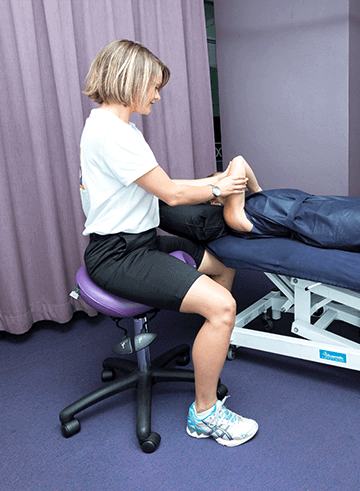
Closer Patient Proximity: First, the straddle design lets you position yourself closer to your patients. Consequently, your arms work at a natural height and angle, ensuring maximum precision while eliminating neck, shoulder, and lower back strain.
Reduced Muscle Fatigue: Second, upright posture improves blood circulation throughout the body. As a result, clinicians experience far less muscle fatigue during long treatment sessions.
Prolonged Clinical Career: Third, eliminating chronic shoulder, neck, and back pain protects your physical health. Therefore, dynamic saddle seating safeguards your body and extends your working life.
Improved Mobility & Reach: Fourth, a stable foot position anchors your lower body securely. Consequently, you enjoy free movement and effortless reach around the clinical treatment space.
Neutral Spinal Alignment & Core Engagement: Finally, the saddle contour holds your spine in neutral balance with all major joints aligned. Moreover, active sitting engages key core muscle groups, significantly reducing your risk of workplace injury.
To find out more about how the Bambach Saddle Seat can help you or your medical team, contact us today!
On conventional flat chairs, a clinician’s knees hit the side of treatment beds, forcing them to hunch forward over patients. The Bambach’s straddle posture points the knees downward, allowing physiotherapists, GPs, podiatrists, and hospital staff to slide directly under examination tables. This stance keeps the spine in its natural “S” curve and lets arms operate at a comfortable height, reducing neck and lower back strain.
Optometrists and dispensing opticians spend hours bent forward over slit lamps, phoropters, and retinal cameras. Sitting on a flat chair flattens the lower back into a “C” curve, multiplying cervical disc compression as you lean into eyepieces. The Bambach’s 135-degree open hip stance tilts the pelvis forward, maintaining neutral head and neck balance while letting optical specialists roll directly up to testing equipment without slouching.
Sonographers and radiographers experience extreme rates of occupational strain due to static arm abduction, lateral twisting, and sustained transducer pressure over ultrasound beds. The Bambach Saddle Seat anchors the pelvis securely, stabilizing the core and freeing the shoulder girdle. This pelvic foundation significantly reduces upper limb and rotator cuff exertion during complex diagnostic scans.
Yes. By holding the pelvis in neutral anatomical balance, the Bambach unloads peak pressure from L4/L5 lumbar vertebrae and sciatic nerve pathways. For clinicians managing scoliosis or hip pain, its continuous-contour seat distributes body weight symmetrically across the sit bones, eliminating the uneven strain caused by slumping on flat seats.
Yes. Bambach seats for clinical, optical, and diagnostic imaging suites are upholstered in seamless, surgical-grade vinyl that withstands daily wiping with hospital-grade disinfectants and fluids. Every chair holds official AFRDI Level 6 Blue Tick certification, guaranteeing severe commercial durability in demanding Australian healthcare environments.
