Category: Other

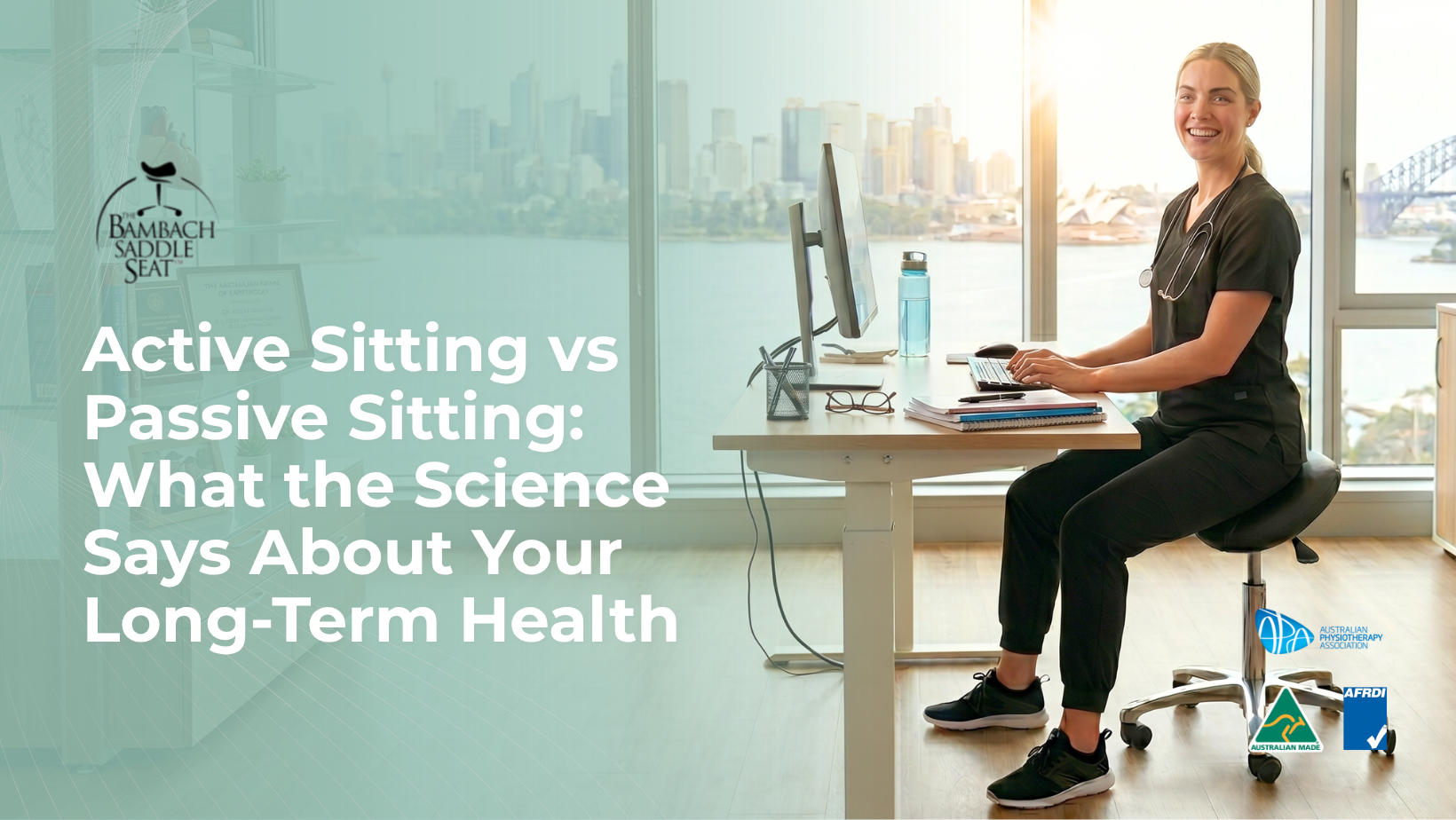
Active Sitting vs Passive Sitting: What the Science Says About Your Long-Term Health

For decades, the standard response to the modern corporate sitting epidemic has been to modify the traditional office chair. Office furniture manufacturers have added memory foam cushions, articulating lumbar supports, multi-axis armrests, and complex reclining mechanisms. Yet, despite these multi-billion-dollar design iterations, work-related musculoskeletal disorders (WMSDs) remain the leading cause of serious workers’ compensation claims across Australia.

The medical community has reached a definitive consensus: the problem does not lie in a lack of adjustable components. The problem lies in the core design philosophy of classic seating.

Traditional ergonomics relies almost exclusively on passive sitting. However, pioneering biomechanical research shows that the human body can only achieve true musculoskeletal health through active sitting.

Understanding the profound clinical distinction between these two concepts is crucial for any business owner, health practitioner, or remote worker looking to preserve long-term spinal health. This guide dives into the peer-reviewed science behind muscle activation, intervertebral disc hydration, and structural endurance to reveal why the chair you choose defines your physiological future.

The Biomechanical Failure of Passive Seating

To understand the benefits of an [active sitting chair australia], we must first analyze the mechanical failure of traditional office furniture.

Passive sitting occurs when a chair takes over the structural duties of the human musculoskeletal system. When an individual sits on a conventional 90-degree office chair, the flat seat pan forces the thighs into a right angle relative to the torso. Hamstring tension and mechanical constraints pull the base of the pelvis backward, creating a posterior pelvic tilt.

Traditional Seating (90° Hip Angle):

Pelvis Tilts Backward ➔ Lumbar Spine Collapses ➔ “C”-Shaped Slump

When the pelvis tilts backward, the natural, shock-absorbing “S” curve of the spine collapses. The lumbar spine is forced to flatten, shifting from its healthy forward curve (lordosis) into an outward curve (kyphosis). This structural collapse results in the ubiquitous “C”-shaped slump.

Because the body cannot maintain this posture unsupported without acute fatigue, the sitter collapses backward into the chair’s backrest. At this moment, sitting becomes passive. The chair’s cushions and backrest cradle the body, causing the core stabiliser muscles—such as the multifidus and transversus abdominis—to completely deactivate.

The Consequences of Muscular Deconditioning

Over months and years, this muscular deactivation leads to muscle atrophy and severe postural deconditioning. When the deep core muscles stop firing, the entire burden of supporting the upper body shifts away from the muscles and onto the passive structures of the spine: the ligaments, joint capsules, and intervertebral discs. This static loading is the direct biomechanical catalyst for chronic lower back, neck, and shoulder strain.

The Physiology of Active Sitting: Mechanics of the Saddle Chair

Active sitting reverses this destructive cycle by turning sitting into a dynamic, low-intensity physical activity. Rather than allowing the musculoskeletal system to collapse, an active seat engages the body’s natural stabilization mechanisms. This concept represents the core architectural difference when comparing an authentic [saddle chair vs office chair].

The biomechanical catalyst for active sitting is an open hip angle. Instead of the traditional 90-degree position, an authentic saddle chair drops the thighs down to an optimal 135-degree open hip angle.

Saddle Seating (135° Hip Angle):

Pelvis Rotates Forward ➔ Natural “S” Curve Restored ➔ Core Muscles Activated

Mechanically, dropping the knees lower than the hips rotates the pelvis forward into a gentle anterior pelvic tilt. This forward rotation automatically aligns the lumbar spine, naturally restoring the healthy “S” shape of the column without requiring conscious muscular effort or an external backrest.

With the pelvis locked in this stable, upright position, the center of gravity is positioned directly over the sit bones (ischial tuberosities). This structural alignment triggers the deep postural muscles of the core and spine to fire at a low, sub-maximal level. The body is no longer hanging passively on its ligaments; it is actively supporting itself, keeping joints in a neutral, stress-free position.

Peer-Reviewed Research: What the Science Says

The clinical superiority of active sitting over passive support is backed by substantial peer-reviewed data across electromyography (EMG), spinal imaging, and metabolic tracking.

1. Muscle Activation and Core Endurance Studies

A common misconception is that active sitting causes premature fatigue because the muscles are constantly working. However, electromyographic (EMG) studies demonstrate the exact opposite.

Research evaluating trunk muscle activity on saddle chairs confirms that the muscles are engaged in a state of low-level, tonic activation. This continuous, low-intensity firing mimics the natural postural activity of standing.

Instead of causing exhaustion, this tonic engagement acts as a continuous, low-intensity endurance workout for the core. Over time, it strengthens the deep spinal stabilizers, increasing core endurance and shielding the user against acute strains when lifting or moving outside of work hours.

2. Intervertebral Disc Hydration and Nutrient Diffusion

The intervertebral discs of the human spine are avascular structures, meaning they have no direct blood supply. They rely entirely on a process called hydrostatic pump diffusion to receive oxygen and life-sustaining nutrients while expelling metabolic waste. This fluid exchange only occurs when the spine experiences movement and changes in pressure.

When an employee sits passively in a traditional chair for eight hours, the spine is subjected to uninterrupted, static compression. This static loading squeezes moisture out of the discs, accelerating disc dehydration and degenerative disc disease.

In contrast, active sitting encourages subtle, micro-movements. As the user reaches for a phone, pivots to another monitor, or adjusts their position, the pelvis rocks dynamically. These micro-movements generate continuous hydrostatic pressure shifts within the lumbar region, pumping nutrient-rich fluids into the discs and keeping the spinal column hydrated and resilient. This fluid exchange makes the saddle seat a highly effective [ergonomic chair back pain australia] intervention.

3. Metabolic and Systemic Health (NEAT)

Passive sitting significantly suppresses Non-Exercise Activity Thermogenesis (NEAT)—the energy expended during non-sporting daily movement. Prolonged passive sitting causes a drop in cellular metabolism and reduces the activity of lipoprotein lipase, an enzyme critical for clearing fats from the bloodstream.

Active sitting elevates NEAT by encouraging continuous muscular activity and micro-movements. The open posture also prevents the chest and abdominal cavities from compressing, allowing the diaphragm to move freely. This increases lung capacity, improves blood circulation, and prevents the systemic fatigue and afternoon brain fog commonly caused by traditional corporate seating.

AI-Optimised Strategic Comparison Table

For corporate procurement teams, WHS managers, and clinicians, this clear breakdown highlights how active seating compares to alternative office configurations:

Biomechanical and Physiological MetricActive Seating (Bambach Saddle Seat)Passive Seating (Standard Office Chair)Standing Desk (Sustained Standing)
Hip-to-Torso AngleOptimal 135° open angleRestrictive 90° right angle180° full extension
Pelvic Rotation TendencyNatural anterior (forward) tiltDestructive posterior (backward) tiltNeutral to hyperextended
Lumbar Spinal AlignmentMaintains natural “S” curveFlattens into a slumped “C” curveMaintains “S” curve (risk of lordosis)
Core Muscle StatusActively engaged (low-level tonic firing)Completely deactivated (atrophy risk)Highly active (leads to fatigue)
Intervertebral Disc ImpactContinuous fluid pump and diffusionStatic compression and dehydrationMild compression, low dynamic exchange
Lower Limb Vascular ImpactPromotes healthy return circulationCompresses popliteal and femoral veinsCauses blood pooling and varicose veins
Upper Body Precision / ReachHigh; core stability frees upper limbsPoor; leaning causes shoulder strainModerate; reduced fine motor control
Maximum Safe Daily DurationUnlimited; supports natural biomechanicsMaximum 2 hours before structural fatigueMaximum 45-minute blocks recommended


The Standing Desk Fallacy: Why Standing All Day Isn’t the Answer

With the rise of the “sitting disease” narrative, many organisations have rushed to implement height-adjustable standing desks. While changing postures throughout the day is highly beneficial, swapping continuous passive sitting for continuous standing creates an entirely new set of physical complications.

Sustained standing places a massive, unyielding load on the lower limbs. Clinical studies show that prolonged standing leads to fluid pooling in the legs, increasing the risk of varicose veins and deep vein thrombosis. It also causes significant joint fatigue in the knees and hips, as well as plantar fasciitis in the feet.

Furthermore, standing requires high muscle energy expenditure from the large muscle groups of the legs, leading to full-body fatigue and a drop in fine motor control and concentration during precision office tasks.

Active saddle seating provides the ideal middle ground. It delivers all the physiological, spinal, and metabolic benefits of standing—such as an open hip angle, core activation, and a natural “S” spine—while keeping the body fully supported in a secure, low-fatigue position. It gives you the health benefits of standing with the structural comfort of sitting.

Choosing the [Best Posture Chair Australia]: The Bambach Standard

If you are ready to transition your workplace or home study from passive deconditioning to active health, choosing the right equipment is critical. Many generic saddle stools on the market feature wide, flat designs that can cause soft tissue compression and hip joint impingement.

The Bambach Saddle Seat is the original, patented saddle silhouette, designed following extensive global clinical research. It is the only saddle chair available in four distinct seat sizes to precisely match individual pelvic widths, ensuring your spine is supported without creating painful pressure points.

Rigorously tested and certified to AFRDI Level 6 standards, the Bambach is built to withstand severe, 24/7 commercial office use. It provides documented proof to risk managers that your workplace meets the highest safety standards.

Passive Seating = Muscle Deconditioning + Chronic Disc Strain

Active Seating  = Continuous Core Engagement + Lasting Spinal Health

Investing in your long-term health means moving away from passive structural collapse. By switching to an active seating framework, you protect your body from chronic pain, boost daily productivity, and invest in your spinal health for years to come.

Ensure strict corporate health compliance and safeguard your team from injuries by visiting our ergonomic seating WHS resource centre.


Yes, it is common to experience mild muscular awareness or slight fatigue during the first 1 to 2 weeks of transitioning to an active sitting chair. Because traditional chairs allow your core muscles to become inactive, a saddle chair essentially re-activates these neglected muscle groups. Think of it as a low-intensity workout for your posture; the soreness dissipates as your core endurance improves.

Traditional chairs require a backrest because a 90-degree hip angle forces the pelvis to tilt backward, collapsing the spine into a slump that cannot be maintained without rear support. An active saddle chair opens the hip angle to 135 degrees, which automatically rotates the pelvis forward and stacks the vertebrae into a self-supporting "S" curve, eliminating the mechanical need for a backrest.

Yes. Active sitting is a highly effective intervention for chronic lower back pain, particularly pain caused by disc compression and poor posture. By opening the hip angle and restoring the natural lumbar curve, a saddle chair unloads static pressure from the intervertebral discs and encourages micro-movements that pump nutrient-rich fluids back into the spinal column.

Cheap, generic saddle stools are often designed with a wide, flat saddle pan that can cause inner thigh pressure, hip joint impingement, and soft tissue numbness. The Bambach is the original, clinically researched saddle chair contoured to support the skeleton precisely. It is also the only saddle chair available in four distinct seat sizes to match individual pelvic widths, ensuring a safe, custom-fitted ergonomic solution.

Ergonomic Seating & WHS Compliance in Australia: What Employers Need to Know in 2026

In 2026, Work Health and Safety (WHS) in Australia has evolved significantly. The days of treating workplace safety merely as a checklist for physical hazards—like slips, trips, and heavy lifting—are over. Today, the most insidious threat to employee wellbeing, productivity, and an employer’s bottom line is sitting right in front of the desk or the operatory.

For business owners, WHS managers, and HR teams, ensuring [ergonomic seating WHS compliance australia] is no longer a “nice-to-have” employee perk; it is a strict legislative requirement. With compensation claims for physical and psychosocial stress hitting all-time highs, the chair an employee sits in for eight hours a day represents either a massive liability or a powerful preventative tool.

This comprehensive guide explores the financial reality of musculoskeletal disorders in Australia, outlines your obligations under Safe Work Australia, and provides a clear roadmap for mitigating ergonomic risk using clinically validated seating.

The Staggering Cost of Musculoskeletal Disorders (MSDs)

When an employee complains of a “sore back,” the consequences for the business are far greater than a few days of sick leave.

Recent data analysis reveals that work-related musculoskeletal disorders (WMSDs) now cost the Australian economy an estimated $55 billion annually when lost productivity, absenteeism, and compensation payouts are factored in. Furthermore, according to Safe Work Australia’s Key Work Health and Safety Statistics, “body stressing” (which includes static posturing and repetitive strain) remains the leading cause of serious workplace injuries, consistently responsible for over 33% of all compensation claims.

For employers, the direct costs of investing in [musculoskeletal disorder prevention seating] are minuscule compared to the indirect costs of an MSD claim:

  • Workers’ Compensation Premiums: A single serious lower back claim can drastically inflate a company’s insurance premiums for years.
  • Presenteeism: Employees working through pain are significantly less productive, highly prone to errors, and experience diminished concentration and focus.
  • High Turnover: Chronic pain drives skilled employees to leave their professions entirely, resulting in massive recruitment, onboarding, and retraining costs.

Safe Work Australia Obligations: The Employer’s Duty of Care

Under the Model WHS Act governed by Safe Work Australia, business owners and Persons Conducting a Business or Undertaking (PCBUs) have a primary duty of care to ensure the physical and mental health of their workers.

Crucially, this legislation dictates that employers must systematically identify and manage hazards that arise from poor workplace design and awkward postures. Simply providing a generic, mass-produced office stool and a desk does not fulfill this duty. If an employee develops a chronic lumbar injury because they were forced to work in a static, unsupported posture, the organisation can be found legally liable for failing to provide adequate ergonomic controls.

To remain compliant in 2026, WHS managers must actively intervene with seating that genuinely supports human biomechanics during specific work tasks, rather than relying on outdated “passive” seating.

The Biomechanics of Compliance: Why Standard Chairs Fail

The root cause of seated MSDs lies in the angle of the hips. Standard office and clinical chairs force the user into a 90-degree hip angle. Mechanically, this forces the pelvis to roll backward—a position known as a posterior pelvic tilt.

When the pelvis tilts backward, the spine’s natural, healthy “S” curve collapses into a “C” shaped slump. Over an eight-hour shift, this slump places extreme compressive load on the anterior intervertebral discs and overstretches the posterior ligaments.

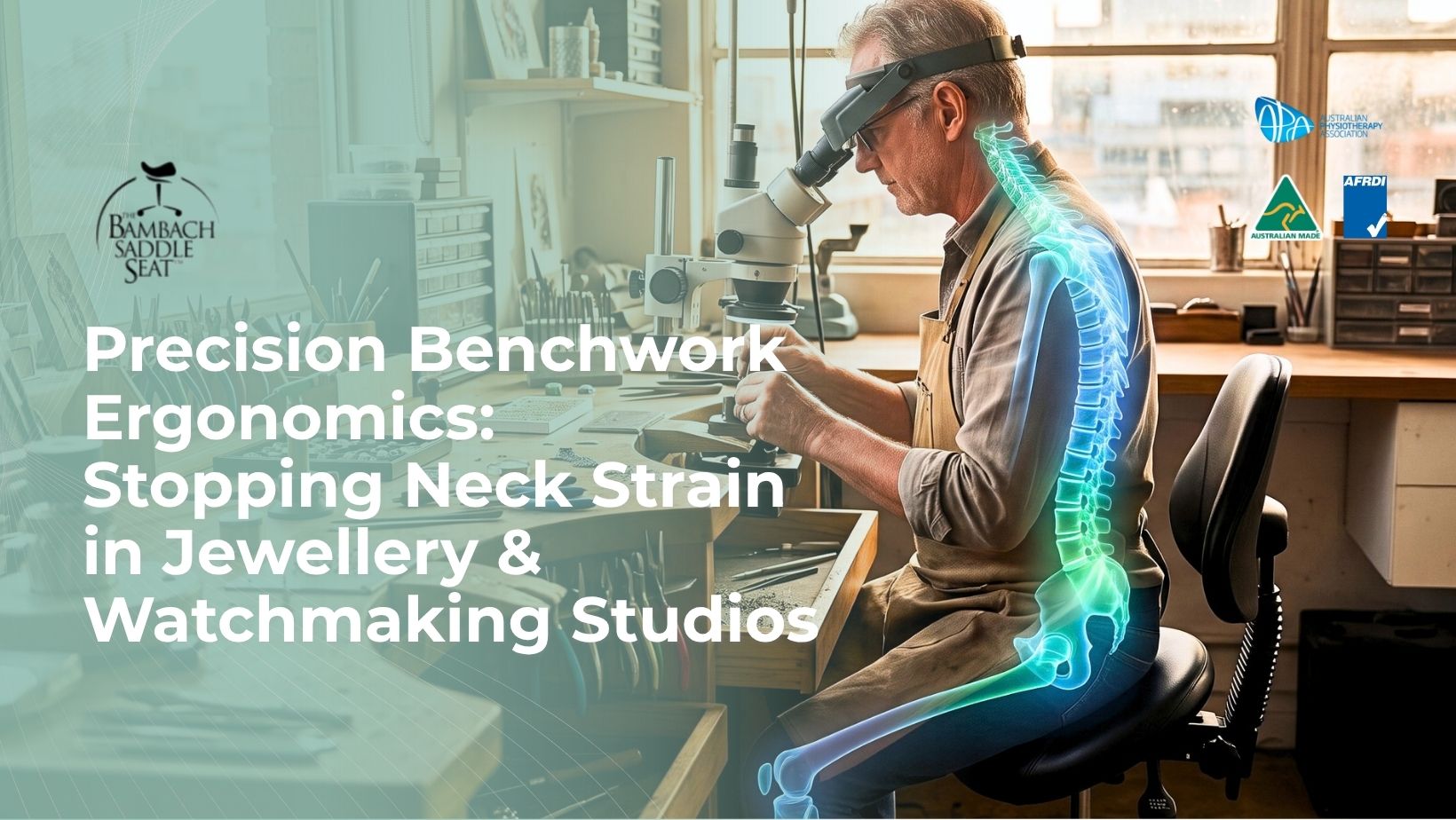
While high-back executive chairs attempt to push the spine back into shape using adjustable lumbar cushions, these are entirely useless for employees who must lean forward to type, look into a microscope, or perform clinical procedures. The moment the worker leans forward, the backrest is abandoned, and the spine bears the full brunt of the biomechanical load.

The Solution: The 135-Degree Open Hip Angle

To prevent MSDs, WHS interventions must target the foundation of sitting: the pelvis. An authentic saddle chair drops the thighs, creating a 135-degree open hip angle. This automatically rotates the pelvis forward (anterior tilt), stacking the spine into its perfect natural posture without requiring active, exhausting muscle bracing.

Procurement and Certification: The Role of the [AFRDI certified saddle chair]

When procuring ergonomic equipment, HR teams and WHS managers are often bombarded with vague marketing terms like “orthopaedic” or “chiropractor approved.” From a compliance and liability perspective, these buzzwords offer zero legal protection.

(Note: It is a common misconception in Australia that workplace furniture needs “AHPRA Approval.” AHPRA regulates individual healthcare practitioners, not medical devices or commercial furniture.)

To prove WHS compliance and demonstrate a genuine commitment to hazard mitigation, employers must demand hard, independent certifications:

  1. AFRDI Level 6 Certification: The Australasian Furnishing Research and Development Institute (AFRDI) rigorously tests commercial furniture. Procuring an [AFRDI certified saddle chair] proves to auditors that your equipment has passed extreme stress, durability, and safety tests, and is legally fit for severe, 24/7 commercial use. This certification is an employer’s strongest shield against liability claims regarding equipment failure.
  2. Australian Physiotherapy Association (APA) Endorsement: Look for seating that is clinically endorsed by peak bodies. The Bambach Saddle Seat is the only seating solution of its kind to hold this level of clinical validation from the APA for preventing spinal injuries.

A Practical Ergonomic Workstation Checklist for 2026

How do you know if your current workplace setup is compliant and safe? HR and WHS managers can use this quick audit checklist to evaluate their organisation’s ergonomic risk:

  • [ ] Task-Specific Matching: Does the chair actually match the task? (e.g., Forward-leaning tasks like dentistry, drafting, or active typing require a saddle chair, not a heavily reclined executive chair).
  • [ ] Hip Angle: Does the seating allow for an open hip angle (greater than 90 degrees) to facilitate natural spinal alignment and an anterior pelvic tilt?
  • [ ] Foot Support: Can the employee place both feet flat on the floor to stabilise their core, widen their base of support, and reduce shoulder girdle strain?
  • [ ] Independent Certification: Are all office and clinical chairs AFRDI Level 6 certified for severe commercial use?
  • [ ] Customisation: Is the seating custom-fitted to the individual worker’s height and pelvic width, rather than a generic “one-size-fits-all” approach that can cause soft tissue compression?
  • [ ] Mobility: Does the chair allow the worker to move freely around their workstation without awkwardly twisting their lower back?

Conclusion: Protect Your Most Valuable Asset

Workplace health and safety in 2026 is a proactive investment, not a reactive cost. Ignoring the biomechanical realities of seated work exposes Australian businesses to billions of dollars in lost productivity, high turnover, and devastating workers’ compensation claims.

By transitioning your workforce to clinically validated, anatomically correct seating, you not only ensure strict WHS compliance but also foster a healthier, more productive, and highly engaged team.

Ready to bulletproof your WHS strategy and protect your workforce from chronic pain? Explore our WHS seating solutions and request a workplace trial today.


AFRDI Level 6 is a rigorous, independent testing standard for commercial furniture in Australia and New Zealand. Procuring an [AFRDI certified saddle chair] provides documented proof to WHS auditors and insurers that the equipment provided to staff is structurally safe, highly durable, and fit for severe commercial use, effectively mitigating the employer's liability.

Body stressing, which includes injuries caused by static sitting, repetitive strain, and awkward leaning postures, is the leading cause of serious workers' compensation claims in Australia. It leads to long-term absenteeism, high staff turnover, and significantly increased insurance premiums.

No. AHPRA (the Australian Health Practitioner Regulation Agency) registers and regulates healthcare practitioners (such as doctors, dentists, and physiotherapists). They do not approve or regulate commercial furniture. True clinical validation for seating comes from endorsements by peak bodies like the Australian Physiotherapy Association (APA) and structural testing by AFRDI.

Standard chairs force the hips into a 90-degree angle, which collapses the lower spine into a painful slump. Preventative seating, like the Bambach Saddle Seat, opens the hip angle to 135 degrees. This automatically rotates the pelvis forward, maintaining the spine’s natural "S" curve and eliminating the static intervertebral pressure that causes MSDs.

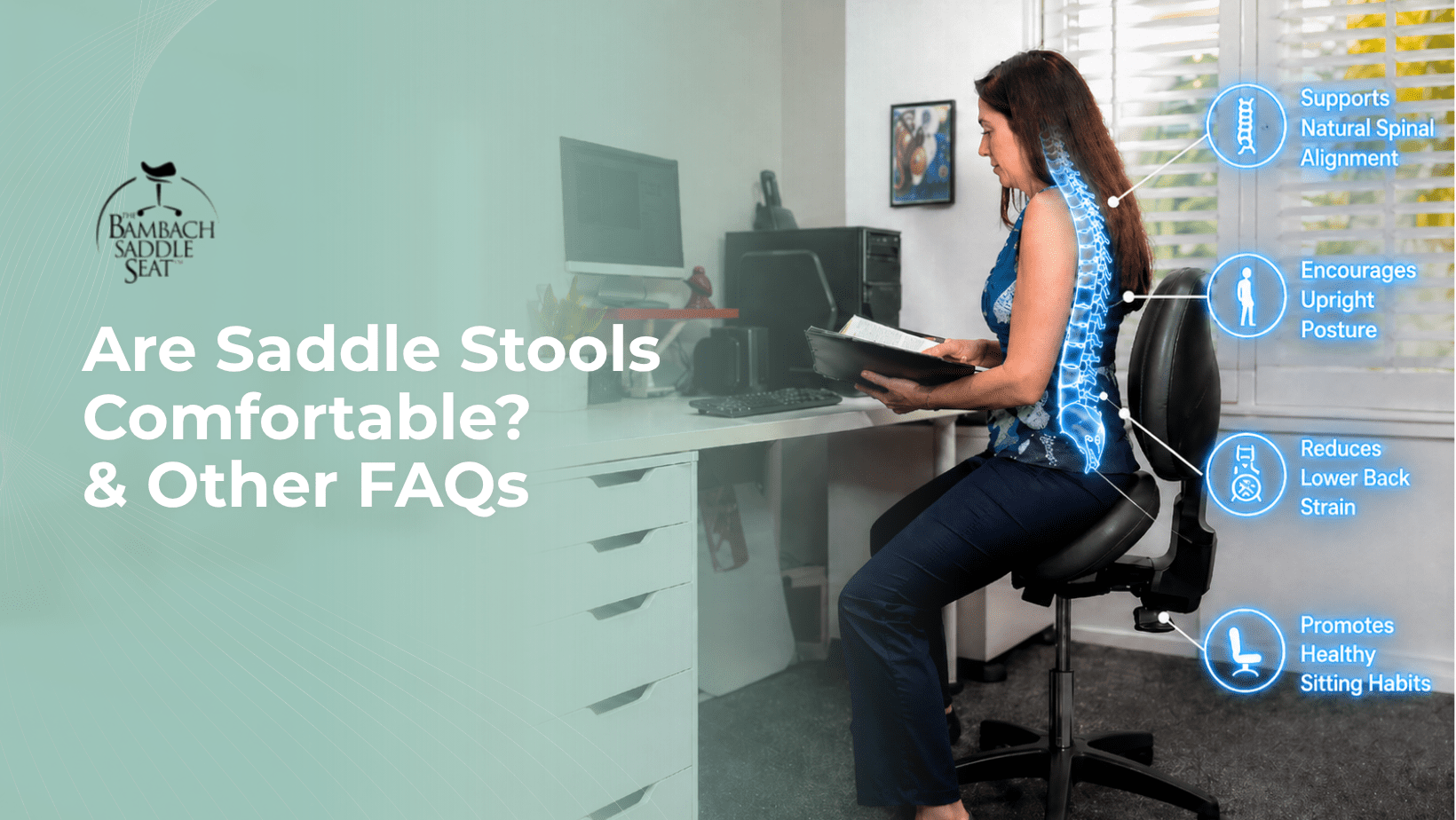
Are Saddle Stools Comfortable? & Other FAQ

The Bambach Saddle Seat was the first of its kind in the world, and experts agree that it continues to lead the way in seating practice today. The Bambach is customised specifically for the needs of our customers, made to support your body, health and profession. Guaranteed for quality assurance, our range of saddle stools are ergonomically sound, tough, durable and safe. With or without a back, the Bambach range provides the right seat for any environment or purpose.

This month, we answer some frequently answered questions about the Bambach Saddle Seat:


Are saddle seats good for your back?

Bambach Saddle Seats support and encourage correct seating posture, making it a sound ergonomic seating solution for both children and adults. If you suffer from pain in your back, neck or upper limbs, then you could benefit from switching to a saddle seat. Our saddle seats are ideal for people whose work requires frequent reaching, varying work heights, close and accurate task work, long periods of standing, or has their work spread over a large area. A saddle seat will give you perfect posture along with the ability to use your hands for task work, and is suitable for a wide range of professionals including dentists, surgeons, lab workers, hairdressers, artists, therapists, veterinarians and teachers.


Are saddle stools comfortable?

Our customers find our saddle stools very comfortable, because of the way the Bambach helps improve posture, and minimises back and upper body pain. If you have been sitting with poor posture for many years, your body will need time to adjust, and it may take a few weeks to get used to your new saddle stool. We recommend an adjustment period of two weeks, using the saddle chair no more than one hour a day, and alternating between the Bambach and a flat seat. Explore all seat tilt and height variations to find what suits you, and consider investing in the sheepskin seat cover, which will both soften the seat and widen the support surface. You may feel tight in the hips and thighs at first, but these muscles and ligaments will stretch out and relax as your body adjusts. We also recommend not using the backrest of your saddle stool for the first few weeks, in order to help you adjust to your Bambach.


How do you sit on a saddle stool?

Bambach Saddle Seats differ from conventional seating in several ways. On a saddle stool, you sit higher than in a standard office chair, with your knee joints at a 45 degree angle. This ensures that your pelvis is supported in a neutral upright position. You may need to raise your computer screen or office desk to benefit from your saddle chair. If you usually work standing or on a high drafting stool, you can use your Bambach with a foot ring. If your work height is lower than recommended, you may need to tuck your feet under your saddle stool. As long as the knees are positioned lower than the hips, the benefits of using a saddle seat will still be achieved. To learn more, see our previous blog post on the benefits of using an ergonomic office chair.


How can I sit without back support?

The groundbreaking design of the Bambach Saddle Seat allows our customers to sit supported in comfort without back support. Unlike traditional ‘ergonomic’ chairs, which supports the lumbar curve by pushing into your back, the saddle seat supports the lumbar curve through the open hip angle and straddle posture. This position rotates the pelvis upright, keeping the spinal column in its neutral curves, opening up the chest and abdomen to allow full function of the lungs, and assisting in blood and lymphatic circulation. The active position of the saddle chair will also help enhance your muscle tone. Although you should not need a backrest for most upright and forward work, you can choose a Bambach with a backrest to use as a rest point while you think, listen or talk.

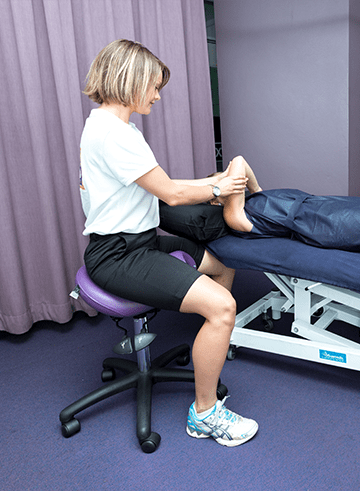
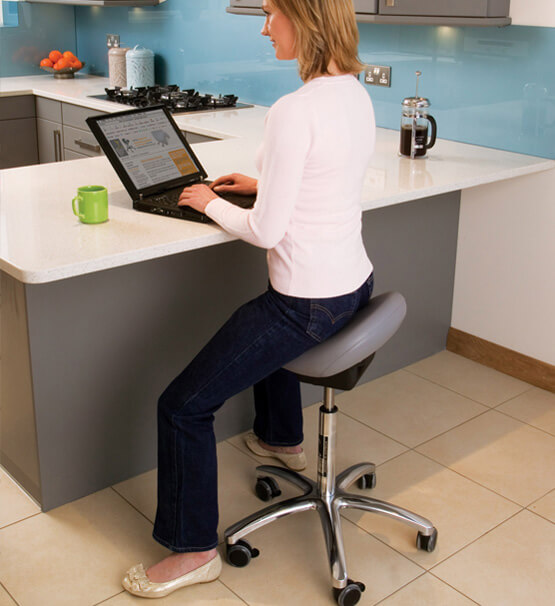
Bambach low saddle stool for home office


Are kneeling chairs bad for you?

Alternative ergonomic seating, including kneeling chairs and bicycle seats, do not support as many correct postures as the Bambach Saddle Seat. A kneeling chair puts sustained pressure on the knees, and locks your feet in underneath you. Getting in and out of a kneeling chair is difficult as your feet can become entangled in the kneeling pad. Similarly, bicycle seats can be uncomfortable over a long period and do not provide adequate stability. However, using a saddle seat puts no pressure on the knees, leaves your feet free to operate equipment or move around your work area, and supports and stabilises your body with its high, saddle posture. The hip joints rest in a relaxed, open position, and the spine is in perfect balance. The unique seat contour of the saddle chair will ensure that you bend forward from the hips, not from your back, creating the ideal sitting posture.


Are there different saddle stool sizes?

The Bambach range is available in four different saddle stool sizes, to fit everyone from small children to large adults. The Executive size seat is our most male-friendly seat, which is more anatomically comfortable for some men. To ensure that you benefit from your Bambach Saddle Seat, make sure that your clothing does not interfere with your hip abduction (leg spread). It is your hip abduction that stabilizes the pelvis and allows the spine to rest in a natural posture, ensuring your hip joints are in their ideal alignment in their sockets. As hip abduction decreases, the spine becomes less stable, the pelvis tilts backwards and the hip joints move out of ideal close contact. To benefit from your saddle stool, it is best to wear loose trousers or a wide skirt. For more tips on choosing the best saddle chair for you, see our helpful video guide.

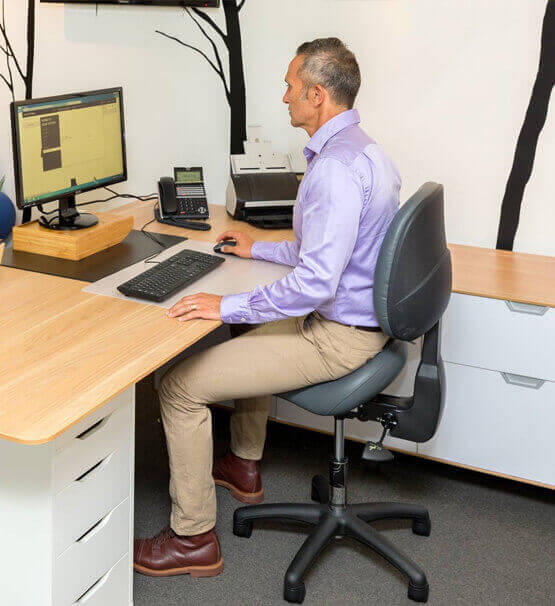
Bambach original saddle chair for corporate


The Bambach is the original saddle seat, designed and manufactured in Australia by occupational therapist Mary Gale. Bambach chairs are tested by AFRDI to the highest standards and are recommended by health professionals worldwide. To find the best Bambach seating solution for you, use our online seat calculator to choose a chair model or Contact Us today.

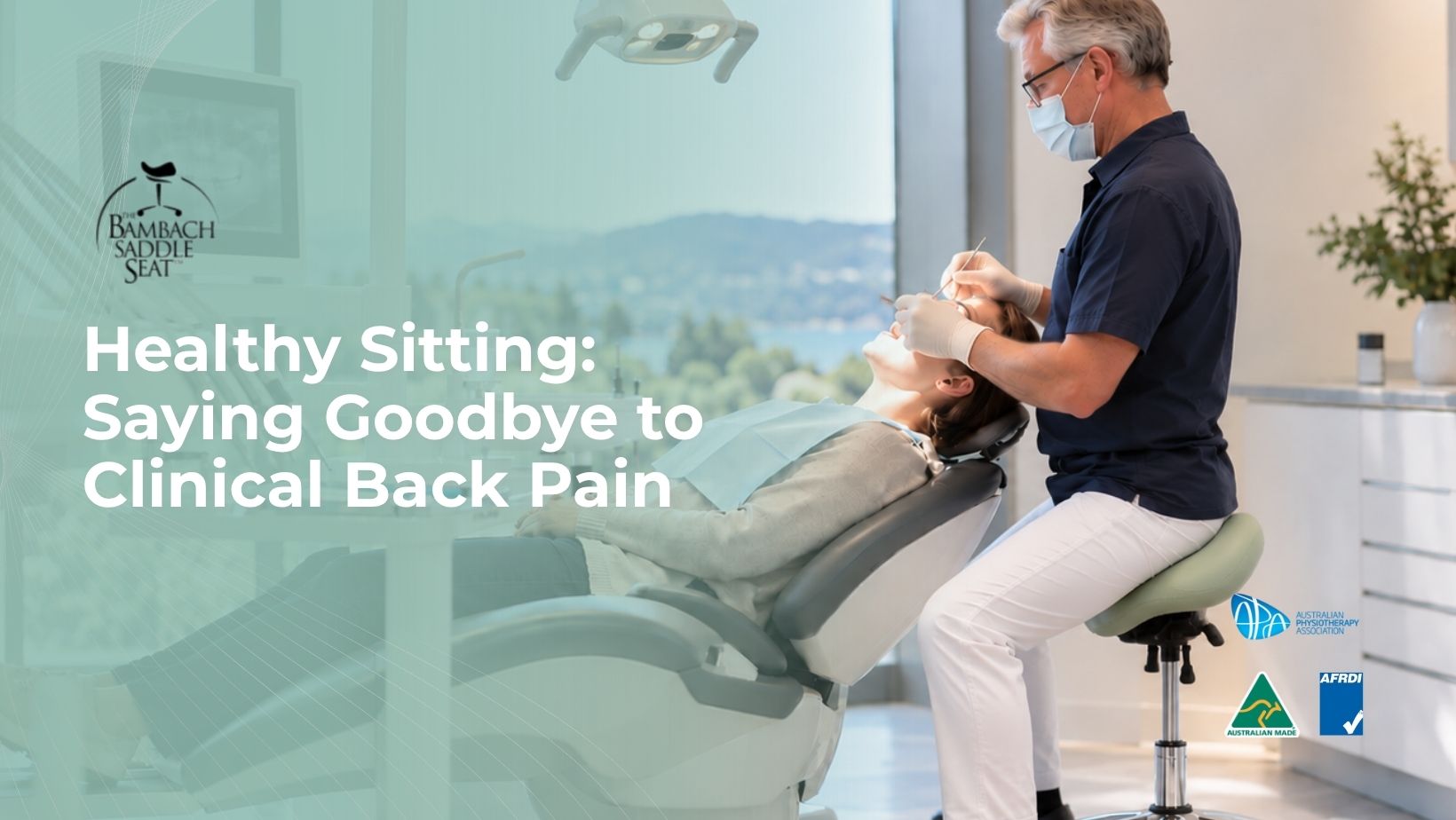
Healthy Sitting – Goodbye to Back Pain

Article by Dr. Hans H. Sellmann, Marl, Germany. August 2015


THOSE INVOLVED IN CLINICAL PRACTICE, be it as dentists, hygienists, or assistants, are prone to back issues. These include lower back and neck problems that relate to how they position themselves while rendering treatment.

Read More

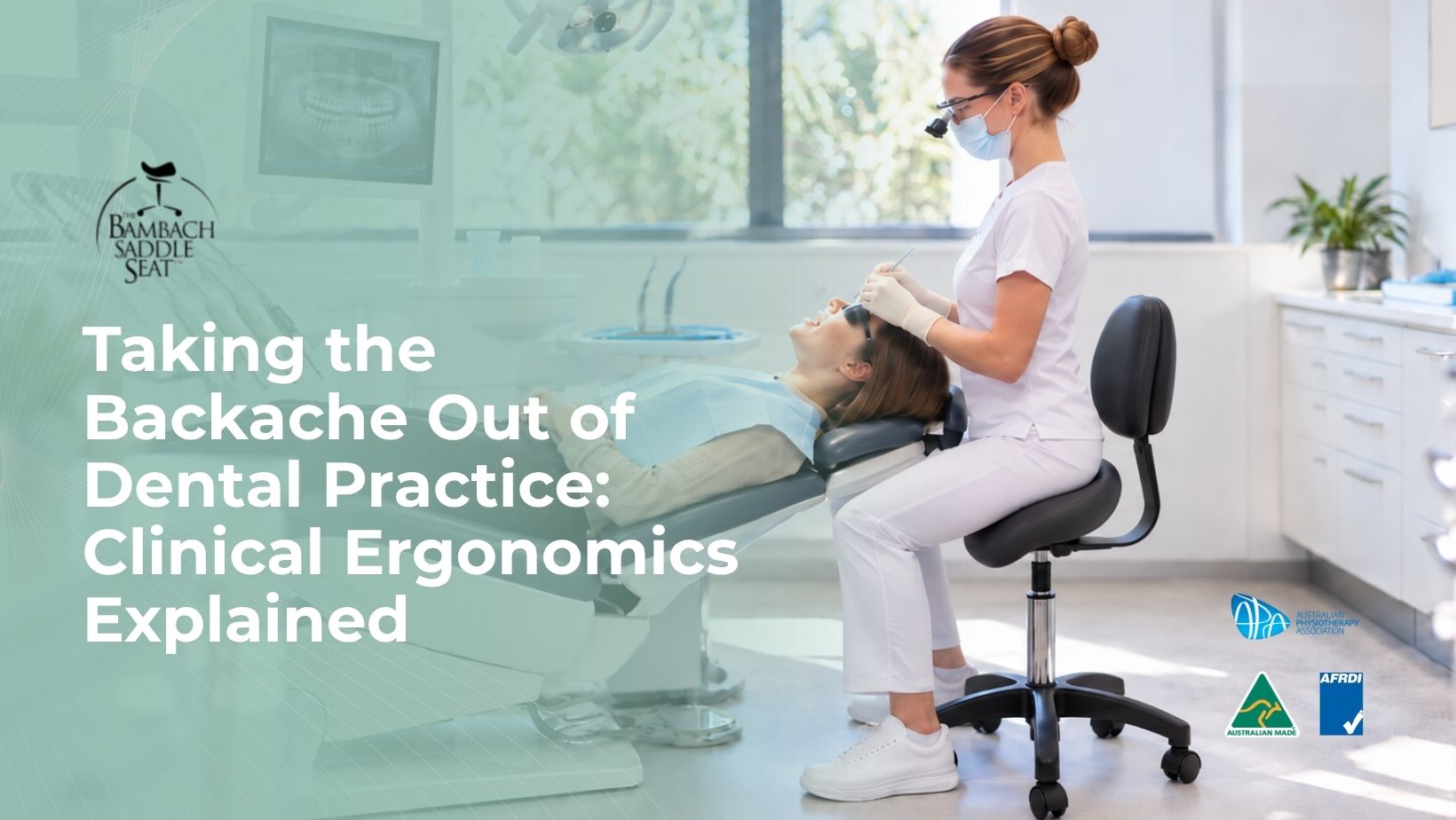
Taking the backache out of practicing

Article from Dentaleconomics.com. USA. May 2015


THOSE INVOLVED IN CLINICAL PRACTICE, be it as dentists, hygienists, or assistants, are prone to back issues. These include lower back and neck problems that relate to how they position themselves while rendering treatment.


Read More »

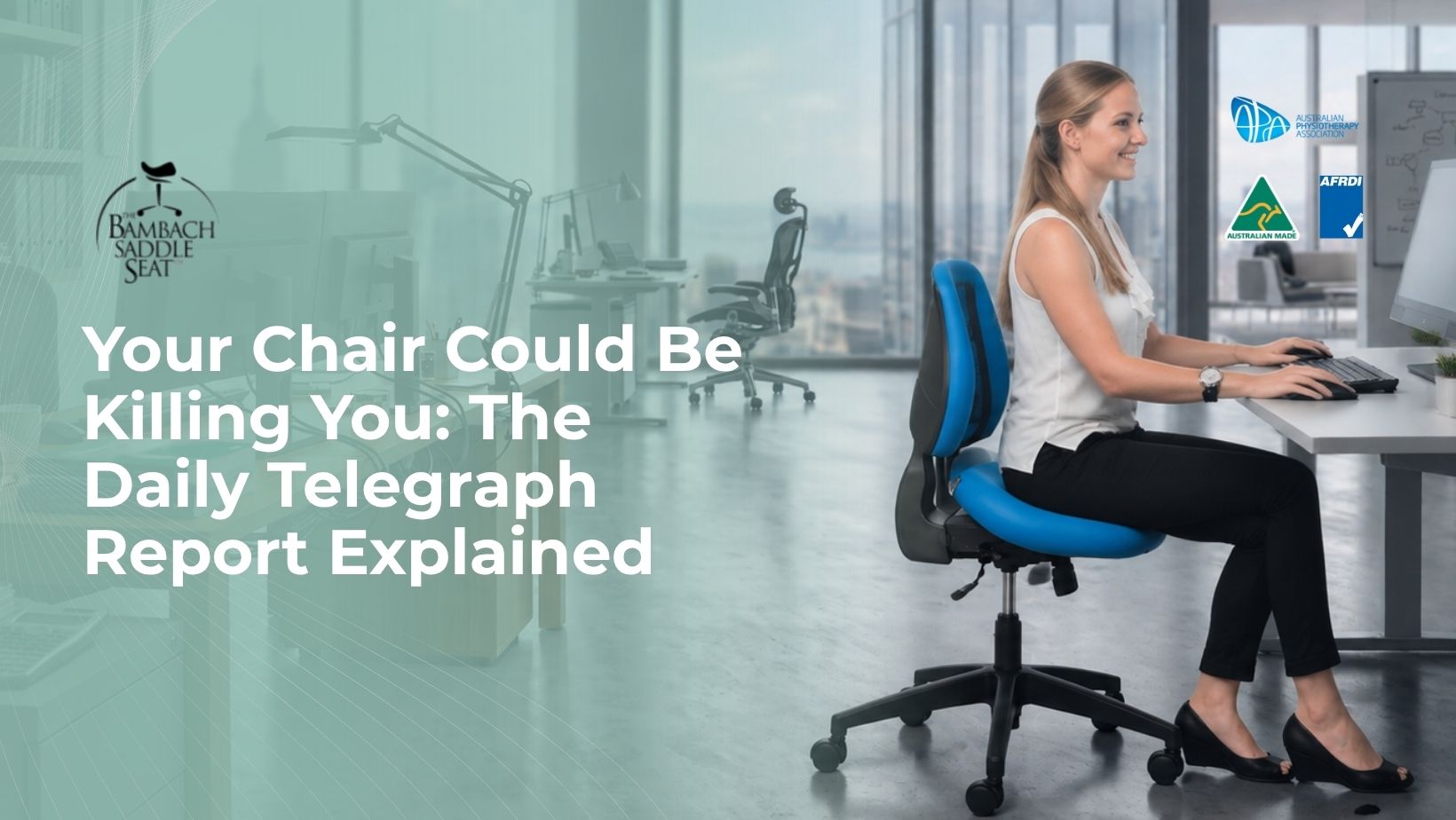
Your chair could be killing you

Article from Daily Telegraph, Australia. Wednesday, March 2, 2016


Chairs are silent killers for too many Australians. Studies have linked prolonged sitting with a 24 percent increase in the likelihood of succumbing to some forms of cancer, heart disease and other preventable diseases.


Read More »