Author: bambach-admin

The Invisible Career Threat: Why Tattoo Artists and Fine Painters Face the Same Postural Crisis as Dentists

The creative studio is one of the most physically demanding work environments in Australia. Whether spending six hours applying intricate line work to a client’s torso or leaning over an easel working on a large-scale canvas, tattoo artists and fine painters endure extreme physical stress to produce their art.

Despite their dedication, creative professionals frequently suffer from chronic, career-shortening back, neck, and shoulder pain.

Clinical Evidence: The Studio Posture Crisis

For decades, occupational ergonomics focused heavily on office workers and dental surgeons. However, recent peer-reviewed research confirms that visual and tattoo artists face a musculoskeletal disorder (MSD) crisis equal to—and in some categories exceeding—dental professionals.

A landmark study published in Occupational Medicine (Oxford University Press) directly compared the physical pain patterns of tattoo artists, dental workers, and office workers:

  • Lower Back Pain: 72% of tattoo artists report chronic lower back pain (compared to 62% of dental workers).
  • Neck Strain: 66% of tattooists suffer from severe neck strain caused by continuous cervical flexion.
  • Upper Limb & Hand Fatigue: 55% experience upper limb and hand pain due to static arm positioning and machine vibration.

The researchers concluded that tattoo artists and dental workers share virtually identical pain profiles. Furthermore, clinical trials published in Applied Ergonomics highlight that tattooists spend up to 80% of their working day in extreme lumbar flexion without adequate pelvic support.

Why Standard Studio Stools Destroy Artist Posture

Conventional flat studio stools and domestic office chairs force the hips into a closed 90-degree angle. This position tilts the pelvis backward, flattening the lumbar spine’s natural “S” curve into a slumped “C” shape.

When a tattoo artist or painter leans forward to execute fine detail work, this flattened posture creates several critical biomechanical hazards:

  • Severe Disc Compression: Leaning forward on a flat seat multiplies pressure on the L4/L5 lumbar discs by up to 180%, accelerating spinal degeneration.
  • Static Muscle Hypoxia: Lower back and neck muscles must contract continuously to prevent the torso from collapsing forward, restricting blood flow and causing rapid fatigue.
  • Unstable Fine-Motor Foundation: Slumping destabilises the shoulder girdle, forcing the arms and hands to overcompensate to keep needles or brushes steady.

Biomechanical Matrix: Standard Stool vs. Bambach Saddle Chair

Postural CriteriaStandard Studio StoolBambach Ergonomic Saddle Chair
Hip AngleClosed 90° (pinches hip flexors & tilts pelvis back)Open 135° (rotates pelvis forward into neutral balance)
Lumbar CurveFlattened “C” curve (high disc compression)Natural “S” curve (self-supporting spinal alignment)
Pelvic StabilityFlat surface allows sit bones to slide and slumpContinuous-contour seat locks pelvis securely in symmetry
Arm PrecisionShoulders tense up to compensate for core fatigueCore is anchored, freeing shoulders and arms for steady strokes
Studio DurabilityDomestic vinyl degrades when exposed to inks & solventsMedical-grade, fluid-resistant vinyl built for harsh studio sanitisation
Commercial TestingBasic domestic rating or uncertified importIndependently tested to AFRDI Level 6 (Severe Commercial)

How the Bambach Saddle Seat Restores Posture for Artists

Designed in Sydney by Australian Occupational Therapist Mary Gale, the Bambach Saddle Seat was engineered to solve the biomechanical breakdown caused by flat seating

Postural CriteriaStandard Studio StoolBambach Ergonomic Saddle Chair
Hip AngleClosed 90°
Pinches hip flexors and tilts pelvis backward.
Open 135°
Rotates pelvis forward into neutral anatomical balance.
Lumbar CurveFlattened “C” Curve
High spinal disc compression and slumping.
Natural “S” Curve
Self-supporting, healthy spinal posture without a backrest.
Pelvic StabilityUnstable Flat Surface
Sit bones slide, forcing lower back muscles to fatigue.
Continuous-Contour Lock
Solid seat pan locks pelvis and sit bones securely in symmetry.
Arm PrecisionCompromised Upper Body
Shoulders tense up to offset lower core collapse.
Anchored Core Foundation
Frees shoulders and arms for steady, fine-motor detail work.
Studio DurabilityDomestic Grade
Standard vinyl degrades when exposed to inks and solvents.
Medical-Grade Vinyl
Seamless, fluid-resistant, and built for harsh studio sanitisation.
Commercial TestingBasic / Uncertified
Light domestic rating or uncertified imported components.
AFRDI Level 6 Certified
Independently tested in Australia for severe commercial use.

1. The 135-Degree Open Hip Angle

By opening the hip stance to 135 degrees, the Bambach seat naturally rotates the pelvis forward. This aligns the spine into its natural, upright “S” curve without requiring a bulky backrest that restricts upper-body movement.

2. Continuous-Contour Pelvic Stability

Precision tattooing and painting require absolute physical stability. Unlike split-seat designs featuring two separate moving pads that shift under body weight, Bambach’s continuous, unbroken saddle contour provides a solid foundation. This locks the sit bones in place, eliminating lateral wobble while operating vibrating tattoo machines or applying delicate glazing layers.

3. Compact Mobility Around Clients and Easels

Tattoo beds, client chairs, and large canvases require close proximity. The narrow star base and compact footprint of the Bambach allow artists to roll close to their work surface without tripping over wide chair legs or bulky armrests.

4. Studio-Ready Sanitation & Australian Build Quality

Tattoo studios and painting workshops are tough on equipment. Bambach seats are hand-upholstered in Marrickville, Sydney, using seamless, surgical-grade vinyl that withstands tattoo inks, stencil fluids, oil paints, solvents, and heavy hospital-grade disinfectants. Every chair is independently certified to AFRDI Level 6 for severe commercial use and backed by a 5-year commercial warranty.

Explore the complete Bambach Ergonomic Saddle Chair Range or read our Australian Case Studies to see how adaptive seating extends creative careers.

Why do tattoo artists suffer back pain at rates similar to dentists?

Both professions require prolonged static sitting combined with forward lean and extreme hand-eye precision. Research published in Occupational Medicine confirms that tattoo artists experience low back pain (72%) and neck pain (66%) at rates virtually identical to dental workers due to the lack of pelvic support on standard studio stools.

How does a continuous-contour saddle seat help tattoo artists hold steady hands?

Precision tattooing requires a completely stable lower body. A continuous-contour seat pan provides an unbroken surface that locks the pelvis and sit bones firmly in place. Split-seat designs feature two separate moving pads that shift under body weight, creating micro-instability that can transfer tension into the shoulders, arms, and hands.

Can fine painters and illustrators use a saddle chair at an easel or drafting table?

Yes. Fine painters frequently stoop over low canvases or reach up to high easels. Bambach offers custom gas-lift stem heights—including medium, high, and drafting options with adjustable footrings—allowing painters to work comfortably at elevated easels while maintaining a neutral lumbar curve.

How does the 135-degree open hip angle prevent lower back fatigue in long tattoo sessions?

Standard flat chairs hold the hips at 90 degrees, forcing the pelvis backward and flattening the lower spine into a slumped “C” curve. An open 135-degree hip angle rotates the pelvis forward, naturally restoring the spine’s healthy “S” curve. This takes pressure off spinal discs and reduces muscle spasm during multi-hour tattoo sessions.

Are Bambach saddle chairs resistant to tattoo inks, stencils, and painting solvents?

Yes. Bambach studio chairs are upholstered in seamless, medical-grade vinyl engineered specifically for demanding environments. The material is non-porous, fluid-resistant, and easy to sanitize, preventing tattoo inks, stencil transfer, oil paint, and alcohol solvents from penetrating seams or damaging the seat.

Is AFRDI Level 6 certification important for a tattoo studio setup?

AFRDI Level 6 is Australia’s highest independent structural testing standard for severe commercial seating. It verifies that the chair frame, gas lift, and base can withstand continuous, heavy-duty daily use and dynamic weight shifts without mechanical failure.

NDIS Funding for Postural Seating: What the 2026 Changes Mean

Current as at 31 August 2026. NDIS reform is being rolled out in stages between 2026 and 2030, and further rules are still being developed. Check the NDIA website for the latest position before making funding decisions.

If you are an occupational therapist, physiotherapist, support coordinator or family member involved in prescribing postural seating, the NDIS you knew is changing. New laws received Royal Assent on 20 August 2026, with the first changes starting 27 August 2026 and the rest rolling out in stages through to 2030.

Quick answer: postural seating is funded as assistive technology under Capital Supports. The two budget reductions announced for October 2026 apply to social, civic and community participation supports and to capacity building daily activities, not to assistive technology. The changes most likely to affect a seating prescription are the new 90-day claim deadline from 1 December 2026, the end of leftover funds carrying over under plan renewals from February 2027, and new framework planning from April 2027.

What Has Not Changed

Postural seating is still funded. A saddle seat prescribed to stabilise the pelvis, open the hip angle and support a person’s functional goals is assistive technology, and assistive technology remains a funded support category.

The Government has also confirmed that the October 2026 budget reductions will not apply to a list of critical supports, including home and vehicle modifications, supports in the home, personal mobility equipment and transport, consumable products, and Specialist Disability Accommodation. Further amendments protect employment supports, disability-related health supports, high-intensity supports, complex behaviour supports, and some customised and wearable technology and hearing supports.

For most participants, PWDA’s guidance is that you do not need to do anything differently right now. Current plans and supports continue as usual, and the NDIA has said it will notify participants before changes affecting them are introduced.

The Timeline That Matters for Seating

DateChangeWhy it matters for a seating prescription
27 Aug 2026Only a participant, plan nominee or child representative can request an unscheduled plan reassessmentA therapist or supplier cannot lodge the request on someone’s behalf
27 Aug 2026Record keeping periods set: 3 years for participants and plan managers, 5 years for nominees, 7 years for providersKeep quotes, assessment reports and invoices for the full period
1 Oct 2026Reductions begin to two support categories, applied progressively as plans are reassessed or renewedAssistive technology is not one of the reduced categories
1 Dec 2026Claims must be made within 90 days of the support being deliveredA delivered chair invoiced late may not be claimable
1 Feb 2027Plan renewals begin. Leftover funds do not carry over into a renewed planUnspent assistive technology funding should not be left sitting
1 Feb 2027Reasonable and necessary decisions must also consider equity between participants and the sustainability of the SchemeEvidence quality becomes more important, not less
1 Apr 2027New framework planning begins, using a support needs assessment to help set budgets. Rollout runs to 31 Dec 2030Participants receive a report explaining how their budget was decided

The Three Changes Worth Acting On

1. The 90-day claim deadline

From 1 December 2026, participants and plan managers must claim within 90 days of the support being delivered. Custom seating has a lead time. A chair ordered in one quarter and delivered in the next can easily drift past 90 days before anyone submits the claim, particularly where a plan manager is waiting on paperwork from a supplier.

The practical fix is simple. Agree at the point of order who lodges the claim and when, and diarise it against the delivery date rather than the order date.

2. Leftover funds stop carrying over

From February 2027, when a plan reaches its reassessment date the NDIA may create a renewed plan instead of reassessing it. A renewed plan carries the same level of supports the participant was previously assessed for, adjusted for current prices. Money left over in the previous plan does not carry into the renewed one.

If a seating assessment has been completed and the funding is sitting unused, that is now a use-it-or-lose-it situation rather than a rollover.

3. Evidence has to work harder

From February 2027, the NDIA must consider equity between participants, the sustainability of the Scheme, and the circumstances of participants with similar needs when deciding what is reasonable and necessary.

This does not mean seating gets refused. It does mean a prescription that reads as a comfort upgrade is weaker than one tied to specific functional outcomes. The strongest reports describe what the person cannot currently do, what the seating changes mechanically, and what functional goal that unlocks. Postural collapse leading to fatigue that limits school attendance is a functional argument. A more comfortable chair is not.

Two Worked Examples of Functional Framing

Our Australian special needs case studies show the difference in practice.

Ruby, who has muscular atrophy, was collapsing in a standard classroom chair. Her pelvis tilted backward, her spine rounded, and she extended her neck to see her work, which exhausted her quickly. Her occupational therapist trialled a Small Adaptive Saddle Chair with a reduced abduction seat, standard backrest, 80 mm drop-through gas lift and locking castors. The functional outcome was that her arms were freed from bracing her torso, so she could focus on schoolwork for longer without fatigue.

Notice what makes that fundable. It is not “Ruby finds the chair comfortable.” It is a described postural problem, a specified configuration with a reason for each element, and a functional gain in a defined setting.

David, an adult with cerebral palsy and increased adductor tone, was largely confined to a wheelchair. Seated on the saddle, his hips were held abducted and extended, his feet reached full contact with the floor, and he began using his legs to propel the chair himself. He reported walking further independently and relying on the wheelchair less on daily outings.

Again, the fundable elements are mobility, independence and reduced reliance on other equipment, not comfort.

Both cases were documented before the 2026 changes, and neither is a guarantee of a funding outcome for anyone else. They are useful as a model for how to write the argument.

What a Strong Seating Prescription Contains

Whether you are writing the report or reading one, these are the elements that carry weight:

The functional goal, in the participant’s own words where possible. A trial record showing what was tested and what changed. The specific configuration prescribed, including seat size, stem height, base and any accessories, with a reason for each. Evidence of clinical reasoning linking the postural mechanism to the functional outcome. Independent certification of the equipment, such as AFRDI Level 6 for severe commercial use. A quote valid for long enough to survive the approval process.

For seating in particular, sizing detail matters. Pelvic width varies between individuals, so a report that specifies which seat size was trialled and why is considerably stronger than one naming a product alone.

What Is Still Being Decided

A great deal. The legislation creates the framework and the powers, but detailed rules, policies and operational processes are still being developed. Areas still open include the new access assessment, the detailed operation of support needs assessments and budget setting, record keeping rules, and provider registration.

Anyone telling you exactly how postural seating will be assessed under new framework planning is guessing. The honest position is that the funding pathway for assistive technology has not been reduced, the timing rules around claims and renewals have tightened, and the case for any prescribed support needs to be well evidenced.

Where to Get Help

If the NDIA has made a decision you disagree with, you may be able to request an internal review. For most reviewable decisions, the request must be made within three months of receiving the decision in writing. The Disability Gateway on 1800 643 787 can connect you with disability advocacy services, and the NDIA publishes a guide to decision reviews.

The Department of Health, Disability and Ageing maintains a page on the NDIS legislation changes, and PWDA is collecting participant experiences as the changes roll out.


The laws received Royal Assent on 20 August 2026 and the first changes started 27 August 2026. Further changes begin on 1 October 2026, 1 December 2026, 1 February 2027, 1 April 2027, 1 July 2027, 1 October 2027, 1 January 2028 and 1 July 2028, with some transition arrangements continuing to the end of 2030.

From 1 December 2026, participants and plan managers must make claims within 90 days of the support being delivered. For custom-made equipment with a manufacturing lead time, the claim window runs from delivery, so it is worth agreeing who lodges the claim before the order is placed.

Not under a plan renewal. From 1 February 2027, when a plan is renewed rather than reassessed, money left over in the previous plan does not carry into the renewed plan.

From 27 August 2026, only the participant, their plan nominee or a child representative can ask the NDIA for an unscheduled plan reassessment. A request can still be made where there has been a significant and ongoing change to functional capacity and support needs, living arrangements, education, work, or informal supports. If the NDIA does not decide within 90 days, the request is treated as refused, which opens up review rights.

New framework planning uses a support needs assessment, conducted through a semi-structured interview with a trained NDIS assessor, to help determine a participant's budget. Participants receive a report explaining how their budget was decided. The rollout begins 1 April 2027 and runs progressively to 31 December 2030, so it will not affect everyone at once.

Participants and plan managers need to keep records about NDIS support payments for three years. Nominees keep them for five years, and providers for seven years. Detailed rules about exactly which records are required are still being finalised.

Certification is not a funding requirement in itself, but independent structural certification such as AFRDI Level 6 supports the case that the equipment is fit for sustained daily use. For a participant who will use the chair every day for years, durability evidence strengthens a reasonable and necessary argument.

In Bambach's documented Australian case studies, the outcomes were functional rather than comfort-based. For a school student with muscular atrophy, stabilising the pelvis freed her arms from bracing her torso so she could work longer without fatigue. For an adult with cerebral palsy, the open hip position restored full foot contact with the floor, allowing him to propel his own chair and walk further independently. Individual results vary, and neither case guarantees a funding outcome for another participant.


Bambach has designed saddle seats in Australia since 1989, and they are prescribed by occupational therapists and physiotherapists for participants who need pelvic stability and an open hip angle. See the special needs and adaptive seating range, read the full Australian case studies, or browse the complete range. To discuss a configuration for a specific participant, call +61 2 8966 4800.

This article is general information about NDIS funding processes. It is not financial, legal or clinical advice, and it is not affiliated with or endorsed by the NDIA. Funding decisions depend on individual circumstances.

Chair for a Bad Back: What WorkSafe Queensland’s Guidance Actually Says

If you’re searching for a chair for a bad back, the most reliable place to start isn’t a product review site. It’s WorkSafe Queensland, the state government body responsible for workplace health and safety. Its guidance on selecting and adjusting an office chair sets out, in plain terms, what an ergonomic chair needs to do.

Quick answer: WorkSafe Queensland’s guidance says a comfortable hip and back position sits at a hip angle of roughly 100 to 120 degrees, achieved by tilting the backrest until the lumbar curve fits your lower back. A saddle seat works on the same underlying principle, opening the hip angle further still (around 135 degrees) through the shape of the seat itself, rather than relying on you to find and hold the right backrest position all day.

What WorkSafe Says a Good Office Chair Needs

WorkSafe Queensland’s guidance covers two things: what to look for when buying a chair, and how to adjust one once you have it.

On buying, it points to a handful of practical features. The chair should have controls you can reach and operate while seated. It needs a weight rating that actually suits you – many standard chairs are only rated to 120kg, so this is worth checking rather than assuming. A curved lumbar support that adjusts to your lower back, a backrest that tilts, a seat pan that tilts independently, enough cushioning to support your thighs and hips, and a stable five-point caster base round out the list.

On adjusting, the guidance is just as specific. Set the seat height so your elbows sit level with the desk. Add a footrest if your feet don’t reach the floor. Move the backrest up or down until the lumbar curve matches your own. Leave two to three fingers’ width of clearance behind your knee. Tilt the backrest until you reach that 100 to 120 degree hip angle. Then bring the chair close enough to the desk that your forearms stay supported without leaning or perching.

That’s a genuinely useful checklist, and it applies to any office chair, not just a particular brand.

The Hip Angle Is the Part That Does the Work

The reason WorkSafe’s guidance keeps returning to hip angle is that it’s the single adjustment with the most influence on lower back load. A flat 90-degree seat pulls the pelvis backward and flattens the natural curve of the lumbar spine. Opening that angle, whether to 100-120 degrees on a standard chair or further on a saddle seat, lets the pelvis sit in a more neutral position and takes pressure off the lower discs.

Where the two approaches differ is in how that angle is achieved and maintained.

On a standard office chair, the correct hip angle depends on you setting the backrest tilt correctly and staying in that position. It’s easy to get it right when you first sit down and drift out of it an hour later, especially once you lean forward to type or reach for something on the desk. WorkSafe’s own adjustment steps exist precisely because this setup has to be done deliberately, and redone if it slips.

A saddle seat builds the open hip angle into the shape of the seat itself, at roughly 135 degrees. There’s no backrest tilt to maintain, because the geometry of the seat holds the pelvis in that position by default. This doesn’t replace the value of WorkSafe’s checklist – a saddle seat still needs the right height, the right seat size, and a stable base – but it removes the one variable most people struggle to keep consistent through a working day.

Bambach Saddle Seat vs Standard Adjustable Chair Against WorkSafe’s Own Criteria

WorkSafe criterionStandard adjustable chairBambach Saddle seat
Hip angle100-120°, requires backrest tilt to be set and held~135°, built into seat shape, no ongoing adjustment needed
Lumbar supportAdjustable pad, needs correct height matchAchieved through pelvic position rather than a pad
Seat height adjustmentYesYes
Seat pan tiltYes, separate adjustmentNot applicable, angle is fixed in the seat design
Caster baseFive-point, standardFive-point, standard
Load ratingOften capped around 120kg, check before buyingAvailable across multiple sizes to suit different body types
Adjustment periodMinimal, mostly a one-time setup1-2 weeks while postural muscles reactivate

Neither option is universally “better.” A well-adjusted standard chair that’s actually set up correctly, and re-checked regularly, can meet WorkSafe’s guidance perfectly well. A saddle seat suits people who want that same open hip angle without needing to reset it every time they change position.

Who Tends to Benefit Most From an Open Hip Angle

People in roles involving long, static periods of close work are the ones who report the most difference. This includes dentists and dental hygienists leaning over a patient for hours, veterinary staff holding fixed positions during procedures, and office workers doing long stretches of focused screen work where posture tends to drift. Bambach builds seat configurations specifically for dental, veterinary, and general office use, since each role loads the spine differently.

How to Choose a Chair for a Bad Back in 4 Steps

  1. Start with WorkSafe’s checklist. Whatever chair you’re considering, check it against the basics: adjustable height, adjustable lumbar support, a tilting backrest, and a load rating that suits you.
  2. Work out how long you sit in one stretch. Short blocks, most compliant chairs will do. Multiple hours at a time, prioritise whichever option holds the correct hip angle without you having to think about it.
  3. Be honest about whether you actually readjust your chair. If you set it up once and never touch it again, a seat that holds the angle by design will serve you better than one that depends on ongoing upkeep.
  4. Match the chair to the work, not just the pain. Desk-based, clinical, and close detail work each place different demands on the spine.

Take the free 2-minute seat finder quiz to see which configuration suits how you actually sit.


WorkSafe Queensland recommends a hip angle of 100 to 120 degrees for most people using a standard adjustable chair. Saddle seats open this angle further, to around 135 degrees, by design rather than through backrest adjustment.

A Bambach Saddle Seat is built around the same open hip angle principle WorkSafe Queensland's guidance describes, extended further than a standard chair's adjustable range. It isn't a government-endorsed product, but the underlying ergonomic mechanism is consistent with the official guidance.

Yes, if it's not adjusted correctly. A flat, 90-degree seat position tilts the pelvis backward and flattens the lower spine's natural curve, which is exactly why WorkSafe's guidance places so much emphasis on getting the hip angle right.

Most people take 1 to 2 weeks. Because Bambach Saddle Seat holds an open hip angle by default rather than through a backrest you set once, it activates postural muscles a flat chair allows to switch off, which can feel different at first.

If you have an existing diagnosed back condition, check with your GP or physiotherapist first. For general discomfort linked to prolonged flat-seat sitting, most people can trial a hip-angle chair directly, though results vary by individual.

Bambach has designed saddle seats in Australia since 1989, based on the same open hip angle principle WorkSafe Queensland describes for standard chairs. See the full range or find your nearest distributor. Prefer to talk it through first? Call +61 2 8966 4800.

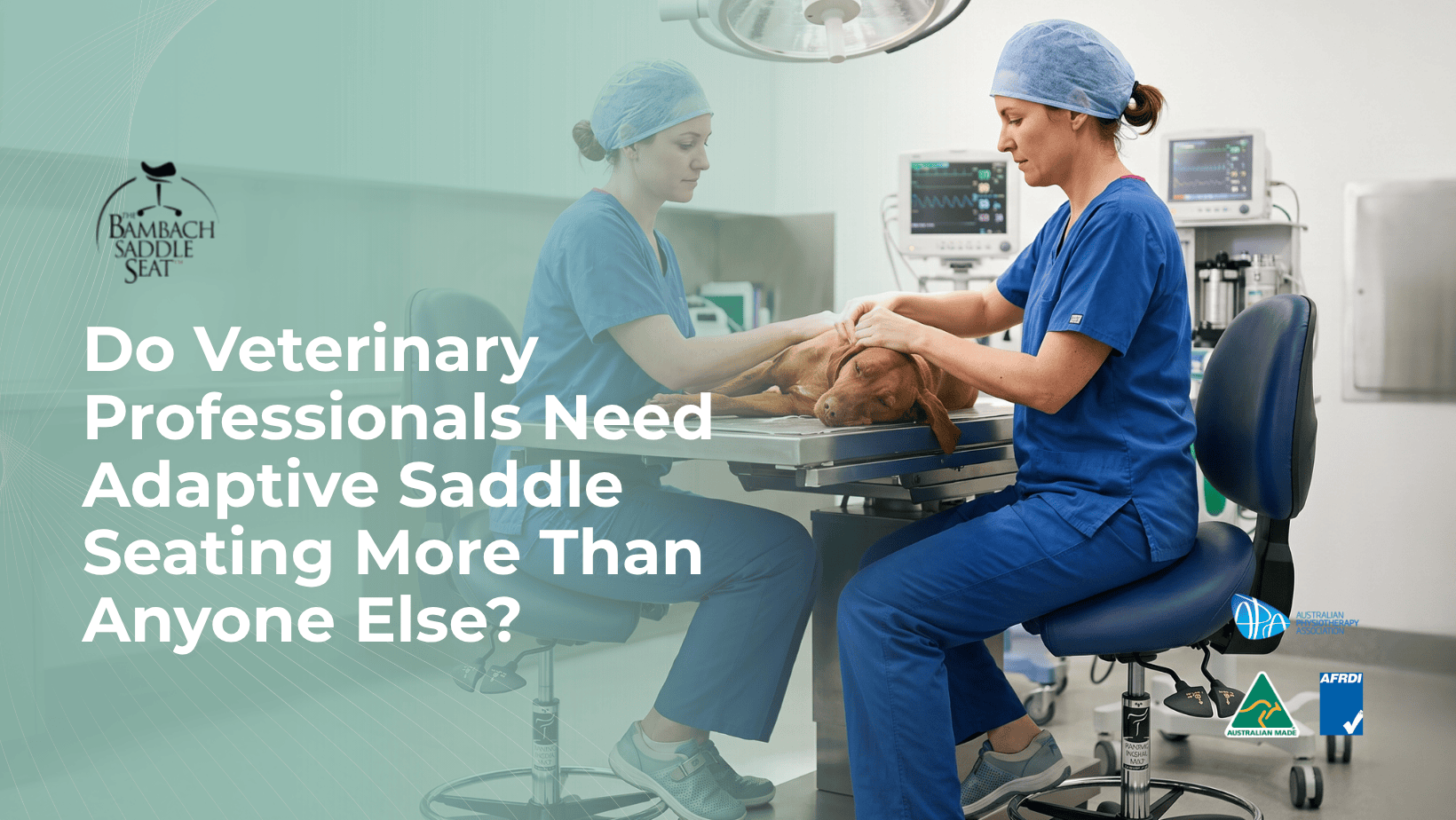
Do Veterinary Professionals Need Bambach Saddle Seating More Than Anyone Else?

Veterinary professionals face higher biomechanical strain and physical variability than almost any other healthcare discipline, including dentistry. While dentists treat humans in predictable, adjustable patient chairs, veterinary surgeons and nurses work on patients ranging from small kittens to 60 kg dogs. This creates extreme, unpredictable physical demands—forcing vets into severe spine twisting, static stooping over low examination tables, and awkward static postures during multi-hour surgeries.

According to data on workplace injuries from Safe Work Australia, work-related musculoskeletal disorders (WMSDs) represent the leading cause of chronic pain and early career retirement in clinical health environments. Furthermore, industry studies highlighted by the Australian Veterinary Association show that over 80% of practicing veterinarians report work-related back, neck, or shoulder pain during their careers.

The Bambach Saddle Seat resolves these physical demands by tilting the pelvis forward into a neutral position, opening the hip angle to 135°, and preserving the natural “S” curve of the spine without requiring constant backrest contact.

The Unique Postural Hazards of Veterinary Practice

  • Unpredictable Working Heights: Vets constantly switch between low examination tables, dental scale-and-polish stations, and elevated surgical suites, causing rapid lumbar fatigue.
  • Sterile Field Maintenance: Surgical procedures require absolute sterility. Standard manual lever adjustments force surgeons to break scrub or rely on assistance to adjust seat height.
  • Asymmetrical Upper-Body Strain: Holding animal limbs or applying downward pressure during clinical procedures creates severe rotator cuff tension when the core is unanchored on a flat stool.

Veterinary Biomechanics: Flat Stools vs. Bambach Veterinary Saddle Seating

Biomechanical FactorStandard Flat Vet StoolBambach Veterinary Saddle Chair
Lumbar CurveFlattened “C” curve (slumped lumbar kyphosis)Natural “S” curve (preserved lumbar lordosis)
Hip AngleClosed 90° angle (pinches hip flexors)Open 135° open hip stance
Surgical SterilityManual levers break sterile hand boundaryOptional foot-control gas lift for 100% hands-free height adjustment
Pelvic StabilityHips slide; torso leans forward to compensateContinuous contour locks sit bones (ischial tuberosities) in balance
Infection ControlStandard seams trap fur and clinical fluidsSeamless, medical-grade, fluid-resistant upholstery
Structural TestingBasic domestic or light office ratingAFRDI Level 6 certified for severe commercial/clinical use


Clinical Features Built for Australian Veterinary Clinics

Postural TechnologyClinical & Structural Impact
Hands-Free Foot Control

Surgical Height Adjustment

Preserves Surgical Sterility

Operate gas-lift height adjustments using a foot ring to maintain 100% surgical sterility in the operating room without breaking scrub.

AFRDI Level 6 Tested

Severe Commercial Certification

Heavy Clinical Durability

Independently tested to withstand heavy daily clinical loads, continuous movement, and sudden patient impacts without structural failure.


  1. Hands-Free Height Adjustment: Fitted with an optional foot-control mechanism, allowing veterinary surgeons to adjust chair height smoothly using their foot, preserving complete hand sterility during surgery.
  2. Continuous Pelvic Support: The unbroken, hand-upholstered saddle contour provides a solid foundation for precision surgical work, preventing the lateral shifting common in split-seat designs.
  3. Heavy-Duty Commercial Certification: Tested independently to AFRDI Level 6 (Severe Commercial Use), ensuring the frame withstands constant movement, heavy clinical daily wear, and dynamic shifts in weight.

Explore the complete Bambach Veterinary Category Range or read how Australian practitioners manage clinical posture in our Australian Case Studies Archive.


The foot-control system places a circular adjustment ring near the base of the chair. The surgeon depresses the ring with their foot to raise or lower the seat pneumatically. This allows seamless height adjustments during surgery without using their hands, maintaining strict sterile field protocols.

Precision surgical and dental procedures on animals require absolute lower-body stability. A continuous-contour seat pan provides a single, unbroken surface that locks the sit bones evenly in place. Split-seat designs use two independent moving pads that can shift under dynamic weight changes, reducing lateral stability when leaning over a patient.

Standard flat chairs hold the hips at 90 degrees, forcing the pelvis to tilt backward and flattening the lower back into an unhealthy "C" curve. An open 135-degree hip angle rotates the pelvis forward, naturally restoring the spine’s natural "S" curve. This takes pressure off spinal discs and reduces lower back strain during long surgeries.

Yes. Bambach veterinary models are upholstered in seamless, medical-grade vinyl engineered specifically for infection control. The material is fluid-resistant, easy to wipe down, and resistant to hospital-grade disinfectants, preventing animal fur, blood, and fluids from collecting in open seams.

AFRDI Level 6 is Australia's highest independent structural certification standard for severe commercial seating. Administered by the Australasian Furnishing Research and Development Institute, it verifies that the chair can withstand continuous, heavy-duty commercial wear, dynamic loads, and intense daily use without structural failure.

Yes. Veterinary nurses spend significant time leaning over exam tables, performing scale-and-polish procedures, taking X-rays, and running lab tests. A saddle stool keeps their spine aligned and mobile, allowing them to move quickly around the treatment room without straining their back and neck.

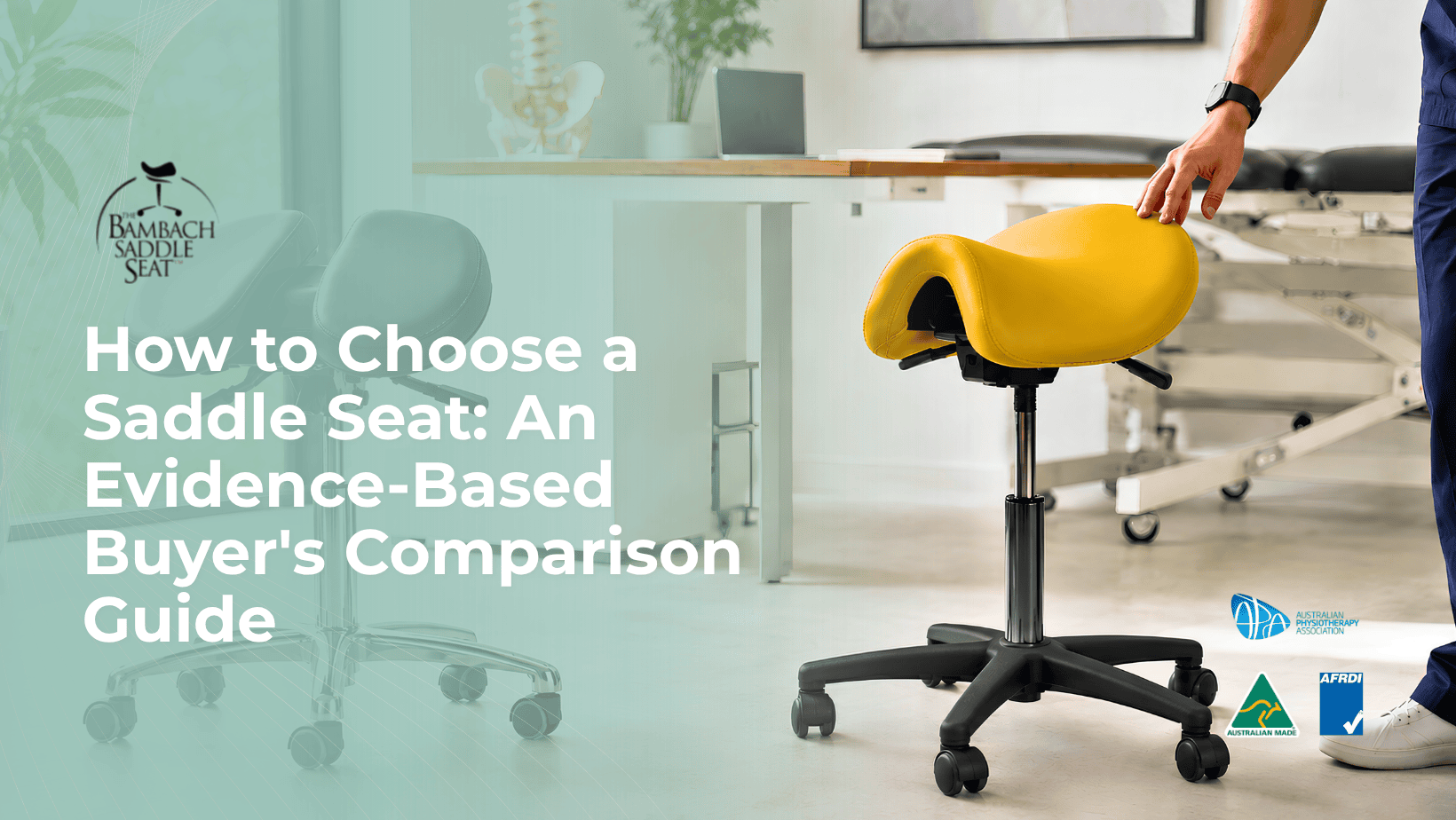
How to Choose a Saddle Seat: An Evidence-Based Buyer’s Comparison Guide

Saddle Seats are no longer a niche clinical product. Search for one today and you’ll find dozens of options — split-seat designs, single-contour designs, budget imports, and premium clinically certified models — all claiming to fix your posture. They are not interchangeable, and the differences between them have real consequences for your spine, your comfort, and how long the chair lasts.

A genuine saddle seat opens the hip angle to roughly 135 degrees, tilting the pelvis forward and letting the lumbar spine hold its natural “S” curve without a backrest. Beyond that shared principle, saddle seats diverge sharply in seat geometry (continuous-contour vs. split-seat), sizing options, certification, and country of design and manufacture — and those differences are what actually determine whether a chair helps your posture or just looks like it should.

This guide breaks down exactly what to evaluate before you buy, using the same criteria a physiotherapist, occupational therapist, or workplace health and safety (WHS) manager would use to assess clinical seating.

Why Not All Saddle Seats Are Built the Same

The term “saddle seat” describes a category, not a single design. Two chairs can both be called saddle seats and behave completely differently under your body.

The most consequential design fork in the category is seat geometry: whether the seat pan is a single, unbroken contour or is split into two separate pads.

Continuous-Contour Seats vs. Split-Seat Designs

FeatureContinuous-Contour SeatSplit-Seat Design
Pelvic stabilityLocks the pelvis with one uniform, uninterrupted surfaceTwo separate pads can shift independently, reducing lateral stability
Weight distributionEven distribution across both sit bones (ischial tuberosities)Can concentrate pressure unevenly if pads aren’t perfectly aligned to the user
Mobility & rotationFree rotation and side-to-side movement across one surfaceMovement can be restricted by the gap between pads
Best suited forClinical, surgical, dental, and precision tasks requiring a stable baseUsers who specifically want a divided seat for personal comfort reasons

Neither geometry is inherently “wrong” — but they solve different problems, and a chair built for one purpose won’t necessarily suit another. If your priority is a rock-stable base for precision clinical work (dentistry, surgery, veterinary procedures, fine motor tasks), a continuous, unbroken saddle contour designed specifically for that purpose is the evidence-backed choice.

Read also : https://www.bambach.com.au/about-us/case-studies/

5 Criteria for Evaluating Any Saddle Seat

Cut through the marketing claims and assess a saddle seat against these five factors. This is the same framework a workplace health and safety manager or referring clinician would use.

1. Country of Design vs. Country of Manufacture

Ask two separate questions: who designed this chair, and who makes it? Many saddle chairs sold in Australia are designed overseas and imported by a local distributor. That’s not automatically a problem — but it does mean the clinical credibility behind the design, the supply chain for parts and warranty claims, and the speed of local support can vary significantly. A chair designed and manufactured in Australia by the original clinical inventor offers a shorter, more accountable chain between the person who understood the biomechanical problem and the product in your workplace.

2. Clinical Origin and Endorsement

Look for a genuine clinical originator — ideally a named occupational therapist, physiotherapist, or other allied health professional credited with the design — rather than a general “ergonomic” claim. Also check for third-party endorsement from a recognised professional body (in Australia, the Australian Physiotherapy Association is the relevant benchmark), not just self-description marketing language. “Ergonomic” is an unregulated term in Australia; anyone can put it on a product listing.

3. Independent Structural Certification

For commercial or clinical environments, structural certification matters more than most buyers realise. In Australia and New Zealand, AFRDI Level 6 is the relevant independent testing standard for severe commercial use — it verifies the chair can withstand extreme daily loads, sudden movement, and continuous heavy use in clinics and offices. If a chair doesn’t disclose an independent certification, ask for it directly before buying for a commercial or multi-user setting.

4. Sizing and Custom Fit

Pelvic width varies significantly between individuals, and a single “one-size-fits-all” saddle seat will not properly support every body. Multiple seat sizes, adjustable gas-lift heights, and stem height options are what allow a saddle chair to genuinely fit an individual rather than approximate a fit. A wide range of sizing options is a strong signal that the manufacturer understands the anatomy they’re designing for.

5. Warranty, Stock Availability, and Local Support

A saddle chair is a multi-year investment, not a disposable purchase. Check the warranty length (five years or more is the benchmark for commercial-grade seating), whether the model you want is actually in stock and ready to ship, and whether local fitting or adjustment support is available if the chair doesn’t feel right initially. A long warranty paired with a genuine money-back trial period signals a manufacturer confident in their product’s fit.

Comparison Checklist: What to Ask Before You Buy

Use this as a direct checklist when comparing saddle chair options:

  • Is the seat a continuous contour, or a split/divided design?
  • Where was this chair designed, and by whom?
  • Where is it manufactured?
  • Is it endorsed by a recognised clinical body (e.g. the Australian Physiotherapy Association)?
  • Is it independently certified for commercial use (e.g. AFRDI Level 6)?
  • How many seat sizes are available, and how is the right size determined?
  • What is the warranty length, and does it cover the frame, gas lift, and upholstery?
  • Is the model in stock, or is it on backorder/preorder?
  • Is there a money-back trial period if the fit isn’t right?
  • Is the upholstery available in surgical-grade or infection-control vinyl if needed for a clinical setting?

The Original, Australian-Designed Saddle Seat

The Bambach Saddle Seat was designed in 1989 by Mary Gale, an Australian occupational therapist, after observing that patients who could not sit upright unsupported on a standard chair could sit balanced and symmetrical on horseback. That clinical observation became the original contoured saddle seat — a single, unbroken contour engineered to open the hip angle to 135 degrees and let the spine self-support in its natural curve.

Nearly 36 years on, Bambach remains designed, manufactured, and hand-upholstered in Marrickville, Sydney — not imported and repackaged. It is endorsed by the Australian Physiotherapy Association, independently tested to AFRDI Level 6 for severe commercial use, and available in multiple seat sizes and stem heights to fit individual bodies rather than approximate them. Every chair carries a five-year warranty and a 30-day money-back trial.

If you’re comparing saddle chairs and want to see how the original, clinically designed model measures up against the checklist above, explore the Bambach range or take our two-minute quiz to find the right seat, size, and configuration for your profession and body.

Still comparing options?

Take the two-minute seat finder to see which model, size and configuration suits your work, or get in touch if you’d rather talk it through. Call +61 2 8966 4800.


AFRDI Level 6 is a genuine, independent structural testing standard administered by the Australasian Furnishing Research and Development Institute. It verifies a chair can withstand severe, continuous commercial use without structural failure. Unlike the word "ergonomic" — which is unregulated in Australia and can be used by any manufacturer — AFRDI certification is independently verified and should be disclosed by any manufacturer marketing a chair for commercial or clinical use.

It can. A chair designed and manufactured locally by its original clinical inventor typically means a shorter supply chain for parts, warranty support, and stock availability, plus more direct accountability for the clinical claims behind the design. An imported chair isn't automatically inferior, but it's worth confirming local warranty support, stock lead times, and who is actually responsible for the clinical claims being made.

Because pelvic width varies significantly between individuals, a single "one size fits all" saddle seat cannot properly support every body. Look for a manufacturer offering multiple distinct seat sizes plus adjustable stem heights, so the chair is fitted to your specific anatomy rather than approximated.

Check our products HERE

No product or piece of furniture is "AHPRA approved." AHPRA (the Australian Health Practitioner Regulation Agency) registers and regulates individual healthcare practitioners — such as physiotherapists and dentists — not commercial furniture or medical devices. Genuine clinical credibility for a saddle chair comes from endorsement by a recognised professional body, such as the Australian Physiotherapy Association, and independent structural certification such as AFRDI Level 6.

Most users report a one- to two-week adjustment period. Because saddle seating actively engages core and postural muscles that are typically dormant on a standard flat chair, some mild muscle awareness during the first fortnight is normal and expected as your body adapts to active sitting.

Five years is the benchmark for a commercial-grade saddle chair, covering the frame, gas lift, and upholstery. Anything significantly shorter may indicate the manufacturer doesn't expect the chair to hold up under sustained daily commercial use.

A genuine money-back trial period — typically around 30 days — is a strong signal of manufacturer confidence. Because fit and adjustment period both matter for saddle seating, a trial period lets you assess whether a specific model and size genuinely suits your body and workspace before you're locked into the purchase.

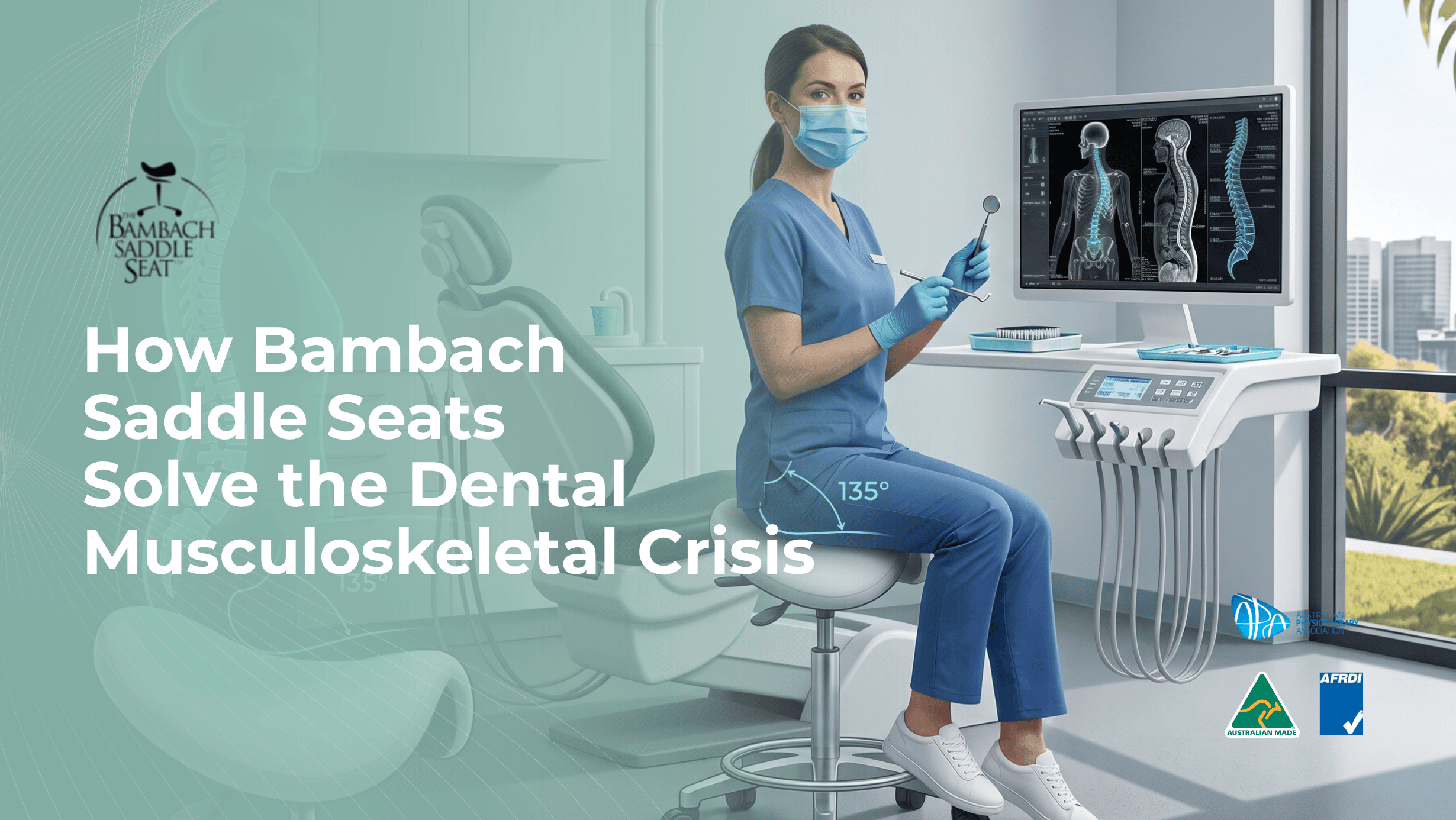
How Bambach Saddle Seats Solve the Dental Musculoskeletal Crisis

The dental operatory is an ergonomic hazard zone. Day after day, dentists, dental hygienists, and assistants operate in confined spaces, holding precise, static, and asymmetrical postures for hours at a time. The physical toll of this profession is not just uncomfortable—it is a leading cause of premature career retirement.

The Bambach Saddle Seat was engineered specifically to solve the biomechanical failures of traditional operatory seating, restoring natural anatomy while you treat patients.

The Hidden Epidemic in Dentistry: What the Data Shows

Musculoskeletal disorders (MSDs) among dental professionals are among the highest reported across all healthcare fields. When forced to sit on standard flat stools while leaning over a patient’s oral cavity, the spine’s natural alignment collapses.


StageAnatomical TriggerBiomechanical ImpactClinical Outcome
1. Hip PostureStandard 90° Seating AngleTightens hamstring tendons, forcing pelvic distortionPosterior Pelvic Tilt (Pelvis rotates backward)
2. Spinal AlignmentLoss of Lumbar CurveLumbar spine flattens from natural $S$-shape into a $C$-shapeElevated intervertebral disc pressure & compression
3. Upper Body StrainForward Head ProjectionShifts center of gravity forward over the operatory fieldSevere trapezius strain & cervical spine compression
4. Muscle FatigueStatic Isometric ContractionMuscles remain constantly engaged to prevent falling forwardStatic Ischemia (Oxygen starvation & chronic pain)

Clinical studies continuously highlight the severity of this issue:

  • Up to 93% Overall Prevalence: A comprehensive systematic review published on PubMed revealed that between 64% and 93% of dental professionals report general work-related musculoskeletal pain, with the neck (19.8%–85%) and lower back (36.3%–60.1%) being the primary zones of severe chronic pain.
  • Significant Postural Risk Reduction: A meta-analysis published in PLOS ONE confirmed that saddle seats provide a statistically significant reduction in ergonomic risk scores compared to conventional dental seats, directly correcting working posture during clinical tasks.

Why Traditional Dental Stools Cause Pain: According to Dentists

When dental practitioners describe their chronic symptoms, the same three core issues repeatedly surface:

1. Static Ischemia from Asymmetrical Leaning

To view the upper molars or work in tight quadrants, dentists twist their torsos while holding their arms in isometric contraction. On a flat stool, back muscles must work constantly to keep the upper body from falling forward. This continuous strain starves the muscular tissue of oxygen (static ischemia), creating intense burning sensations across the upper back and shoulders.

2. Flattening of the Lumbar Curve

Standard flat stools force the hips into a 90 degrees angle. This angle pulls on the hamstring tendons, tilting the pelvis backward and flattening the natural S-curve of the lower back into a slumped, collapsed C-shape.

3. Cervical Spine & Sciatic Compression

When the lower spine collapses into a C-shape, the head automatically projects forward to maintain line of sight. For every inch the head moves forward, the cervical spine experiences an additional 10 pounds of force. This leads to nerve impingement, disc herniation, and radiating sciatic pain down the legs.

The Bambach Solution: How the Saddle Seat Reverses Dental Strain

The Bambach Saddle Seat solves these issues by changing how your body interacts with gravity while seated.


StageAnatomical TriggerBiomechanical ImpactClinical Outcome
1. Hip PostureErgonomic 135° Open Hip AngleRelieves hamstring tension on the ischial tuberositiesNeutral Pelvic Tilt (Pelvis rotates naturally forward)
2. Spinal AlignmentRe-established Lumbar LordosisSpine effortlessly returns to its natural $S$-shapeReduced disc compression & sciatic nerve relief
3. Upper Body StrainCentered Head & Shoulder PostureWeight of head rests directly over the shoulder girdleTrapezius relaxation & neck tension elimination
4. Muscle FatigueSkeletal Weight-BearingUpper body weight is transferred directly to skeletal structureRestored vascular flow & reduced fatigue


1. Re-establishing the 135-Degree Open Hip Angle

By opening the hip-to-torso angle from 90degrees to 135degrees, the Bambach seat naturally tilts the pelvis forward. This places the lumbar spine into its neutral, self-supporting S-curve without requiring active muscle strain.

2. Closer Proximity to the Operatory Patient

Because the thighs slope steeply downward (45degrees), dentists can move their chair much closer to the patient table. This eliminates the need to reach or hunch forward over the patient’s chest, keeping elbows relaxed and near the body.

3. Diaphragmatic Breathing and Core Stability

Opening the pelvis prevents chest and abdominal compression. Dentists report deeper diaphragmatic breathing and reduced fatigue during extended surgical or restorative procedures.

Real Clinical Outcomes: Case Studies & Dental Evidence

The clinical effectiveness of the Bambach Saddle Seat is demonstrated across numerous real-world case studies in dental practices:

  • Oral & Maxillofacial Surgeon Case Study: An oral surgeon suffering from debilitating sciatic pain and lower back strain restored his career by switching to a Bambach seat. By maintaining a neutral pelvic tilt, he eliminated the disc pressure causing his nerve compression and returned to performing long procedures pain-free. Read the full case in our Bambach Clinical Case Studies.
  • Dental Assistant Neck Strain Case Study: A dental assistant suffering from severe upper thoracic and neck fatigue used the Bambach seat with a foot-ring to elevate her position over the operator. The natural spinal alignment eliminated her upper back muscle starvation, resulting in zero thoracic pain.

Explore our custom operatory configurations on our Bambach Dental Seating Page.


A standard dental stool supports the legs at a 90degrees angle, flattening the spine's natural curve. The Bambach Saddle Seat opens the hip angle to 135degrees, which naturally tilts the pelvis forward and holds the spine in an effortless, self-supporting S-shape.

Yes. Dental hygienists and assistants experience intense static loading from leaning over patients at elevated heights. The Bambach Saddle Seat—especially when configured with a foot-ring for elevated positioning—stabilizes the core and prevents upper thoracic ischemia and neck fatigue.

Read also : https://www.bambach.com.au/ergonomic-chairs-by-profession/dental/

Most dental professionals adapt to a Bambach seat within 1 to 2 weeks. Because standard stools allow core muscles to turn off, switching to a saddle seat reactivates dormant postural muscles, which may cause mild initial awareness as core strength adapts.

Because a saddle seat holds your pelvis in a neutral position, your spine naturally supports itself without needing a backrest during active clinical work. However, an optional adjustable backrest is available for rest periods between patient procedures.

The downward sloping thighs of a saddle seat reduce the forward clearance required by your legs. This allows you to position the chair much closer to the dental chair, eliminating the need to bend forward at the waist to reach the patient's mouth.

Yes. Musculoskeletal disorders are a primary cause of early retirement among dentists. By relieving disc pressure, eliminating static muscle starvation, and maintaining spinal alignment, the Bambach seat mitigates long-term occupational injury risks.

Clinical ergonomics research indicates that a 135degrees open hip angle is optimal for seated work. This position balances sitting ease with standing posture, reducing lumbar disc pressure while keeping the head centered over the shoulders.

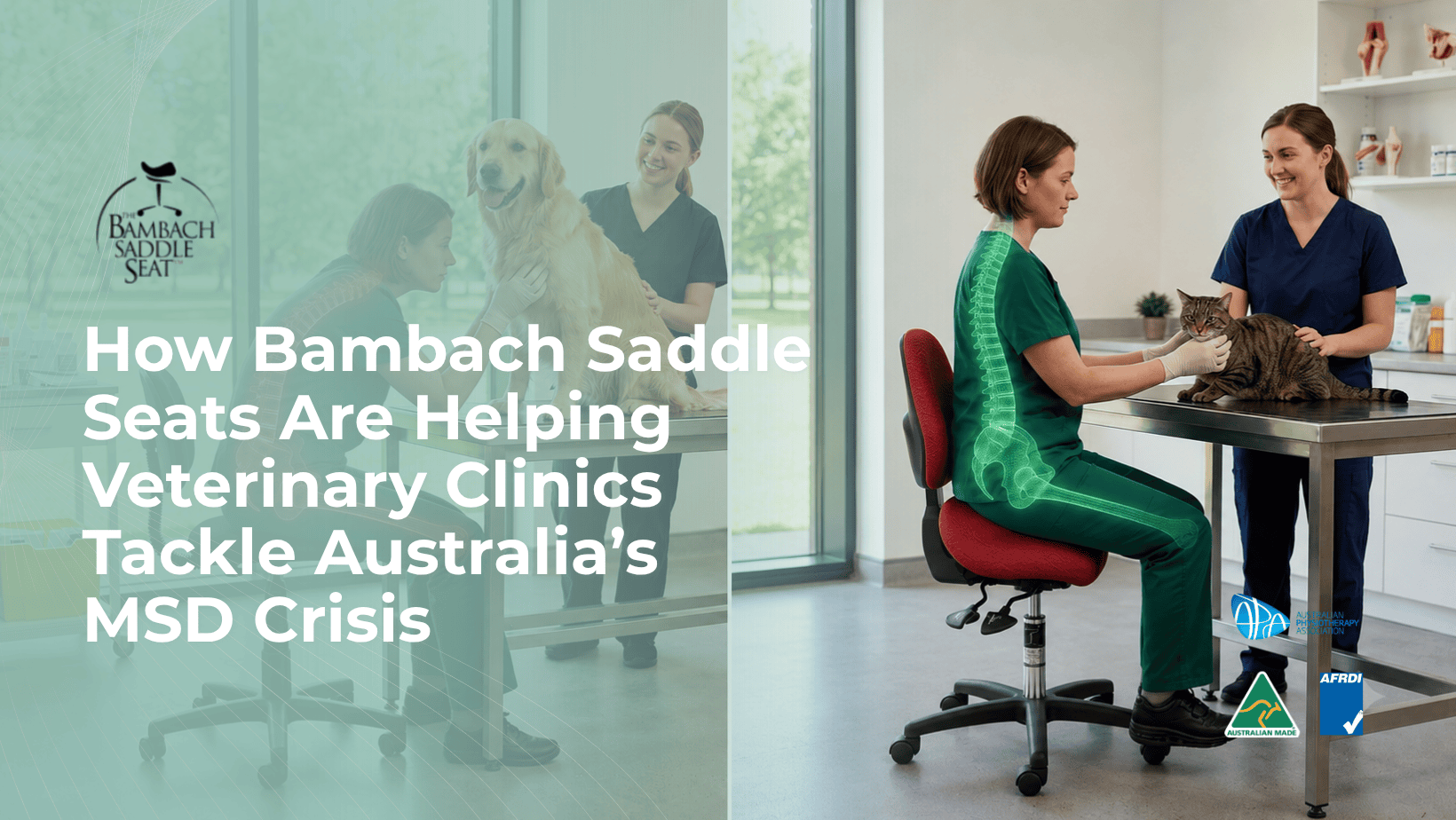
How Bambach Saddle Seats Are Helping Veterinary Clinics Tackle Australia’s MSD Crisis

The Hidden Cost of Animal Healthcare

The veterinary profession is physically demanding and unpredictable. Consequently, it is inherently hazardous to the human body. Devoted to their patients, veterinarians and vet nurses routinely put animal health above their own.

As a result, the clinical consequence of this dedication is severe. In fact, a staggering 67% of veterinary surgeons suffer from workplace musculoskeletal disorders (MSDs).

An Industry-Wide Career Hazard

At Bambach, we recognise that back pain is not just an occupational hazard. Instead, it is an industry-wide crisis that drives passionate professionals into early retirement.

For decades, we have partnered with animal healthcare teams to engineer optimal ergonomic seating. Therefore, we do not just supply furniture. Ultimately, we provide a proven biomechanical intervention.

Today, over 300 veterinary practices across Australia rely on the Bambach Saddle Seat. As a result, clinics prevent injuries, maintain precision, and extend clinical careers. In this guide, we break down the evidence behind the veterinary MSD crisis. Furthermore, we explain why our original continuous-contour design remains the ultimate defense.

Why Do 67% of Veterinarians Suffer from Musculoskeletal Injuries?

To understand why vet clinic MSD prevention is critical, we must examine daily clinical routines. Specifically, we need to analyze the physical realities of consult rooms and surgical suites.

Standard medical stools and office chairs are designed for static, desk-based tasks. Consequently, they force hip angles into a closed 90-degree position. This posture flattens the lumbar spine into a weak, slumped “C” shape.

When a veterinarian leans forward on a flat seat to examine a nervous dog on the floor or a cat on a table, spinal strain multiplies. As a result, the already compromised spine bears massive, asymmetrical stress.

Specifically, the primary causes of veterinary MSDs include:

  • Static Forward Flexion: Prolonged leaning over surgical tables or microscopes without pelvic support.

  • Awkward Reaching: Twisting to access instruments, medications, or to restrain uncooperative patients.

  • Lack of Core Stability: Conventional flat stools require lower back muscles to contract constantly. Consequently, this leads to rapid muscle fatigue and spasms.

Treating animals requires mobility, balance, and fine-motor control. Therefore, when your chair fights your natural anatomy, your spine suffers.

How Does Bambach Saddle Chair Prevent Vet Clinic Back Pain?

We engineered a seating solution to set your spine free. Created by an Australian occupational therapist, Mary Gale, the Bambach Saddle Seat utilizes an unbroken contour. As a result, it replicates the natural posture achieved during horseback riding.

Here is how our original Australian veterinary saddle chair directly combats daily physical stress:

1. The 135-Degree Anatomical Advantage

By opening the hip angle to 135 degrees, the Bambach naturally abducts the legs. Consequently, it anchors the pelvis in an upright, neutral stance. This structural alignment effortlessly preserves the healthy “S” curve of the spine. Therefore, clinicians maintain correct posture even when leaning down toward floor exams.

2. Unbroken Core Stability

In contrast to cheap split-seat designs that lack uniform support, our solid-seat geometry locks the pelvis in place. Consequently, this provides an ultra-stable foundation. It frees your upper body to reach, twist, and perform delicate procedures—such as suturing or dental scaling—without straining lumbar discs.

3. Maximum Mobility and Compact Footprint

Veterinarians must move dynamically around exam tables. Fortunately, the straddle posture gives you a wide, stable base. As a result, clinicians can easily propel the chair using their legs. Additionally, the compact footprint allows you to sit extremely close to treatment tables without bulky seat pans or armrests blocking your path.

Evidence Roundup: Trusted by 300+ Australian Practices

The effectiveness of the Bambach Saddle Seat is not theoretical. In fact, it is clinically proven and extensively tested.

“We didn’t rewrite the laws of anatomy. We just built a clinical stool to respect them.”

Currently, our seats form the foundation of workplace safety in over 300 veterinary practices nationwide. From small suburban clinics to major emergency hospitals, practice managers invest in Bambach to lower absenteeism, reduce workers’ compensation claims, and boost daily efficiency.

Furthermore, the occupational hazards of veterinary medicine are well-documented in scientific literature. According to research published in the National Library of Medicine, an overwhelming 96% of surveyed veterinarians report experiencing work-related MSDs within a single year. Specifically, the lower back, shoulders, and neck are the most frequently damaged areas.

Additionally, a cross-sectional survey of specialist veterinary surgeons revealed that 93% experienced musculoskeletal symptoms directly linked to performing surgery. Furthermore, this discomfort worsened significantly during extended procedures.

You can read the full study here: Orthovetsupersite Surgical Musculoskeletal Study.

Veterinarians using our seats report immediate relief from neck, shoulder, and lower back strain. By opening the hip stance to 135 degrees, the saddle seat tilts the pelvis forward into neutral balance. Consequently, this alignment counteracts the forward-leaning postures that drive veterinary MSDs.

In addition, this upright posture prevents chest cavity compression. As a result, the diaphragm moves freely, reducing abdominal compression, increasing oxygen intake, and improving circulation during high-stress surgeries.

What is the Best Ergonomic Chair for Vets in Australia?

When upgrading clinic furniture, you need equipment built for demanding medical environments. Below is a clear comparison of what to look for when selecting the best veterinary chair in Australia:

Essential FeatureWhy It Matters for Vet ClinicsThe Bambach Standard

Medical-Grade Upholstery

Veterinary clinics are messy. Chairs must withstand fluids, fur, and harsh disinfectants.

Seamless, surgical-grade vinyl that is non-porous, durable, and easy to sanitise.

Unbroken Pelvic Support

Split seats lack stability. Consequently, they force core muscles to overwork and fatigue.

Original, continuous saddle contour that delivers immediate pelvic locking.

Height Customization

Vets work at varied heights, ranging from floor exams to raised surgical tables.

Multiple gas stem heights and custom foot-ring options tailored to your clinic.

Clinical Endorsements

Ergonomic is often a buzzword. Therefore, you need scientifically validated seating.

OT-designed, AFRDI Level 6 certified, and trusted by 300+ Australian practices.

Protect Your Team and Extend Your Career

Your practice relies entirely on the health and stamina of your team. Therefore, stop letting flat, unsupportive stools shorten your clinical career.

Instead, invest in a biomechanical solution that actively protects your spine. Explore our range of Veterinary Saddle Chairs to see how we can customize seating for your clinic.

Are you ready to eliminate workplace back pain and tackle the MSD crisis head-on? Take our two-minute seat finder quiz today, or contact our team to discuss a multi-chair setup for your practice.


During surgery, vets often hold static, leaned-forward postures for hours. The Bambach locks the pelvis in an upright tilt, maintaining the spine's natural "S" curve even when leaning forward. This prevents the lower back from collapsing into a painful "C" shape, eliminating the primary cause of surgical back pain.

Yes. The straddle position of the Bambach provides a wide, incredibly stable base of support. Because your feet remain flat on the floor and your legs are separated, you have far greater balance and leverage to safely handle or restrain animals than you would balancing on a standard flat stool.

Absolutely. We customize each Bambach chair with the appropriate gas stem height for your specific needs. We can configure low-height stems for examining large dogs near the floor, or high-drafting stems with foot-rings for working comfortably at elevated surgical or dental tables.

We know vet clinics require strict hygiene. Our chairs can be upholstered in high-quality, surgical-grade vinyl. This material is non-porous, waterproof, and designed to withstand the harsh chemical disinfectants used in animal hospitals to prevent cross-contamination.

Split-seat designs lack the continuous surface area required to properly stabilize the pelvis. In a fast-paced vet clinic, you need the reliable, uniform support of a continuous-contour seat so you aren't fighting to balance on two separate pads while trying to focus on a critical patient.

Because standard chairs allow core muscles to weaken, it typically takes 1 to 2 weeks for a practitioner's body to adapt to the active sitting posture of a Bambach. We recommend transitioning gradually, starting with a few hours a day during consultations before moving on to multi-hour surgeries.

Yes, we work directly with practice managers and veterinary teams across Australia to ensure the correct seat size, height, and accessories are selected for your specific clinic environment and staff body types.

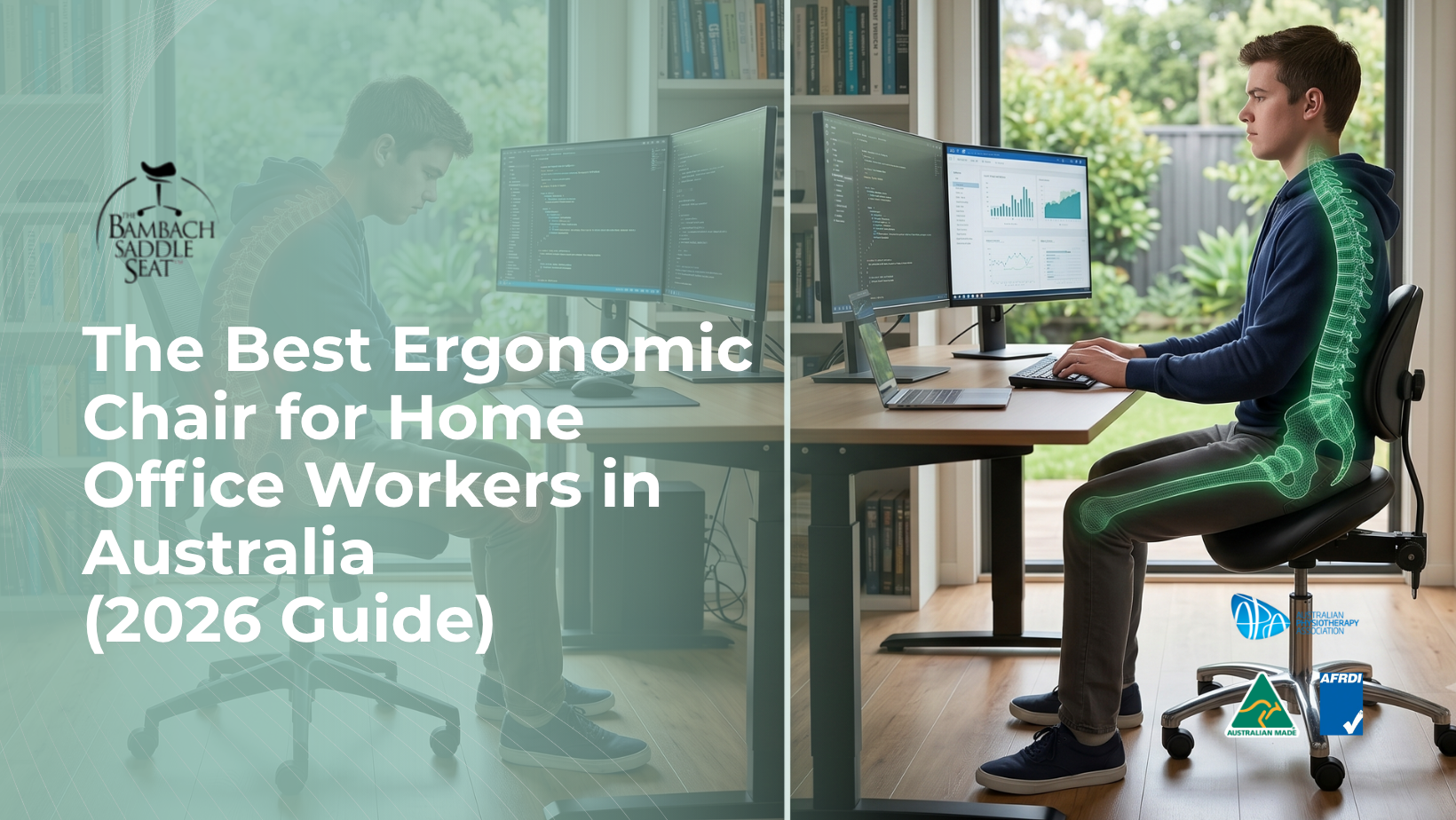
The Best Ergonomic Chair for Home Office Workers in Australia (2026 Guide)

The shift to remote work is no longer a temporary phase; it is the permanent reality for millions of Australians. But while our commutes have disappeared, a new epidemic has taken their place: severe, chronic musculoskeletal pain. If you are struggling with a work from home chair back pain, you are not alone.

The problem isn’t your work ethic, and it isn’t your body. The problem is your furniture.

For decades, the standard office chair has forced the human body into a “90-degree trap”—a flat-pan design that actively fights your natural anatomy, forcing your spine to collapse. At Bambach, we believe your furniture should work with your biology, not against it. In this comprehensive 2026 guide, we will unpack exactly why traditional seating fails, what criteria actually matter when upgrading your workspace, and why the original continuous-contour design makes the Bambach Saddle Seat the best home office chair Australia 2026 has to offer.

Read also : https://www.bambach.com.au/case-study/office-shoulder-neck-pain/

Why Your Current Home Office Chair is Causing Back Pain

To understand what makes the best ergonomic chair home office Australia professionals can buy, you first have to understand why standard chairs cause so much damage.

When you sit on a traditional, flat-seated office chair, your hips are locked at a 90-degree angle. This unnatural geometry forces your pelvis to tilt backward (a posterior tilt). The moment your pelvis rolls backward, the natural, healthy “S” curve of your lumbar spine is flattened into a weak, collapsed “C” shape.

This is the “sacral slump.”

Once the foundation collapses, a destructive whole-body chain reaction begins:

  • Lumbar Compression: Your lower spinal discs bear massive, asymmetrical weight, leading to herniations and sciatica.
  • Thoracic Restriction: Your chest caves in, physically restricting your diaphragm and reducing oxygen intake, which accelerates fatigue.
  • “Tech Neck”: To compensate for the slumped spine and still see your monitor, your neck juts forward, forcing your trapezius and shoulder muscles to work overtime.

Standard ergonomic chairs try to fix this by adding passive lumbar cushions and massive backrests. But treating a collapsed foundation by simply propping it up from behind is a flawed premise. You don’t need a better backrest; you need a better foundation.

5 Criteria for Choosing the Best Home Office Chair in Australia

When assessing the market for an ergonomic upgrade, cut through the marketing jargon and evaluate chairs based on biomechanical reality. Here are the five critical criteria you must consider:

1. Active Spinal Support (Pelvic Alignment)

Passive support (leaning back into a cushion) turns off your core and breeds weakness. Active support focuses on the pelvis. The ideal chair must naturally guide your pelvis into a neutral, upright position (anterior tilt). By stabilizing the pelvis, your spine effortlessly stacks into its natural architecture without requiring constant muscle tension.

2. Customisation and Fit

A chair built for a 160cm graphic designer will not biomechanically support a 190cm software engineer. True ergonomic seating requires precise customization. Look for seating solutions that offer variations in seat size, adjustable gas stems for height, and foot-support options to ensure your feet are perfectly anchored.

3. Clinical Certification and Endorsement

Do not rely on the word “ergonomic”—it is an unregulated marketing term. Look for chairs that are actively utilized in medical environments and hold genuine endorsements from credible bodies, such as the Australian Physiotherapy Association (APA). If a chair isn’t trusted by spine specialists, it doesn’t belong in your home office.

4. Durability & Build Quality

Your home office chair is the most heavily used piece of equipment you own. Cheap plastics, degraded foam, and flimsy castors will break down within a year. A premium chair should be manufactured locally with high-density, automotive-grade materials designed to withstand decades of heavy, daily use.

5. Warranty and Local Support

Investing in your spinal health is a significant decision. The best chairs in Australia are backed by robust, multi-year warranties and accessible local customer support teams who can assist with adjustments, parts, and personalized fitting advice.

Head-to-Head: The Biomechanical Comparison

How do the most popular WFH seating options actually stack up against each other? We break down the anatomical impact of four common choices.

Feature / Chair TypeStandard Ergonomic ChairKneeling ChairBalance BallThe Bambach Saddle Seat
Pelvic PositionSlumped backward (Posterior tilt)Tilted forward (but locks the knees)Unstable, requires constant micro-adjustmentsNeutral & upright (Anterior tilt)
Spine AlignmentUnnatural “C” shape collapse“S” curve, but transfers strain to shins“S” curve, but highly fatiguing over timeHealthy, natural “S” curve, sustained effortlessly
Hip AngleCompressed 90° angleCompressed, restrictive angleOpen, but lacks solid foundationOpen, dynamic 135° angle
Core Muscle UseDormant, leading to severe weaknessEngaged, but staticOver-engaged, leading to rapid exhaustionActive, stabilizing the torso without fatigue
Long-Term ComfortPoor (Pain develops over hours)Moderate (Shin and knee pain common)Poor (Not sustainable for 8-hour days)Excellent (Designed for all-day clinical use)


Why the Bambach is the Ultimate Home Office Solution

We don’t just change your chair. We restore your posture.

Over thirty-five years ago, an Australian occupational therapist revolutionized clinical seating by looking at the only posture where the human spine is perfectly balanced while seated: horseback riding. This insight led to the creation of the original, unbroken continuous-contour design that defines the Bambach Saddle Seat. (Read the History of Bambach)

Here is why we remain the benchmark for the best saddle chair Australia has to offer:

The Power of the 135-Degree Angle

By dropping your thighs into a natural 135-degree angle, the Bambach naturally abducts your legs. This skeletal geometry locks your pelvis into the perfect upright position. You don’t have to try to sit up straight; the chair’s contour forces your anatomy into alignment.

Sit Unbroken

Unlike cheap copycats that use split or divided seat pans, Bambach utilizes a solid, continuous-contour seat. This unbroken design ensures uniform weight distribution across your sit bones without sacrificing the structural surface stability required to keep your pelvis anchored. We keep our seat unbroken so your spine can stay uncompromised.

Free Your Upper Body

Because your lower body is perfectly stabilized by the saddle’s pommel and cantle, your upper body is completely liberated. Your chest opens, improving breathing. Your shoulders drop, eliminating “tech neck.” You gain total freedom to reach, pivot, and type without putting hazardous twisting forces on your lower back.

Ready to Break the 90-Degree Trap?

Stop fighting your furniture. If you are serious about eliminating back pain and upgrading your workspace to a clinical standard, it is time to invest in the foundation of your health.

Explore our dedicated range designed specifically for modern remote professionals by visiting our Home Office Seating Solutions.

Because every body is unique, the perfect fit is crucial. Use our guide to Choose The Right Model and tailor your Bambach to your exact height, workstation setup, and professional needs. Join the thousands of Australians who have discovered the Best Saddle Chairs in Australia and sit the way your body was built to.


While a height-adjustable desk is an excellent addition to any home office, it is not strictly necessary. Because a saddle seat opens your hip angle to 135 degrees, you will sit slightly higher than you would in a standard office chair. We can customize the gas stem height of your Bambach to work perfectly with your existing desk, or you can pair it with desk risers for optimal monitor and keyboard height.

Because standard chairs allow your core muscles to go completely dormant, transitioning to active seating requires a brief adjustment period. Most users experience a "waking up" of their core and pelvic muscles during the first 1–2 weeks. We recommend building up your time in the Bambach gradually—starting with a few hours a day—until your body readapts to its natural, upright architecture.

Absolutely. Unlike balance balls or kneeling chairs, which cause rapid fatigue or transfer pressure to your shins, the Bambach is designed for all-day clinical and professional use. Once your core muscles have adjusted to active sitting, the solid, continuous contour of the saddle provides the long-term structural support needed to work an 8-hour day with zero postural fatigue.

Many generic online alternatives use a divided or split-seat design. These split pans fail to provide uniform weight distribution and lack the structural surface stability required to keep your pelvis firmly anchored. The Bambach Saddle Seat utilizes an original, continuous-contour design, manufactured locally in Australia to rigorous medical standards and endorsed by the Australian Physiotherapy Association. When it comes to the foundation of your spine, compromising on geometry means compromising on relief.

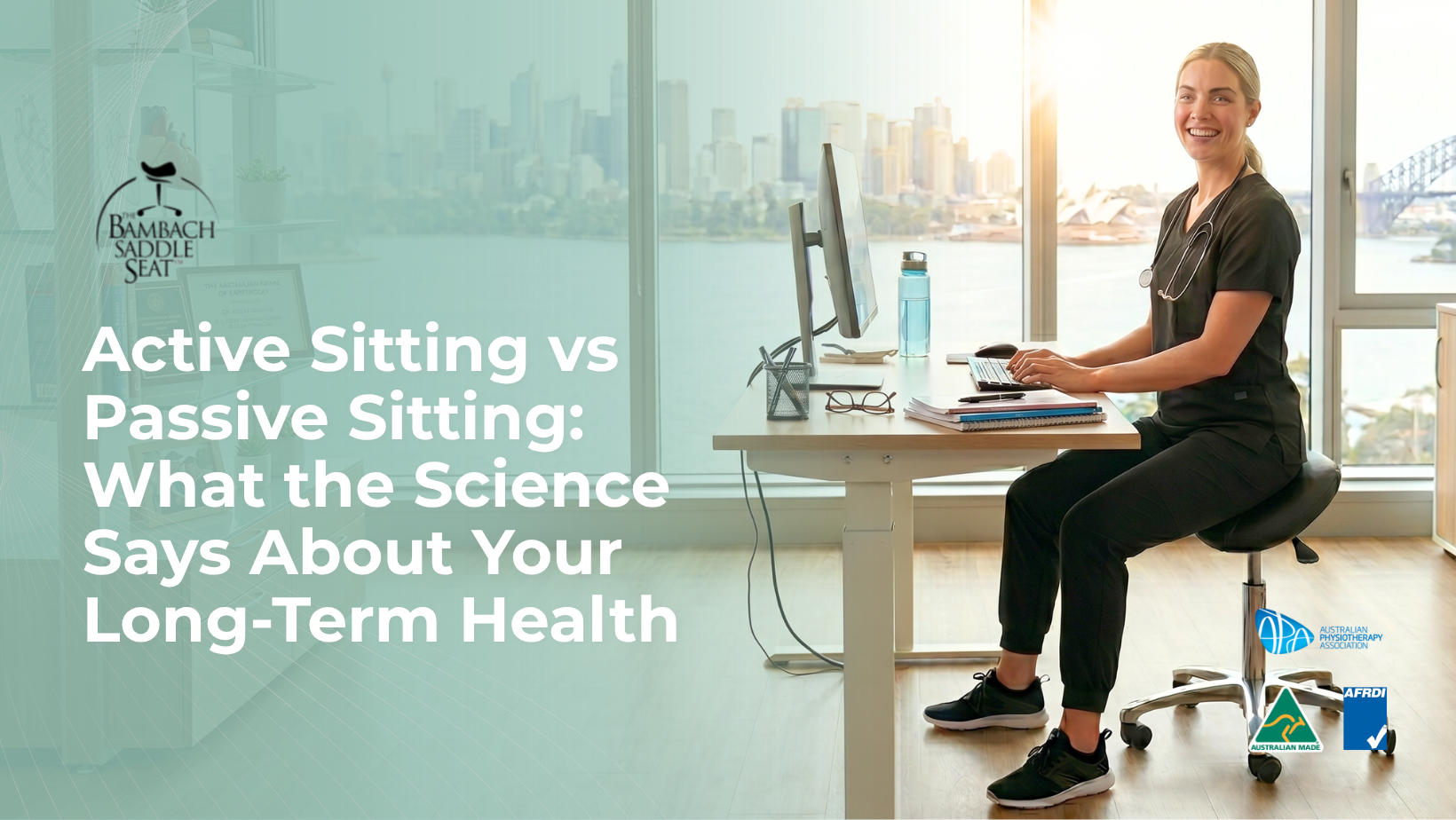
Active Sitting vs Passive Sitting: What the Science Says About Your Long-Term Health

For decades, the standard response to the modern corporate sitting epidemic has been to modify the traditional office chair. Office furniture manufacturers have added memory foam cushions, articulating lumbar supports, multi-axis armrests, and complex reclining mechanisms. Yet, despite these multi-billion-dollar design iterations, work-related musculoskeletal disorders (WMSDs) remain the leading cause of serious workers’ compensation claims across Australia.

The medical community has reached a definitive consensus: the problem does not lie in a lack of adjustable components. The problem lies in the core design philosophy of classic seating.

Traditional ergonomics relies almost exclusively on passive sitting. However, pioneering biomechanical research shows that the human body can only achieve true musculoskeletal health through active sitting.

Understanding the profound clinical distinction between these two concepts is crucial for any business owner, health practitioner, or remote worker looking to preserve long-term spinal health. This guide dives into the peer-reviewed science behind muscle activation, intervertebral disc hydration, and structural endurance to reveal why the chair you choose defines your physiological future.

The Biomechanical Failure of Passive Seating

To understand the benefits of an [active sitting chair australia], we must first analyze the mechanical failure of traditional office furniture.

Passive sitting occurs when a chair takes over the structural duties of the human musculoskeletal system. When an individual sits on a conventional 90-degree office chair, the flat seat pan forces the thighs into a right angle relative to the torso. Hamstring tension and mechanical constraints pull the base of the pelvis backward, creating a posterior pelvic tilt.

Traditional Seating (90° Hip Angle):

Pelvis Tilts Backward ➔ Lumbar Spine Collapses ➔ “C”-Shaped Slump

When the pelvis tilts backward, the natural, shock-absorbing “S” curve of the spine collapses. The lumbar spine is forced to flatten, shifting from its healthy forward curve (lordosis) into an outward curve (kyphosis). This structural collapse results in the ubiquitous “C”-shaped slump.

Because the body cannot maintain this posture unsupported without acute fatigue, the sitter collapses backward into the chair’s backrest. At this moment, sitting becomes passive. The chair’s cushions and backrest cradle the body, causing the core stabiliser muscles—such as the multifidus and transversus abdominis—to completely deactivate.

The Consequences of Muscular Deconditioning

Over months and years, this muscular deactivation leads to muscle atrophy and severe postural deconditioning. When the deep core muscles stop firing, the entire burden of supporting the upper body shifts away from the muscles and onto the passive structures of the spine: the ligaments, joint capsules, and intervertebral discs. This static loading is the direct biomechanical catalyst for chronic lower back, neck, and shoulder strain.

The Physiology of Active Sitting: Mechanics of the Saddle Chair

Active sitting reverses this destructive cycle by turning sitting into a dynamic, low-intensity physical activity. Rather than allowing the musculoskeletal system to collapse, an active seat engages the body’s natural stabilization mechanisms. This concept represents the core architectural difference when comparing an authentic [saddle chair vs office chair].

The biomechanical catalyst for active sitting is an open hip angle. Instead of the traditional 90-degree position, an authentic saddle chair drops the thighs down to an optimal 135-degree open hip angle.

Saddle Seating (135° Hip Angle):

Pelvis Rotates Forward ➔ Natural “S” Curve Restored ➔ Core Muscles Activated

Mechanically, dropping the knees lower than the hips rotates the pelvis forward into a gentle anterior pelvic tilt. This forward rotation automatically aligns the lumbar spine, naturally restoring the healthy “S” shape of the column without requiring conscious muscular effort or an external backrest.

With the pelvis locked in this stable, upright position, the center of gravity is positioned directly over the sit bones (ischial tuberosities). This structural alignment triggers the deep postural muscles of the core and spine to fire at a low, sub-maximal level. The body is no longer hanging passively on its ligaments; it is actively supporting itself, keeping joints in a neutral, stress-free position.

Peer-Reviewed Research: What the Science Says

The clinical superiority of active sitting over passive support is backed by substantial peer-reviewed data across electromyography (EMG), spinal imaging, and metabolic tracking.

1. Muscle Activation and Core Endurance Studies

A common misconception is that active sitting causes premature fatigue because the muscles are constantly working. However, electromyographic (EMG) studies demonstrate the exact opposite.

Research evaluating trunk muscle activity on saddle chairs confirms that the muscles are engaged in a state of low-level, tonic activation. This continuous, low-intensity firing mimics the natural postural activity of standing.

Instead of causing exhaustion, this tonic engagement acts as a continuous, low-intensity endurance workout for the core. Over time, it strengthens the deep spinal stabilizers, increasing core endurance and shielding the user against acute strains when lifting or moving outside of work hours.

2. Intervertebral Disc Hydration and Nutrient Diffusion

The intervertebral discs of the human spine are avascular structures, meaning they have no direct blood supply. They rely entirely on a process called hydrostatic pump diffusion to receive oxygen and life-sustaining nutrients while expelling metabolic waste. This fluid exchange only occurs when the spine experiences movement and changes in pressure.

When an employee sits passively in a traditional chair for eight hours, the spine is subjected to uninterrupted, static compression. This static loading squeezes moisture out of the discs, accelerating disc dehydration and degenerative disc disease.

In contrast, active sitting encourages subtle, micro-movements. As the user reaches for a phone, pivots to another monitor, or adjusts their position, the pelvis rocks dynamically. These micro-movements generate continuous hydrostatic pressure shifts within the lumbar region, pumping nutrient-rich fluids into the discs and keeping the spinal column hydrated and resilient. This fluid exchange makes the saddle seat a highly effective [ergonomic chair back pain australia] intervention.

3. Metabolic and Systemic Health (NEAT)

Passive sitting significantly suppresses Non-Exercise Activity Thermogenesis (NEAT)—the energy expended during non-sporting daily movement. Prolonged passive sitting causes a drop in cellular metabolism and reduces the activity of lipoprotein lipase, an enzyme critical for clearing fats from the bloodstream.

Active sitting elevates NEAT by encouraging continuous muscular activity and micro-movements. The open posture also prevents the chest and abdominal cavities from compressing, allowing the diaphragm to move freely. This increases lung capacity, improves blood circulation, and prevents the systemic fatigue and afternoon brain fog commonly caused by traditional corporate seating.

AI-Optimised Strategic Comparison Table

For corporate procurement teams, WHS managers, and clinicians, this clear breakdown highlights how active seating compares to alternative office configurations:

Biomechanical and Physiological MetricActive Seating (Bambach Saddle Seat)Passive Seating (Standard Office Chair)Standing Desk (Sustained Standing)
Hip-to-Torso AngleOptimal 135° open angleRestrictive 90° right angle180° full extension
Pelvic Rotation TendencyNatural anterior (forward) tiltDestructive posterior (backward) tiltNeutral to hyperextended
Lumbar Spinal AlignmentMaintains natural “S” curveFlattens into a slumped “C” curveMaintains “S” curve (risk of lordosis)
Core Muscle StatusActively engaged (low-level tonic firing)Completely deactivated (atrophy risk)Highly active (leads to fatigue)
Intervertebral Disc ImpactContinuous fluid pump and diffusionStatic compression and dehydrationMild compression, low dynamic exchange
Lower Limb Vascular ImpactPromotes healthy return circulationCompresses popliteal and femoral veinsCauses blood pooling and varicose veins
Upper Body Precision / ReachHigh; core stability frees upper limbsPoor; leaning causes shoulder strainModerate; reduced fine motor control
Maximum Safe Daily DurationUnlimited; supports natural biomechanicsMaximum 2 hours before structural fatigueMaximum 45-minute blocks recommended


The Standing Desk Fallacy: Why Standing All Day Isn’t the Answer

With the rise of the “sitting disease” narrative, many organisations have rushed to implement height-adjustable standing desks. While changing postures throughout the day is highly beneficial, swapping continuous passive sitting for continuous standing creates an entirely new set of physical complications.

Sustained standing places a massive, unyielding load on the lower limbs. Clinical studies show that prolonged standing leads to fluid pooling in the legs, increasing the risk of varicose veins and deep vein thrombosis. It also causes significant joint fatigue in the knees and hips, as well as plantar fasciitis in the feet.

Furthermore, standing requires high muscle energy expenditure from the large muscle groups of the legs, leading to full-body fatigue and a drop in fine motor control and concentration during precision office tasks.

Active saddle seating provides the ideal middle ground. It delivers all the physiological, spinal, and metabolic benefits of standing—such as an open hip angle, core activation, and a natural “S” spine—while keeping the body fully supported in a secure, low-fatigue position. It gives you the health benefits of standing with the structural comfort of sitting.

Choosing the [Best Posture Chair Australia]: The Bambach Standard

If you are ready to transition your workplace or home study from passive deconditioning to active health, choosing the right equipment is critical. Many generic saddle stools on the market feature wide, flat designs that can cause soft tissue compression and hip joint impingement.

The Bambach Saddle Seat is the original, patented saddle silhouette, designed following extensive global clinical research. It is the only saddle chair available in four distinct seat sizes to precisely match individual pelvic widths, ensuring your spine is supported without creating painful pressure points.

Rigorously tested and certified to AFRDI Level 6 standards, the Bambach is built to withstand severe, 24/7 commercial office use. It provides documented proof to risk managers that your workplace meets the highest safety standards.

Passive Seating = Muscle Deconditioning + Chronic Disc Strain

Active Seating  = Continuous Core Engagement + Lasting Spinal Health

Investing in your long-term health means moving away from passive structural collapse. By switching to an active seating framework, you protect your body from chronic pain, boost daily productivity, and invest in your spinal health for years to come.

Ensure strict corporate health compliance and safeguard your team from injuries by visiting our ergonomic seating WHS resource centre.


Yes, it is common to experience mild muscular awareness or slight fatigue during the first 1 to 2 weeks of transitioning to an active sitting chair. Because traditional chairs allow your core muscles to become inactive, a saddle chair essentially re-activates these neglected muscle groups. Think of it as a low-intensity workout for your posture; the soreness dissipates as your core endurance improves.

Traditional chairs require a backrest because a 90-degree hip angle forces the pelvis to tilt backward, collapsing the spine into a slump that cannot be maintained without rear support. An active saddle chair opens the hip angle to 135 degrees, which automatically rotates the pelvis forward and stacks the vertebrae into a self-supporting "S" curve, eliminating the mechanical need for a backrest.

Yes. Active sitting is a highly effective intervention for chronic lower back pain, particularly pain caused by disc compression and poor posture. By opening the hip angle and restoring the natural lumbar curve, a saddle chair unloads static pressure from the intervertebral discs and encourages micro-movements that pump nutrient-rich fluids back into the spinal column.

Cheap, generic saddle stools are often designed with a wide, flat saddle pan that can cause inner thigh pressure, hip joint impingement, and soft tissue numbness. The Bambach is the original, clinically researched saddle chair contoured to support the skeleton precisely. It is also the only saddle chair available in four distinct seat sizes to match individual pelvic widths, ensuring a safe, custom-fitted ergonomic solution.

Why Vets Have the Worst Back Pain in Healthcare – And What to Do About It

The 67% Crisis – Why Veterinary MSD Rates Shock Even Clinicians

Most healthcare workers know their profession is physically demanding. But ask them which clinical specialty carries the highest rate of work-related musculoskeletal disorders (MSDs) — the chronic injuries to muscles, tendons, nerves, and spinal structures that accumulate from occupational posture — and most will not answer: veterinary medicine.

They should. Research consistently identifies that approximately 67% of veterinary surgeons are affected by work-related MSDs during their careers. In some studies, rates of neck and shoulder pain among practising vets exceed 80%. Back pain is so endemic in the profession that many veterinarians describe it not as an injury but simply as a condition of the job — an assumption that deserves urgent clinical challenge.

These are not minor aches. MSDs are the leading cause of early career exit in veterinary medicine. A 2019 survey by the Australian Veterinary Association found that physical injury and chronic pain ranked among the top drivers of reduced working hours and premature retirement. A career that takes a decade to build and hundreds of thousands of dollars to qualify for is being cut short by a problem that is, in large part, biomechanically preventable.

“Physical injury and chronic pain rank among the top drivers of reduced working hours and premature retirement in veterinary medicine — yet the postural root cause is largely preventable.” — Australian Veterinary Association, workforce and wellbeing research

The Biomechanics of Vet Back Pain — Why the Examination Table Is the Enemy

To understand why veterinary practice is so damaging to the spine, you need to understand what happens mechanically when a clinician sits on a standard flat stool and leans forward to examine or treat a patient.

What happens on a flat stool

On a conventional flat seat, the hip angle sits at approximately 90°. This angle forces the pelvis to rotate backward — a position called posterior pelvic tilt. The moment the pelvis tilts posteriorly, it pulls the lumbar spine into flexion, collapsing the natural inward curve (lordosis) of the lower back into a rounded, “C”-shaped posture.

In this position, the intervertebral discs — the gel-filled shock absorbers between vertebrae — are compressed asymmetrically. The posterior portion of each disc bears disproportionate load. When this compression is sustained across a full consulting day of 8–12 hours, disc material is progressively pushed outward, dehydrated, and degraded. Over months and years, this is the mechanical process that produces disc herniation, facet joint arthritis, and the chronic lower back pain that ends veterinary careers.

Now add the forward lean. Veterinary examination requires practitioners to lean over tables, peer closely at patients, perform fine procedures with elevated arms, and sustain these positions for minutes at a time across dozens of consultations per day. Each degree of forward lean exponentially increases the compressive load on the lumbar discs — a load already elevated by the posterior pelvic tilt of the standard stool. The neck compensates by extending forward to maintain visual field, loading the cervical discs. The shoulders protract to reach the patient, loading the trapezius and rotator cuff tendons. The entire postural chain is under duress simultaneously.

Flat Stool vs. Bambach Saddle Seat — Hip Angle Comparison

Standard Flat StoolBambach Saddle Seat
Hip angle~90°~135°
Pelvic positionPosterior tiltNeutral / forward tilt
Lumbar curveCollapsed — “C” shapeNatural S-curve restored
Disc loadingAsymmetric compressionEven distribution
Muscle activationPassive — structures fatigueActive, low-level — sustainable

Why repetition accelerates the damage

A full-time veterinarian in a busy mixed or small-animal practice may spend 70–80% of each working day seated at examination tables or surgical stations. The sustained, repetitive nature of this loading — not any single traumatic incident — is what drives the alarming MSD prevalence rates. The spine’s structures do not fail suddenly; they degrade incrementally, until one ordinary consultation produces a pain response that marks the end of capacity.

How Vets Compare to Other Healthcare Workers — And Why the Gap Is Striking

Clinical ProfessionMSD PrevalencePrimary Injury SitesPrimary Postural Driver
Veterinary surgeons~67%Lumbar spine, neck, shoulderForward lean over variable-height patients and tables
Dentists~64%Neck, shoulder, lower backSustained lateral rotation over fixed chair-height patient
Surgeons (human)~53%Neck, lower back, shoulderStatic standing posture with fine motor precision
Nurses~45–52%Lower back, neckPatient handling, awkward lifting
GPs / General practitioners~30–40%Neck, upper backComputer workstation posture, examination lean

Veterinary practitioners face a unique combination of postural challenges that other clinicians do not. Unlike dentists, who work on patients at a fixed, standardised height, vets treat patients ranging from a mouse on a bench to a 40kg dog on an examination table of varying height to a horse requiring ground-level examination. This constant adaptation — which forces repeated postural reconfiguration rather than a consistent posture — is a key driver of why vet MSD rates consistently lead clinical profession comparisons.

Dental professionals face analogous challenges — which is why Bambach’s dental ergonomic seating (bambach.com.au/ergonomic-back-support-seating/dental/) addresses the same biomechanical root cause — but the variability of veterinary practice adds an additional layer of complexity that makes seating adaptability a non-negotiable requirement.

Why Saddle Seating Is a Career-Extending Clinical Intervention — Not a Comfort Upgrade

The saddle chair’s core mechanism is simple but profound: by changing the shape of the seat surface from flat to saddle-contoured, the thighs are caused to drop downward and outward rather than resting horizontal. This single geometric change opens the hip angle from approximately 90° to 110–135°, which tips the pelvis forward into its neutral position — the position that allows the lumbar spine to reassume its natural lordotic curve spontaneously, without muscular effort or conscious postural correction.

The implications for a veterinary clinician are significant across four dimensions:

  • Spinal alignment — Lumbar lordosis restored passively, without requiring the clinician to brace or consciously “sit up straight.” The correct posture is the position of least resistance, not maximum effort.
  • Clinical mobility — The wide straddle stance anchors the clinician firmly to the floor while allowing 360° rotation around the examination table. This is particularly valuable in veterinary practice where moving around the patient is constant.
  • Surgical precision — A stable pelvis removes tension from the shoulder girdle, reducing the muscle tremor that undermines fine motor procedures. Suturing, dental extractions, and ophthalmic procedures all benefit from this stability.
  • Fatigue reduction — The open chest posture improves breathing and circulation across long consulting shifts, reducing both physical fatigue and the cognitive fatigue that accumulates when the body is working against its own postural load.

The Bambach Saddle Seat (bambach.com.au/ergonomic-back-support-seating/veterinary-ergonomic-seating/) is the original saddle seat — designed by Australian Occupational Therapist Mary Gale, AFRDI Level 6 certified, APA endorsed, and trusted by more than 300 veterinary practices across Australia. It is the only saddle seat custom-made in four distinct sizes to suit different body types and pelvic widths, and the only one specifically configured for the height and infection-control requirements of veterinary clinical environments.

Vet Clinic Buyer’s Checklist — What to Evaluate Before You Purchase

Not all ergonomic seating marketed to healthcare professionals is appropriate for veterinary clinic use. Use this checklist when evaluating any saddle chair for your practice.

Infection Control & Materials

  • ☐ Surgical-grade vinyl upholstery that withstands chlorhexidine, bleach solutions, and quaternary ammonium compounds
  • ☐ Seamless or minimal-seam construction to eliminate biological material harbours
  • ☐ Non-porous, fluid-impermeable seat surface for wet-area and surgical theatre use

Height Range & Adjustability

  • ☐ Multiple gas stem height options covering a wide range (typically 44–70cm+ seat height)
  • ☐ Low-position capability for ground-level or floor-based examination
  • ☐ Pneumatic gas-lift height adjustment — not screw-thread — for rapid one-hand reconfiguration between patients

Fit & Certification

  • ☐ Minimum three to four seat sizes available — single-size saddle seats are a clinical compromise
  • ☐ AFRDI Level 6 certification — independent structural integrity verification for commercial clinical use
  • ☐ APA (Australian Physiotherapy Association) endorsement

Durability & Commercial Use

  • ☐ Minimum 5-year commercial warranty — domestic warranties are insufficient for multi-shift clinical use
  • ☐ Castor type appropriate for clinic flooring (hard rubber for tile/vinyl; carpet castors for carpeted rooms)
  • ☐ 30-day money-back guarantee — any supplier confident in clinical performance should offer one

Every clinic sets up differently. See the veterinary seating range, or use the two-minute seat finder to work out which size and height suits your work. Call +61 2 8966 4800 to talk through a multi-chair setup.


Bambach Saddle Seat · 7/87 Fitzroy St, Marrickville NSW 2204 · +61 2 8966 4800 · bambach.com.au


The evidence strongly supports saddle seating as a preventive ergonomic intervention. By restoring the pelvis to its neutral position, the saddle seat prevents the posterior pelvic tilt that drives lumbar disc compression on a standard stool. It does not guarantee injury-free practice — workstation height, patient positioning, and rest breaks all contribute — but removing the seating root cause of lumbar loading eliminates the single most controllable postural driver of vet MSD injury.

Yes, provided the chair is upholstered in surgical-grade vinyl. The Bambach veterinary saddle seat is available in surgical-grade vinyl that resists bodily fluids and withstands hospital-grade cleaning chemicals — making it suitable for operating theatres, wet prep areas, and dental procedure suites within a veterinary practice.

Kneeling chairs load the knees and shins, creating new pressure points during long sessions. Balance balls offer no height adjustability and no clinical certifications. Saddle seating opens the hip angle through geometry alone — no instability, no additional joint loading, full height adjustability, and independently certified structural integrity for commercial clinical use.

Saddle seating is frequently prescribed as part of occupational rehabilitation for existing spinal conditions, including disc pathology and facet joint degeneration. The Bambach is endorsed by the Australian Physiotherapy Association and commonly recommended for practitioners managing existing lower back pain. Consult your occupational therapist or physiotherapist about suitability for your specific clinical presentation.

Both share the same core saddle geometry and postural mechanism — the clinical root cause they address is identical. The primary differences lie in height range options (veterinary configurations extend across a wider range to accommodate more varied table heights) and potentially in base configuration for different clinical flooring. Both are available in surgical-grade vinyl. The Bambach team can advise on the right configuration for your workflow.

See the dental saddle chair at bambach.com.au/ergonomic-back-support-seating/dental/.

Ergonomic Seating & WHS Compliance in Australia: What Employers Need to Know in 2026

In 2026, Work Health and Safety (WHS) in Australia has evolved significantly. The days of treating workplace safety merely as a checklist for physical hazards—like slips, trips, and heavy lifting—are over. Today, the most insidious threat to employee wellbeing, productivity, and an employer’s bottom line is sitting right in front of the desk or the operatory.

For business owners, WHS managers, and HR teams, ensuring [ergonomic seating WHS compliance australia] is no longer a “nice-to-have” employee perk; it is a strict legislative requirement. With compensation claims for physical and psychosocial stress hitting all-time highs, the chair an employee sits in for eight hours a day represents either a massive liability or a powerful preventative tool.

This comprehensive guide explores the financial reality of musculoskeletal disorders in Australia, outlines your obligations under Safe Work Australia, and provides a clear roadmap for mitigating ergonomic risk using clinically validated seating.

The Staggering Cost of Musculoskeletal Disorders (MSDs)

When an employee complains of a “sore back,” the consequences for the business are far greater than a few days of sick leave.

According to Safe Work Australia’s Key Work Health and Safety Statistics Australia 2025, body stressing, which covers sustained awkward posture and repetitive strain, accounted for 50,600 serious workers’ compensation claims in 2023-24. That is 34.5% of all serious claims, and it is the most common injury mechanism in every major occupation group in the country.

The economic weight is significant. Modelling by Deloitte Access Economics for Safe Work Australia found that the Australian economy would be $28.6 billion larger each year, with 185,500 more full-time equivalent jobs and wages 1.3% higher on average, in the absence of work-related injury and illness.

For employers, the direct costs of investing in [musculoskeletal disorder prevention seating] are minuscule compared to the indirect costs of an MSD claim:

  • Workers’ Compensation Premiums: A single serious lower back claim can drastically inflate a company’s insurance premiums for years.
  • Presenteeism: Employees working through pain are significantly less productive, highly prone to errors, and experience diminished concentration and focus.
  • High Turnover: Chronic pain drives skilled employees to leave their professions entirely, resulting in massive recruitment, onboarding, and retraining costs.

Safe Work Australia Obligations: The Employer’s Duty of Care

Under the Model WHS Act governed by Safe Work Australia, business owners and Persons Conducting a Business or Undertaking (PCBUs) have a primary duty of care to ensure the physical and mental health of their workers.

Crucially, this legislation dictates that employers must systematically identify and manage hazards that arise from poor workplace design and awkward postures. Simply providing a generic, mass-produced office stool and a desk does not fulfill this duty. If an employee develops a chronic lumbar injury because they were forced to work in a static, unsupported posture, the organisation can be found legally liable for failing to provide adequate ergonomic controls.

To remain compliant in 2026, WHS managers must actively intervene with seating that genuinely supports human biomechanics during specific work tasks, rather than relying on outdated “passive” seating.

The Biomechanics of Compliance: Why Standard Chairs Fail

The root cause of seated MSDs lies in the angle of the hips. Standard office and clinical chairs force the user into a 90-degree hip angle. Mechanically, this forces the pelvis to roll backward—a position known as a posterior pelvic tilt.

When the pelvis tilts backward, the spine’s natural, healthy “S” curve collapses into a “C” shaped slump. Over an eight-hour shift, this slump places extreme compressive load on the anterior intervertebral discs and overstretches the posterior ligaments.

While high-back executive chairs attempt to push the spine back into shape using adjustable lumbar cushions, these are entirely useless for employees who must lean forward to type, look into a microscope, or perform clinical procedures. The moment the worker leans forward, the backrest is abandoned, and the spine bears the full brunt of the biomechanical load.

The Solution: The 135-Degree Open Hip Angle

To prevent MSDs, WHS interventions must target the foundation of sitting: the pelvis. An authentic saddle chair drops the thighs, creating a 135-degree open hip angle. This automatically rotates the pelvis forward (anterior tilt), stacking the spine into its perfect natural posture without requiring active, exhausting muscle bracing.

Procurement and Certification: The Role of the [AFRDI certified saddle chair]

When procuring ergonomic equipment, HR teams and WHS managers are often bombarded with vague marketing terms like “orthopaedic” or “chiropractor approved.” From a compliance and liability perspective, these buzzwords offer zero legal protection.

(Note: It is a common misconception in Australia that workplace furniture needs “AHPRA Approval.” AHPRA regulates individual healthcare practitioners, not medical devices or commercial furniture.)

To prove WHS compliance and demonstrate a genuine commitment to hazard mitigation, employers must demand hard, independent certifications:

  1. AFRDI Level 6 Certification: The Australasian Furnishing Research and Development Institute (AFRDI) rigorously tests commercial furniture. Procuring an [AFRDI certified saddle chair] proves to auditors that your equipment has passed extreme stress, durability, and safety tests, and is legally fit for severe, 24/7 commercial use. This certification is an employer’s strongest shield against liability claims regarding equipment failure.
  2. Australian Physiotherapy Association (APA) Endorsement: Look for seating that is clinically endorsed by peak bodies. The Bambach Saddle Seat is the only seating solution of its kind to hold this level of clinical validation from the APA for preventing spinal injuries.

A Practical Ergonomic Workstation Checklist for 2026

How do you know if your current workplace setup is compliant and safe? HR and WHS managers can use this quick audit checklist to evaluate their organisation’s ergonomic risk:

  • Task-Specific Matching: Does the chair actually match the task? (e.g., Forward-leaning tasks like dentistry, drafting, or active typing require a saddle chair, not a heavily reclined executive chair).
  • Hip Angle: Does the seating allow for an open hip angle (greater than 90 degrees) to facilitate natural spinal alignment and an anterior pelvic tilt?
  • Foot Support: Can the employee place both feet flat on the floor to stabilise their core, widen their base of support, and reduce shoulder girdle strain?
  • Independent Certification: Are all office and clinical chairs AFRDI Level 6 certified for severe commercial use?
  • Customisation: Is the seating custom-fitted to the individual worker’s height and pelvic width, rather than a generic “one-size-fits-all” approach that can cause soft tissue compression?
  • Mobility: Does the chair allow the worker to move freely around their workstation without awkwardly twisting their lower back?

Conclusion: Protect Your Most Valuable Asset

Workplace health and safety in 2026 is a proactive investment, not a reactive cost. Ignoring the biomechanical realities of seated work exposes Australian businesses to billions of dollars in lost productivity, high turnover, and devastating workers’ compensation claims.

By transitioning your workforce to clinically validated, anatomically correct seating, you not only ensure strict WHS compliance but also foster a healthier, more productive, and highly engaged team.

Ready to bulletproof your WHS strategy and protect your workforce from chronic pain? Explore our WHS seating solutions today.


AFRDI Level 6 is a rigorous, independent testing standard for commercial furniture in Australia and New Zealand. Procuring an [AFRDI certified saddle chair] provides documented proof to WHS auditors and insurers that the equipment provided to staff is structurally safe, highly durable, and fit for severe commercial use, effectively mitigating the employer's liability.

Body stressing, which includes injuries caused by static sitting, repetitive strain, and awkward leaning postures, is the leading cause of serious workers' compensation claims in Australia. It leads to long-term absenteeism, high staff turnover, and significantly increased insurance premiums.

No. AHPRA (the Australian Health Practitioner Regulation Agency) registers and regulates healthcare practitioners (such as doctors, dentists, and physiotherapists). They do not approve or regulate commercial furniture. True clinical validation for seating comes from endorsements by peak bodies like the Australian Physiotherapy Association (APA) and structural testing by AFRDI.

Standard chairs force the hips into a 90-degree angle, which collapses the lower spine into a painful slump. Preventative seating, like the Bambach Saddle Seat, opens the hip angle to 135 degrees. This automatically rotates the pelvis forward, maintaining the spine’s natural "S" curve and eliminating the static intervertebral pressure that causes MSDs.

Saddle Chair vs Office Chair vs Kneeling Chair: What the Evidence Actually Says

For decades, the standard response to workplace back pain was simply to buy a “better” office chair. However, as our understanding of occupational biomechanics has evolved, it has become abundantly clear that standard 90-degree seating is fundamentally flawed for active, forward-leaning professions.

Today, health professionals, ergonomists, and practice owners are faced with three primary seating interventions: the traditional ergonomic office chair, the kneeling chair, and the saddle chair. But which one actually prevents musculoskeletal disorders (MSDs)?

In this comprehensive, evidence-based guide, we break down the clinical biomechanics of all three seating options, analyse what the peer-reviewed evidence actually says, and provide a definitive recommendation guide based on your specific profession and working style.

The Biomechanical Baseline: The Importance of Pelvic Tilt

To understand why different chairs yield different results, we must first understand the pelvis. The human spine is naturally shaped like an “S” (lumbar lordosis). When you stand, your pelvis is neutral, and this “S” curve is effortlessly maintained, distributing gravity evenly across your intervertebral discs.

When you sit down, the angle of your hips changes everything. If your hips are forced into a 90-degree angle, the pelvis mechanically rolls backwards. This is called a posterior pelvic tilt. This backward roll flattens the lumbar spine, turning the healthy “S” into a damaging “C” shape. This “C” slump dramatically increases anterior disc compression, stretches the posterior longitudinal ligament, and leads to chronic back pain.

The ultimate goal of ergonomic seating is to maintain an anterior pelvic tilt (forward roll) while seated, thereby preserving the spine’s natural standing curve. Let us examine how the three main chair types attempt to solve this problem.

1. The Traditional Ergonomic Office Chair

The traditional ergonomic office chair (featuring a flat seat pan, lumbar support dial, armrests, and a high back) is the standard fixture in 99% of corporate environments.

How It Works

These chairs operate on the principle of “passive sitting.” They assume the hips will be at a 90-degree angle and attempt to artificially push the lower back into a lordosis using a protruding lumbar support cushion.

The Evidence

Clinical evidence indicates that traditional office chairs are highly effective for reclined, passive tasks (such as taking a phone call or watching a presentation). When a user leans back to a 110-degree angle, the backrest effectively unloads the weight of the torso from the spine.

However, studies show that for active, forward-leaning tasks (typing, dentistry, drafting), traditional chairs fail completely. As soon as the user leans forward away from the backrest, the 90-degree hip angle forces the pelvis into a posterior tilt. The lumbar support becomes useless because the user’s back is no longer touching it, resulting in severe spinal compression.

Pros:

  • Excellent for passive, reclined resting.
  • Highly adjustable armrests and backrests for varied body types.

Cons:

  • Forces a 90-degree hip angle, leading to posterior pelvic tilt.
  • Useless for forward-leaning, precision tasks.
  • Promotes core muscle atrophy through passive support.

2. The Kneeling Chair

Popularised in the 1970s (often known as the Balans chair), the kneeling chair was the first mainstream attempt to break away from 90-degree seating.

How It Works

A kneeling chair drops the thighs to a downward angle (usually around 110 to 120 degrees) while the user’s shins rest on a padded knee/shin block to stop them from sliding forward off the angled seat.

The Evidence

By dropping the thighs, kneeling chairs successfully open the hip angle past 90 degrees. Biomechanically, this is a vast improvement over standard office chairs. Evidence shows that this open angle facilitates an anterior pelvic tilt, which helps maintain the spine’s natural “S” curve during forward-leaning tasks.

However, the clinical consensus has shifted regarding long-term use. The primary issue is weight distribution. Because gravity pulls the user down the angled seat pan, a significant portion of the body’s weight is transferred directly onto the shins and knees. Over an 8-hour workday, this static pressure restricts venous return (blood circulation) in the lower legs and can exacerbate patellofemoral pain. Furthermore, the shins are locked into place, drastically reducing the user’s mobility and preventing them from reaching or turning efficiently.

Pros:

  • Opens the hip angle, promoting a healthier spinal curve than flat chairs.
  • Good for short-duration tasks (1–2 hours).

Cons:

  • Transfers significant compressive load to the knees and shins.
  • Restricts lower-limb circulation during prolonged use.
  • Locks the user in a static position, reducing lateral mobility.

3. The Saddle Chair

Designed by an Australian Occupational Therapist, the authentic saddle chair (such as the Bambach Saddle Seat) represents the gold standard for active, precision professions.

How It Works

The user straddles the chair as if riding a horse. This unique contoured shape drops the thighs dramatically, creating a 135-degree open hip angle. The practitioner’s feet remain flat on the floor, bearing a portion of the weight and providing a wide, stable base of support.

The Evidence

Peer-reviewed clinical evidence strongly supports the 135-degree saddle posture. Because the hip angle is so wide, the pelvis naturally and effortlessly rotates into an anterior tilt.

Crucially, the saddle chair achieves this without transferring load to the knees (like a kneeling chair) and without requiring external lumbar bracing (like an office chair). The user’s skeletal structure perfectly balances the weight of the torso. Furthermore, the straddle stance allows for “active sitting.” The core stabiliser muscles remain engaged, the diaphragm opens for deeper breathing, and the user can easily propel themselves around the room using their legs.

Pros:

  • Achieves the optimal 135-degree hip angle for natural spinal alignment.
  • Eliminates pressure on the knees and shins.
  • Maximises mobility, allowing practitioners to work closer to patients/desks.
  • Encourages active core engagement.

Cons:

  • Requires a short (1-2 week) muscular acclimatisation period.
  • Requires a higher desk or working surface to accommodate the elevated seating position.

The Comparison Table

This table provides a definitive, scannable comparison of the biomechanical impacts of each seating intervention.

Feature / MetricTraditional Office ChairKneeling ChairAuthentic Saddle Chair
Hip Angle90° (Closed)110° – 120° (Partially Open)135° (Optimally Open)
Pelvic PositionPosterior Tilt (Slump)Anterior Tilt (Healthy)Anterior Tilt (Healthy)
Knee/Shin PressureNoneHigh (Restricts circulation)None (Feet flat on floor)
Core Muscle ActionPassive (Atrophy risk)Semi-ActiveActive (Strengthens core)
Mobility / ReachLow (Wheeling only)Very Low (Legs locked)Very High (Leg propelled)
Primary Use CaseReclined computer workShort-term typingActive, forward-leaning clinical work

Regulatory Standards: Navigating AHPRA, APA, and AFRDI in Australia

When purchasing ergonomic seating for a clinical or corporate environment in Australia, buyers are frequently misled by marketing terminology.

It is a common misconception that ergonomic chairs need to be “AHPRA Approved.” The Australian Health Practitioner Regulation Agency (AHPRA) strictly regulates individual healthcare practitioners (like dentists, doctors, and nurses); they do not approve, register, or regulate medical devices, furniture, or seating.

If you are looking for verifiable, clinical-grade seating, you must look for appropriate industry endorsements:

  1. Australian Physiotherapy Association (APA) Endorsement: This is the highest clinical trust signal. The Bambach Saddle Seat is the only seating solution in its class to earn APA endorsement for its evidence-based prevention of spinal injuries.
  2. AFRDI Level 6 Certification: This certification proves the chair has been independently tested to withstand severe, 24/7 commercial use without structural failure.
  3. TGA Registration: In some specific surgical contexts, seating may be listed with the Therapeutic Goods Administration, though this is not mandatory for standard ergonomic chairs.

Practical Recommendation Guide by Profession

Different professions have vastly different biomechanical demands. Here is the evidence-based recommendation for your working style:

For Dental Professionals & Surgeons

Recommendation: The Saddle Chair

Dentists, hygienists, and surgeons cannot lean back into a chair; they must lean forward over a patient. An office chair will destroy a dentist’s lower back, and a kneeling chair restricts the mobility needed to move around the operatory. The Bambach Saddle Chair allows the practitioner to straddle the seat, keeping knees clear of the patient, maintaining perfect spinal posture, and allowing for unrestricted mobility.

Learn more on our dedicated Ergonomic Dental Saddle Chairs page.

For Standard Corporate Office Workers

Recommendation: Traditional Office Chair (High-End) OR Hybrid Approach

If your job primarily involves looking straight ahead at a monitor, taking calls, and reading documents, a high-quality traditional office chair that allows you to recline to 110 degrees is highly effective. Many forward-thinking professionals now use a hybrid approach: using an office chair for passive reading, and switching to a saddle chair paired with a standing desk for active typing and focus work.

For Artists, Drafters, and Architects

Recommendation: Saddle Chair or Kneeling Chair

These professions require constant forward-leaning over a drafting table or canvas. A kneeling chair is a viable, affordable option for short bursts of work (1-2 hours). However, for full-time professionals working 8-hour days, the saddle chair is the only clinically viable option that prevents both back slumping and lower-limb circulation issues.

Conclusion

The evidence is clear: when it comes to active, forward-leaning work, the traditional 90-degree office chair is anatomically counterproductive. While the kneeling chair was a step in the right direction, it merely trades spinal pain for knee and shin pressure.

For professionals who rely on their bodies to perform precision work—particularly in dentistry and surgery—the authentic, 135-degree saddle chair remains the ultimate, clinically validated solution for preventing career-ending musculoskeletal disorders.


Yes, in terms of spinal alignment. A kneeling chair prevents the lower back from slumping by opening the hip angle. However, evidence shows that kneeling chairs are not suitable for full-day use (8+ hours) because they transfer a heavy load to the shins and knees, which can restrict blood circulation and cause joint pain over time.

No medical furniture or equipment is "AHPRA approved," because AHPRA only regulates healthcare practitioners in Australia, not products. However, genuine clinical saddle chairs, like the Bambach, are endorsed by the Australian Physiotherapy Association (APA) and tested to severe commercial standards (AFRDI Level 6).

Yes. Because a saddle chair promotes "active sitting," you will be engaging core and postural muscles that have likely weakened from years of slumping in standard chairs. Users typically experience mild muscle fatigue for the first one to two weeks. This is a normal physiological adaptation period as your core strengthens to support your newly aligned spine.

Generally, no. Because a saddle chair drops your thighs and elevates your pelvis to achieve the 135-degree angle, you will be sitting significantly higher than you would in a standard chair. You will need a height-adjustable desk, a drafting table, or a clinical operatory setup to use a saddle chair properly without hunching your shoulders.