Tag: bambach saddle seat

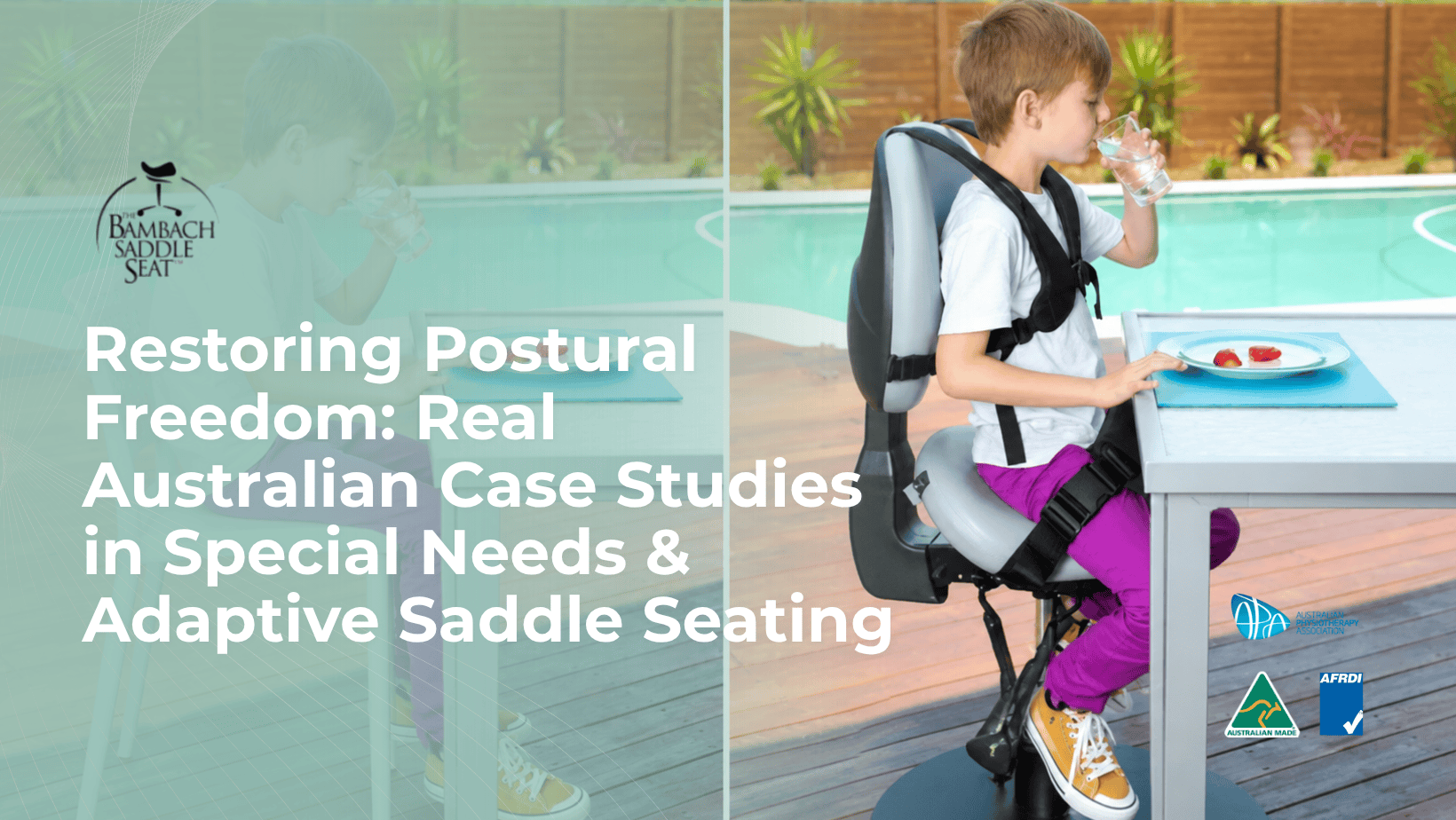
Restoring Postural Freedom: Real Australian Case Studies in Special Needs & Adaptive Saddle Seating

When sitting on a conventional flat chair or static wheelchair, individuals with physical disabilities and neurological conditions often face severe biomechanical challenges. Without stable pelvic support, the torso collapses, the spine curves into a slumped “C” shape, and upper-limb movement becomes heavily compromised.

The concept of adaptive saddle seating originated in Australia in 1988. Mary Gale, a qualified Australian Occupational Therapist at Hornsby Hospital in Sydney, noticed a remarkable physiological phenomenon: patients with severe physical trauma and neurological impairments who could not sit unsupported on a standard seat could sit upright, with balance and symmetry, when mounted on horseback.

By replicating the natural rider’s saddle position, the Bambach Saddle Seat was engineered to stabilize the pelvis in a neutral position, open the hip angle to 135°, and restore the natural “S” curve of the spine. Today, Bambach posture chairs are prescribed across Australia by Occupational Therapists (OTs) and Physiotherapists as clinically validated assistive technology.

Real Australian Case Studies: Transforming Special Needs Posture

Case Study 1: Ruby – Managing Muscular Atrophy & Classroom Fatigue

  • Clinical Background: Ruby was diagnosed with muscular atrophy, a condition causing progressive muscle weakness and difficulty maintaining upright posture over extended periods.
  • The Postural Problem: In a standard classroom chair, Ruby suffered severe postural collapse. Her pelvis tilted backward (posterior pelvic tilt), collapsing her spine into a flattened lumbar “C” curve with hunched shoulders and forward head projection. To view her work, she hyperextended her cervical spine and protruded her chin, leading to rapid physical exhaustion, thoracic compression, and an elevated risk of progressive spinal deformities.
  • The Bambach Intervention: Ruby’s Occupational Therapist recommended trialling a Bambach Small Adaptive Saddle Chair fitted with a reduced abduction seat, standard backrest, an 80 mm drop-through gas lift, and locking castors.
  • Clinical Outcome:
    • Neutral Pelvic Alignment: Opening Ruby’s hip angle naturally rotated her pelvis into a neutral upright position, eliminating the slumped “C” curve.
    • Upper Limb Independence: With her core and lower body stabilized, her head and shoulders returned to a comfortable, neutral position. This freed her arms from bracing, allowing her to focus on fine motor tasks and schoolwork without premature fatigue.
    • Optimized Respiration: Restoring natural lumbar lordosis expanded her thoracic cavity, reducing abdominal compression and supporting overall respiratory function.

“With her pelvis now in its neutral position, Ruby can assume and maintain a correct posture, which greatly improves her ability to perform functional tasks as well as working longer without fatigue.” — Bambach Clinical Case Report

Case Study 2: David – Adult Cerebral Palsy & Functional Mobility

  • Clinical Background: David lives with Cerebral Palsy characterized by increased adductor muscle tone, predominantly on his right side.
  • The Postural Problem: David’s tight hip adductors made walking difficult, confining him largely to a wheelchair. When seated sacrally in his wheelchair or on flat chairs, his shoulders hunched, his shoulder blades winged, his chin protruded, and his pelvis pulled obliquely to the right.
  • The Bambach Intervention: David trialled a Bambach Saddle Seat adjusted to accommodate his frame and computer workstation.
  • Clinical Outcome:
    • Inhibition of Abnormal Tone: The saddle seat’s contoured design held David’s hips abducted and extended at a 45° angle, inhibiting abnormal muscle tone and restoring symmetrical alignment.
    • Active Weight Bearing & Mobility: Rather than remaining passive, David’s legs and feet achieved full plantar contact with the floor. He began actively using his legs to push, pull, and propel his chair around the room.
    • Gait and Functional Gains: Activating his postural core and back muscles significantly improved his spinal strength. David reported walking greater distances independently, reducing his reliance on his wheelchair during daily outings.

“My back is a lot straighter and it has helped my walking, as I can now walk straighter and have more strength in my back.” — David, Bambach User

Biomechanical Comparison: Conventional Seating vs. Bambach Adaptive Saddle Seating

Biomechanical Metric Standard Wheelchair / Flat Chair Bambach Adaptive Saddle Chair
Pelvic Orientation Posterior tilt (sacral sitting) Neutral forward tilt (upright ischial tuberosity support)
Spinal Profile Flattened “C” curve (slumped kyphosis) Natural “S” curve (preserved lumbar lordosis)
Hip Angle Restricted 90° angle Open 135° open hip angle
Upper Limb Mobility Arms forced to brace torso for balance Arms completely free for fine motor tasks & learning
Lower Limb Engagement Passive, unweighted positioning Active plantar contact & sensory proprioceptive feedback
Respiratory Cavity Compressed thoracic & abdominal space Open thoracic cavity for maximum lung capacity


Tested Strength & Trust: AFRDI Level 6 Certification & NDIS Approval

When prescribing adaptive seating for special needs users, durability, structural integrity, and clinical safety are paramount.

Certification Standard Structural & Clinical Impact
AFRDI Level 6 Tested

Certified for Severe Commercial & Heavy Clinical Use

Heavy Structural Loads

Engineered to withstand extreme daily wear, dynamic spasticity, and high impact forces.

NDIS Assistive Technology

Approved Adaptive Equipment

Clinical Funding & Safety

Fully approved under Australian NDIS funding for specialized adaptive seating equipment.


  • AFRDI Level 6 Certification: The Bambach Saddle Seat is certified to AFRDI Level 6 (Severe Commercial Use) by the Australasian Furnishing Research and Development Institute. This certification guarantees that the chair can withstand intense dynamic loads, sudden movements caused by spasticity, and continuous heavy-duty use in schools, clinics, and homes.
  • Australian Physiotherapy Association (APA) Endorsed: Recognised by clinical bodies across Australia for its proven anatomical benefits.
  • NDIS Assistive Technology Funding: As a clinically validated posture device, the Bambach Saddle Seat is regularly funded under the National Disability Insurance Scheme (NDIS) under Capital Supports / Assistive Technology.

Explore our complete range of Special Needs Adaptive Saddle Chairs or read more real-world results in our Australian Clinical Case Studies Archive. For paediatric requirements, view the Bambach Small Adaptive Chair Range.


Yes. The Bambach Saddle Seat is classified as clinically prescribed Assistive Technology. NDIS participants can work alongside their registered Occupational Therapist or Physiotherapist to conduct a seating trial, document functional goals (such as increased independence, improved posture, or upper-limb control), and submit an Assistive Technology assessment report for funding approval.

AFRDI Level 6 certification ensures that the chair has undergone rigorous testing for extreme durability, stability, and structural strength under severe commercial conditions. For individuals with neurological conditions who experience involuntary movements, high muscle tone, or sudden spasms, AFRDI Level 6 approval provides assurance that the seating frame will remain safe and stable.

When a person slumps in a conventional chair, the torso compresses, crowding the lungs, diaphragm, and digestive organs while forcing the head forward. By holding the spine in its natural "S" curve, the Bambach opens the thoracic and abdominal cavities. This alignment expands lung volume and positions the head and neck neutrally over the shoulders, facilitating smoother swallowing and improved vocal control.

Yes. By positioning the pelvis upright and enabling full foot contact on the floor or footring, the Bambach provides a wide, stable base of support. This triggers natural postural righting reactions and engages dormant core muscles safely, rather than allowing the torso to collapse into passive slumping. Optional accessories—such as adjustable backrests, trunk supports, and side harness systems—can also be integrated for additional support.

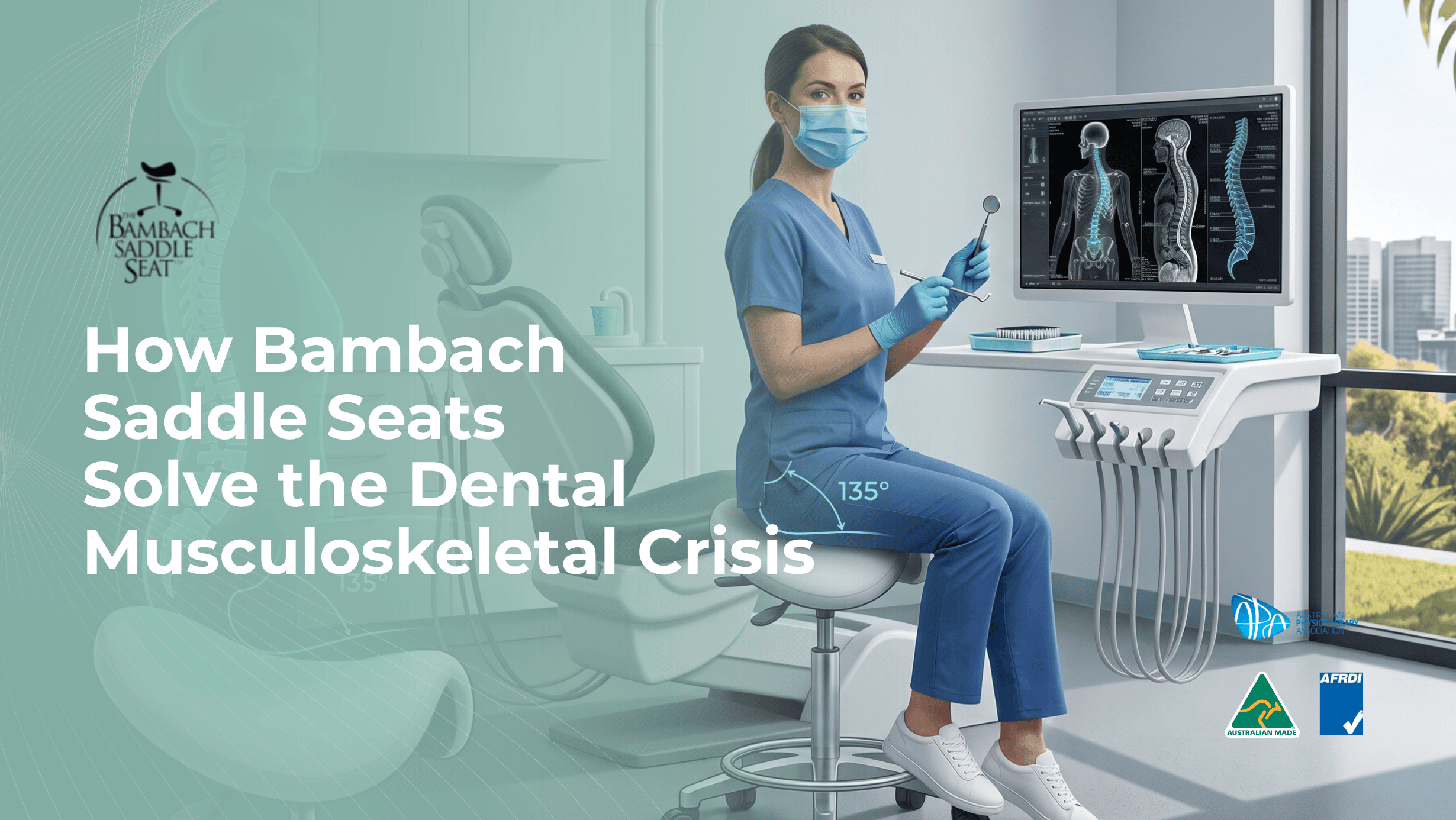
How Bambach Saddle Seats Solve the Dental Musculoskeletal Crisis

The dental operatory is an ergonomic hazard zone. Day after day, dentists, dental hygienists, and assistants operate in confined spaces, holding precise, static, and asymmetrical postures for hours at a time. The physical toll of this profession is not just uncomfortable—it is a leading cause of premature career retirement.

The Bambach Saddle Seat was engineered specifically to solve the biomechanical failures of traditional operatory seating, restoring natural anatomy while you treat patients.

The Hidden Epidemic in Dentistry: What the Data Shows

Musculoskeletal disorders (MSDs) among dental professionals are among the highest reported across all healthcare fields. When forced to sit on standard flat stools while leaning over a patient’s oral cavity, the spine’s natural alignment collapses.


Stage Anatomical Trigger Biomechanical Impact Clinical Outcome
1. Hip Posture Standard 90° Seating Angle Tightens hamstring tendons, forcing pelvic distortion Posterior Pelvic Tilt (Pelvis rotates backward)
2. Spinal Alignment Loss of Lumbar Curve Lumbar spine flattens from natural $S$-shape into a $C$-shape Elevated intervertebral disc pressure & compression
3. Upper Body Strain Forward Head Projection Shifts center of gravity forward over the operatory field Severe trapezius strain & cervical spine compression
4. Muscle Fatigue Static Isometric Contraction Muscles remain constantly engaged to prevent falling forward Static Ischemia (Oxygen starvation & chronic pain)

Clinical studies continuously highlight the severity of this issue:

  • Up to 93% Overall Prevalence: A comprehensive systematic review published on PubMed revealed that between 64% and 93% of dental professionals report general work-related musculoskeletal pain, with the neck (19.8%–85%) and lower back (36.3%–60.1%) being the primary zones of severe chronic pain.
  • Significant Postural Risk Reduction: A meta-analysis published in PLOS ONE confirmed that saddle seats provide a statistically significant reduction in ergonomic risk scores compared to conventional dental seats, directly correcting working posture during clinical tasks.

Why Traditional Dental Stools Cause Pain: According to Dentists

When dental practitioners describe their chronic symptoms, the same three core issues repeatedly surface:

1. Static Ischemia from Asymmetrical Leaning

To view the upper molars or work in tight quadrants, dentists twist their torsos while holding their arms in isometric contraction. On a flat stool, back muscles must work constantly to keep the upper body from falling forward. This continuous strain starves the muscular tissue of oxygen (static ischemia), creating intense burning sensations across the upper back and shoulders.

2. Flattening of the Lumbar Curve

Standard flat stools force the hips into a 90 degrees angle. This angle pulls on the hamstring tendons, tilting the pelvis backward and flattening the natural S-curve of the lower back into a slumped, collapsed C-shape.

3. Cervical Spine & Sciatic Compression

When the lower spine collapses into a C-shape, the head automatically projects forward to maintain line of sight. For every inch the head moves forward, the cervical spine experiences an additional 10 pounds of force. This leads to nerve impingement, disc herniation, and radiating sciatic pain down the legs.

The Bambach Solution: How the Saddle Seat Reverses Dental Strain

The Bambach Saddle Seat solves these issues by changing how your body interacts with gravity while seated.


Stage Anatomical Trigger Biomechanical Impact Clinical Outcome
1. Hip Posture Ergonomic 135° Open Hip Angle Relieves hamstring tension on the ischial tuberosities Neutral Pelvic Tilt (Pelvis rotates naturally forward)
2. Spinal Alignment Re-established Lumbar Lordosis Spine effortlessly returns to its natural $S$-shape Reduced disc compression & sciatic nerve relief
3. Upper Body Strain Centered Head & Shoulder Posture Weight of head rests directly over the shoulder girdle Trapezius relaxation & neck tension elimination
4. Muscle Fatigue Skeletal Weight-Bearing Upper body weight is transferred directly to skeletal structure Restored vascular flow & reduced fatigue


1. Re-establishing the 135-Degree Open Hip Angle

By opening the hip-to-torso angle from 90degrees to 135degrees, the Bambach seat naturally tilts the pelvis forward. This places the lumbar spine into its neutral, self-supporting S-curve without requiring active muscle strain.

2. Closer Proximity to the Operatory Patient

Because the thighs slope steeply downward (45degrees), dentists can move their chair much closer to the patient table. This eliminates the need to reach or hunch forward over the patient’s chest, keeping elbows relaxed and near the body.

3. Diaphragmatic Breathing and Core Stability

Opening the pelvis prevents chest and abdominal compression. Dentists report deeper diaphragmatic breathing and reduced fatigue during extended surgical or restorative procedures.

Real Clinical Outcomes: Case Studies & Dental Evidence

The clinical effectiveness of the Bambach Saddle Seat is demonstrated across numerous real-world case studies in dental practices:

  • Oral & Maxillofacial Surgeon Case Study: An oral surgeon suffering from debilitating sciatic pain and lower back strain restored his career by switching to a Bambach seat. By maintaining a neutral pelvic tilt, he eliminated the disc pressure causing his nerve compression and returned to performing long procedures pain-free. Read the full case in our Bambach Clinical Case Studies.
  • Dental Assistant Neck Strain Case Study: A dental assistant suffering from severe upper thoracic and neck fatigue used the Bambach seat with a foot-ring to elevate her position over the operator. The natural spinal alignment eliminated her upper back muscle starvation, resulting in zero thoracic pain.

Explore our custom operatory configurations on our Bambach Dental Seating Page.


A standard dental stool supports the legs at a 90degrees angle, flattening the spine's natural curve. The Bambach Saddle Seat opens the hip angle to 135degrees, which naturally tilts the pelvis forward and holds the spine in an effortless, self-supporting S-shape.

Yes. Dental hygienists and assistants experience intense static loading from leaning over patients at elevated heights. The Bambach Saddle Seat—especially when configured with a foot-ring for elevated positioning—stabilizes the core and prevents upper thoracic ischemia and neck fatigue.

Read also : https://www.bambach.com.au/ergonomic-chairs-by-profession/dental/

Most dental professionals adapt to a Bambach seat within 1 to 2 weeks. Because standard stools allow core muscles to turn off, switching to a saddle seat reactivates dormant postural muscles, which may cause mild initial awareness as core strength adapts.

Because a saddle seat holds your pelvis in a neutral position, your spine naturally supports itself without needing a backrest during active clinical work. However, an optional adjustable backrest is available for rest periods between patient procedures.

The downward sloping thighs of a saddle seat reduce the forward clearance required by your legs. This allows you to position the chair much closer to the dental chair, eliminating the need to bend forward at the waist to reach the patient's mouth.

Yes. Musculoskeletal disorders are a primary cause of early retirement among dentists. By relieving disc pressure, eliminating static muscle starvation, and maintaining spinal alignment, the Bambach seat mitigates long-term occupational injury risks.

Clinical ergonomics research indicates that a 135degrees open hip angle is optimal for seated work. This position balances sitting ease with standing posture, reducing lumbar disc pressure while keeping the head centered over the shoulders.

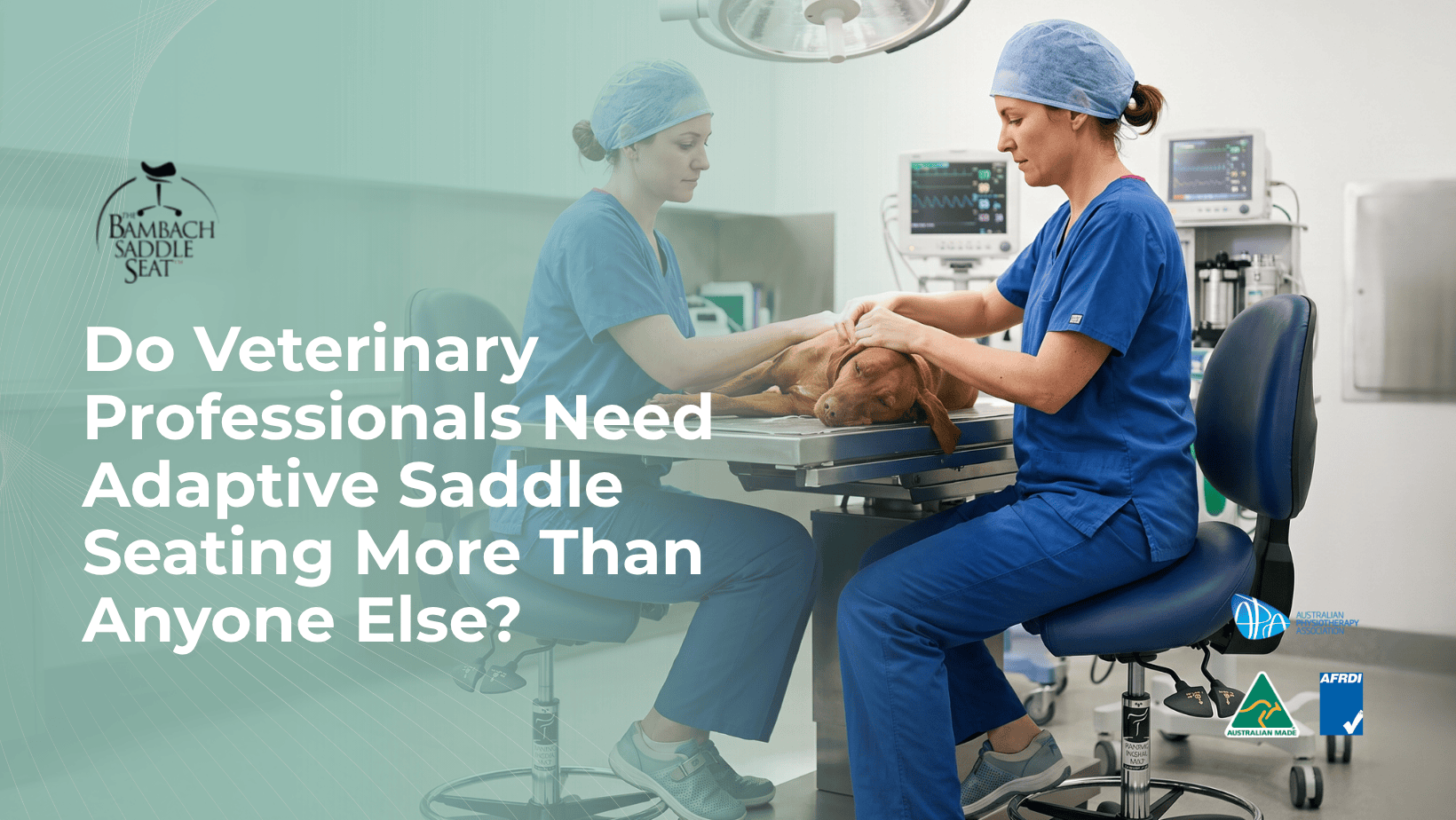
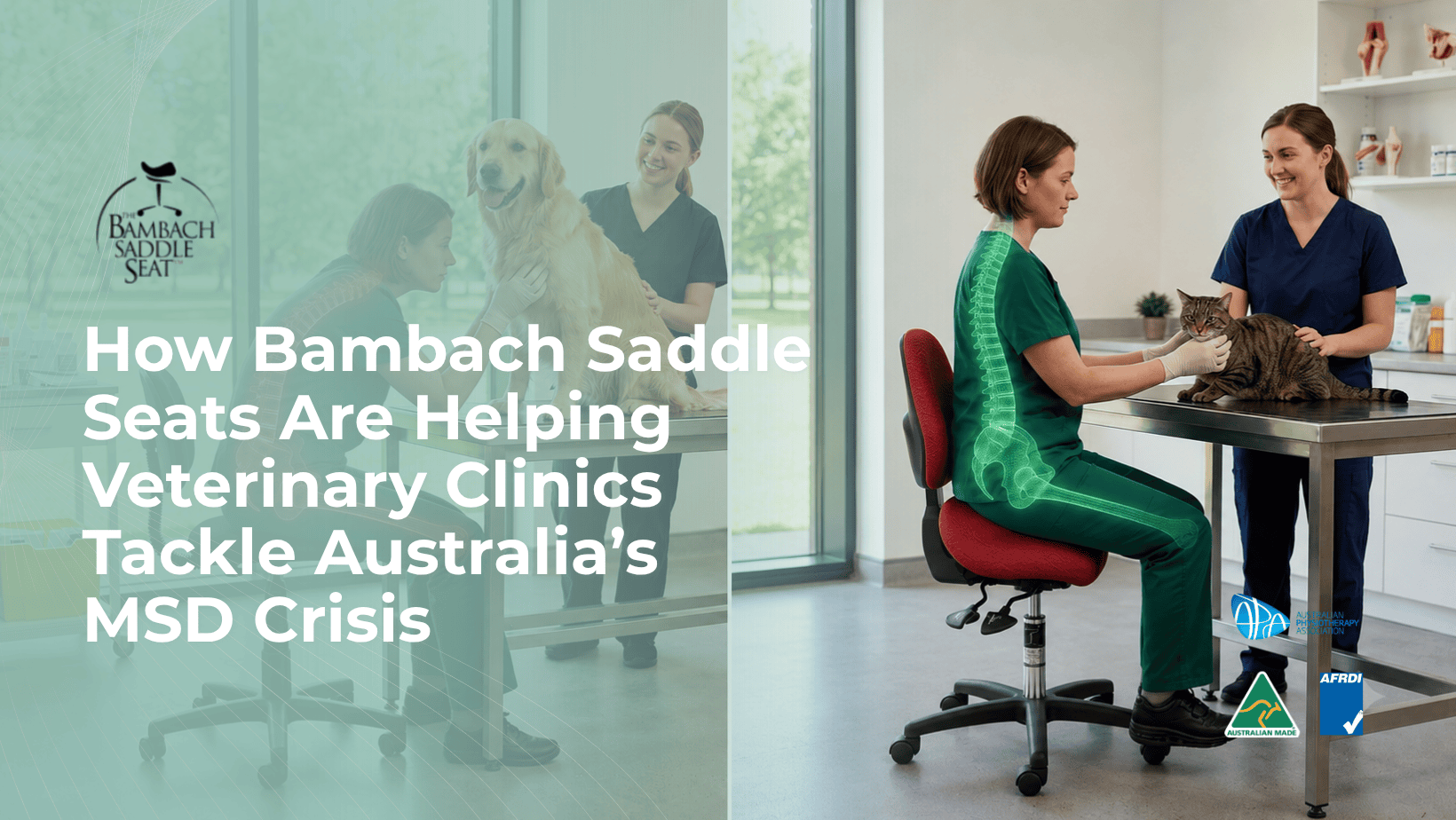
How Bambach Saddle Seats Are Helping Veterinary Clinics Tackle Australia’s MSD Crisis

The veterinary profession is physically demanding, unpredictable, and inherently hazardous to the human body. Devoted to the care of their furry, feathered, and scaly patients, veterinarians and vet nurses routinely put the health of animals above their own. The clinical consequence of this dedication is severe: a staggering 67% of veterinary surgeons suffer from workplace musculoskeletal disorders (MSDs).

At Bambach, we recognize that this is not just an occupational hazard; it is an industry-wide crisis that drives passionate professionals into early retirement.

For decades, we have partnered with animal healthcare professionals to engineer the optimal ergonomic seating for vet clinics. We don’t just supply furniture; we provide a biomechanical intervention. Today, over 300 veterinary practices across Australia rely on the Bambach Saddle Seat to prevent injuries, maintain clinical precision, and extend careers. In this guide, we break down the evidence behind the veterinary MSD crisis and explain how our original continuous-contour design remains the ultimate defense.

Why Do 67% of Veterinarians Suffer from Musculoskeletal Injuries? 

To understand why vet clinic MSD prevention is so critical, we must examine the physical realities of the consulting room and the surgical theater.

Standard medical stools and office chairs are designed for static, forward-facing desk work. They force the user’s hips into a closed, 90-degree angle, which flattens the lumbar spine into a weak “C” shape. When a veterinarian sits in a standard chair and leans forward to examine a nervous dog on the floor or a cat on a treatment table, their already compromised spine bears massive, asymmetrical strain.

The primary causes of veterinary MSDs include:

  • Static Forward Flexion: Prolonged leaning over surgical tables or microscopes without pelvic support.
  • Awkward Reaching: Twisting to access instruments, medications, or to restrain uncooperative patients.
  • Lack of Core Stability: Conventional flat stools require the lower back muscles to work constantly just to keep the body upright, leading to rapid muscular fatigue and spasm.

Treating patients requires mobility, stability, and precise hand-eye coordination. When your chair fights your anatomy, your spine pays the price.

How Does Bambach Saddle Chair Prevent Vet Clinic Back Pain?

We engineered a chair to set your spine free. Created by an Australian occupational therapist, the Bambach Saddle Seat utilizes a continuous, unbroken contour that mimics the only posture where the human spine is perfectly balanced: horseback riding.

Here is how our original veterinary saddle chair Australia design directly combats the physiological stressors of veterinary work:

1. The 135-Degree Anatomical Advantage

By opening the hip angle to 135 degrees, the Bambach naturally abducts the legs and anchors the pelvis in an upright, neutral position. This structural alignment effortlessly preserves the healthy “S” curve of the spine, even when you lean forward to examine a patient on the floor.

2. Unbroken Core Stability

Unlike cheap split-seat designs that fail to provide uniform support, our solid-seat geometry locks the pelvis in place. This provides an ultra-stable foundation, freeing your upper body to reach, twist, and perform delicate procedures—such as suturing or dental scaling—without straining your lumbar discs.

3. Maximum Mobility and Footprint

Veterinarians need to move dynamically around exam tables. The straddle posture gives you a wide, stable base, allowing you to use your legs to easily propel the chair around the clinic. The compact design ensures you can get as close to the treatment table as possible without restrictive armrests or bulky seat pans getting in the way.

Evidence Roundup: Trusted by 300+ Australian Practices

The effectiveness of the Bambach Saddle Seat is not theoretical; it is clinically proven and industry-tested.

“We didn’t rewrite the laws of anatomy. We just built a clinical stool to respect them.”

Currently, our seats are the foundation of occupational health in over 300 veterinary practices nationwide. From small suburban clinics to major emergency animal hospitals, practice managers are investing in Bambach to reduce staff absenteeism, lower worker’s compensation claims, and improve daily clinical efficiency.

The occupational hazard of veterinary medicine is a well-documented crisis. According to studies published in the National Library of Medicine, an overwhelming 96% of surveyed veterinarians report experiencing work-related musculoskeletal disorders (MSDs) within a one-year period, with the lower back, shoulders, and neck being the most frequently affected areas. Furthermore, a cross-sectional survey of veterinary surgeons found that 93% experienced musculoskeletal symptoms directly associated with performing surgery, with discomfort significantly worsening during prolonged procedures.

Read also :  https://www.orthovetsupersite.com/abstract/musculoskeletal-symptoms-reported-specialist-veterinary-surgeons 

Veterinarians utilizing our seats report immediate reductions in this neck, shoulder, and lower back fatigue. By opening the hip angle to 135 degrees, the saddle seat naturally tilts the pelvis forward to maintain the spine’s healthy curvature, effectively counteracting the static, forward-leaning postures that drive veterinary MSDs. Furthermore, this upright, open hip posture prevents the chest cavity from compressing. This allows the diaphragm to move freely, reducing abdominal compression, increasing oxygen intake, and promoting healthy blood circulation during long, high-stress surgical procedures.

What is the Best Ergonomic Chair for Vets in Australia? 


If you are upgrading your clinic’s furniture, you need equipment that withstands the rigors of veterinary medicine. Here is exactly what you should look for when sourcing the best chair for vets Australia has to offer:

Essential Feature Why It Matters for Vet Clinics The Bambach Standard
Medical-Grade Upholstery Clinics are messy. Chairs must withstand bodily fluids, fur, and harsh chemical disinfectants. We offer premium, surgical-grade vinyl that is non-porous, highly durable, and easy to sanitize.
Unbroken Pelvic Support Split seats lack surface stability, forcing the core to work harder and causing fatigue. Our continuous, unbroken saddle contour provides immediate, effortless pelvic locking.
Height Customization Vets work at various heights, from low floor exams to high surgical tables. We provide multiple gas stem heights and foot-ring options tailored to your specific workstation.
Clinical Endorsements Ergonomic is a marketing term; you need scientifically backed medical furniture. Designed by an OT, AFRDI Level 6 tested, and trusted by over 300 Australian vet practices.


Protect Your Team, Extend Your Career

Your practice relies on the health and stamina of your veterinarians and nurses. Stop letting flat, unsupportive stools dictate the length and quality of your career.

It is time to invest in a biomechanical solution that actively protects your spine. Explore our dedicated range of Veterinary Saddle Chairs or dive deeper into the science of Veterinary Ergonomic Seating to see how we can customize a solution for your entire clinic.

Ready to eliminate workplace back pain and tackle the MSD crisis head-on? 

Contact Us today for a personalized fitting assessment for your practice.


During surgery, vets often hold static, leaned-forward postures for hours. The Bambach locks the pelvis in an upright tilt, maintaining the spine's natural "S" curve even when leaning forward. This prevents the lower back from collapsing into a painful "C" shape, eliminating the primary cause of surgical back pain.

Yes. The straddle position of the Bambach provides a wide, incredibly stable base of support. Because your feet remain flat on the floor and your legs are separated, you have far greater balance and leverage to safely handle or restrain animals than you would balancing on a standard flat stool.

Absolutely. We customize each Bambach chair with the appropriate gas stem height for your specific needs. We can configure low-height stems for examining large dogs near the floor, or high-drafting stems with foot-rings for working comfortably at elevated surgical or dental tables.

We know vet clinics require strict hygiene. Our chairs can be upholstered in high-quality, surgical-grade vinyl. This material is non-porous, waterproof, and designed to withstand the harsh chemical disinfectants used in animal hospitals to prevent cross-contamination.

Split-seat designs lack the continuous surface area required to properly stabilize the pelvis. In a fast-paced vet clinic, you need the reliable, uniform support of a continuous-contour seat so you aren't fighting to balance on two separate pads while trying to focus on a critical patient.

Because standard chairs allow core muscles to weaken, it typically takes 1 to 2 weeks for a practitioner's body to adapt to the active sitting posture of a Bambach. We recommend transitioning gradually, starting with a few hours a day during consultations before moving on to multi-hour surgeries.

Yes, we work directly with practice managers and veterinary teams across Australia to ensure the correct seat size, height, and accessories are selected for your specific clinic environment and staff body types.