Case Studies

Dental Assistant Back Pain Case Study

Case Study: Overcoming Dental Assistant Fatigue & Thoracic Spine Pain

Dental Assistant: Fatigue, Pain in Thoracic Spine

Name: F.B, Occupation: Dental Assistant

The Problem

Despite being a competitive triathlete in peak physical condition, dental assistant F.B. developed severe upper thoracic (back) pain and crushing fatigue just one month into her clinical career.

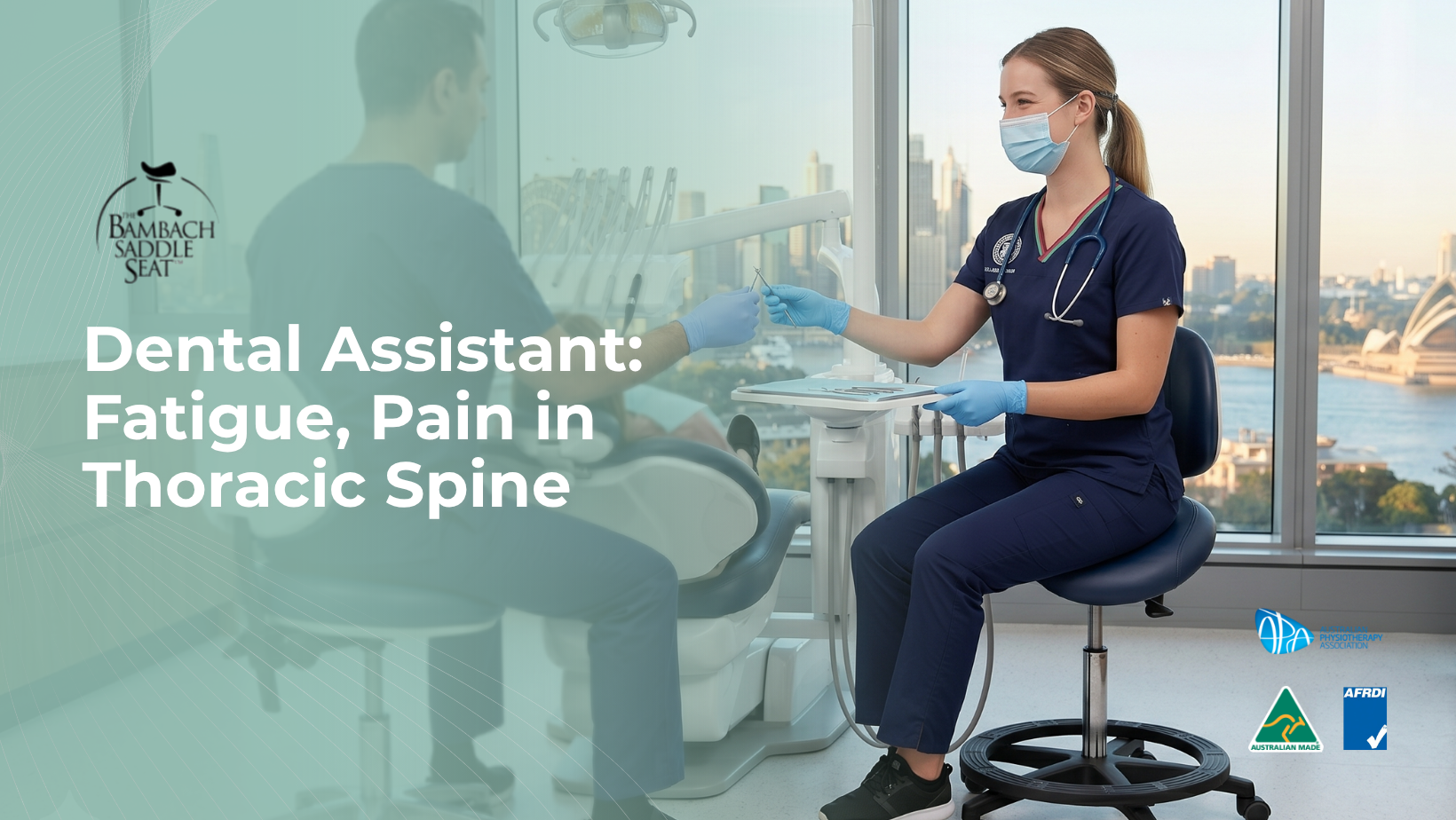
To see into the patient’s mouth over the dentist’s shoulder, F.B. had to sit 10 to 15 centimetres higher than the operator. On a standard flat stool, this elevated position forced her pelvis to tilt backward, collapsing her spine into a slumped “C” shape. Holding this twisted, forward-leaning position starved her upper back muscles of oxygen (static ischemia), causing severe burning pain and intense physical exhaustion that her athletic fitness could not prevent.

The Intervention

F.B. swapped her traditional flat stool for an authentic Bambach Saddle Seat customized with an extended gas stem and a structural foot-ring.

The contoured saddle dropped her thighs into a 135-degree open hip angle, naturally rotating her pelvis forward. This automatically restored her spine’s healthy “S” curve without requiring active muscle straining. The mechanical foot-ring provided full foot contact, giving her a wide, perfectly stable base of support closer to the patient.

The Outcome

  • Zero Thoracic Pain: Transferring her upper body weight onto her skeletal structure—rather than forcing her muscles to hold it up—completely eliminated her upper back pain.

  • Vastly Reduced Fatigue: The upright posture opened her chest cavity, maximizing lung capacity and circulation, which wiped out her afternoon brain fog and fatigue.

  • The Clinical Lesson: F.B.’s case proves that athletic conditioning cannot protect against static clinical loading. Task-appropriate, active ergonomic seating is the only definitive preventative solution.


Dental assistants must sit 10 to 15 centimetres higher than the dentist to see into the patient's mouth clearly over the dentist's arm. Because the chair must be elevated, the assistant's feet cannot reach the floor. A mechanical foot-ring provides an elevated platform for full foot contact, establishing the wide, stable base of support necessary to anchor the pelvis and maintain a healthy posture.

Upper back pain occurs when a flat chair causes the lower back to slump, forcing the upper thoracic muscles to work overtime to keep the chest and head upright. A saddle chair opens the hip angle to 135 degrees, which automatically rotates the pelvis forward and aligns the entire spine into a natural, self-supporting "S" curve. This unloads the burden from the thoracic muscles, allowing them to relax.

Most dental professionals experience an acclimatisation period of approximately 1 to 2 weeks. Because standard dental stools allow the core and postural muscles to completely switch off, the dynamic posture of a saddle chair reactivates these dormant muscle groups. Users may feel mild muscle awareness or slight tiredness for the first few days, which quickly fades as core endurance improves.
Dental Assistant Neck Pain Case Study

Case Study: Eliminating Occupational Neck Pain in Dental Assisting

Dental Assistant: Neck Pain

Name: D.M., Occupation: Dental Assistant

The Problem

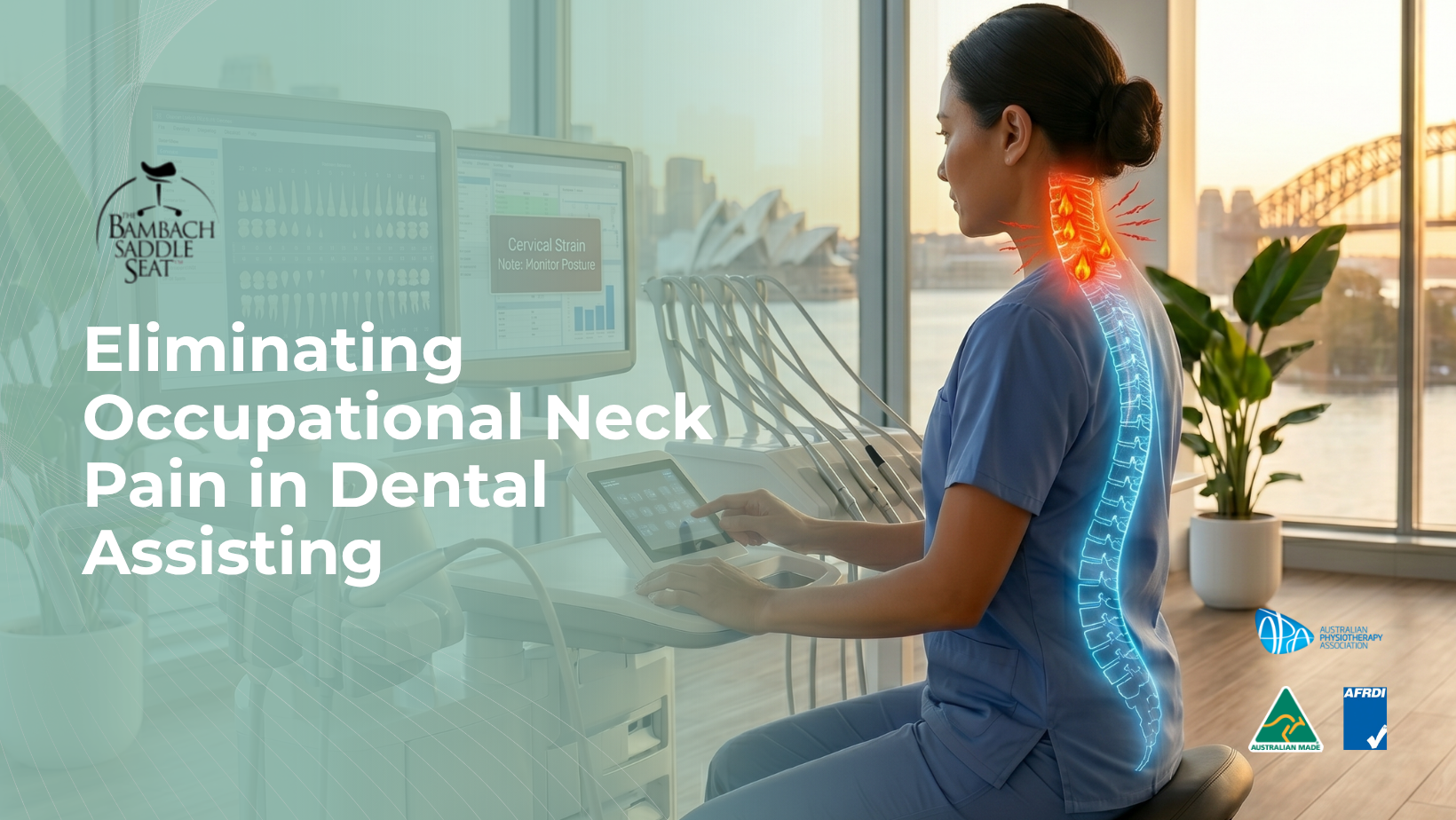
Dental assistant D.M. presented with chronic, work-induced neck (cervical) pain. The clinical demands of her role required continuous forward-leaning and neck flexion to maintain a clear line of sight into the patient’s mouth.

On a traditional, flat-pan dental stool, this posture forced her spine into a slumped “C” curve. To compensate for this slump and keep her head upright, D.M.’s cervical spine and upper trapezius muscles had to remain in a constant, straining state of tension. This excessive static loading rapidly led to muscle fatigue, stiffness, and chronic neck pain.

The Intervention

D.M.’s employer—a dentist who already utilized and understood the ergonomic benefits of the Bambach Saddle Seat in the surgery—suggested she transition to one. Before proceeding, D.M. consulted her Osteopath. Understanding the biomechanics of active seating, the Osteopath strongly endorsed the intervention as a medical necessity.

By switching to the Bambach, D.M.’s hips were opened to an optimal 135-degree angle. This naturally rotated her pelvis forward and restored her spine’s natural, self-supporting “S” shape without requiring active muscular effort.

The Outcome

  • Complete Resolution of Neck Pain: By restoring her natural lumbar curve at the base of the spine, the Bambach naturally balanced D.M.’s head directly over her shoulders. This completely removed the static workload from her cervical muscles, eradicating her neck pain.

  • Multidisciplinary Endorsement: This case highlights the importance of clinical consensus. The Osteopath’s approval underlines a core physiological fact: supporting the pelvis in a neutral position is the single most effective way to prevent ascending spinal pain.


Osteopaths understand that the human spine acts as a single mechanical chain. A saddle chair stabilizes the foundation (the pelvis). When the pelvis is held upright, the neck naturally aligns directly over the shoulders, completely eliminating the muscular strain required to hold the head up.

Yes. Both roles require precision and close patient access. While dentists often use standard gas stems, assistants typically use elevated stems equipped with a structural foot-ring to maintain a higher line of sight while still benefiting from optimal pelvic alignment.

Choose Your Perfect Bambach Chair

Dentist sciatic pain

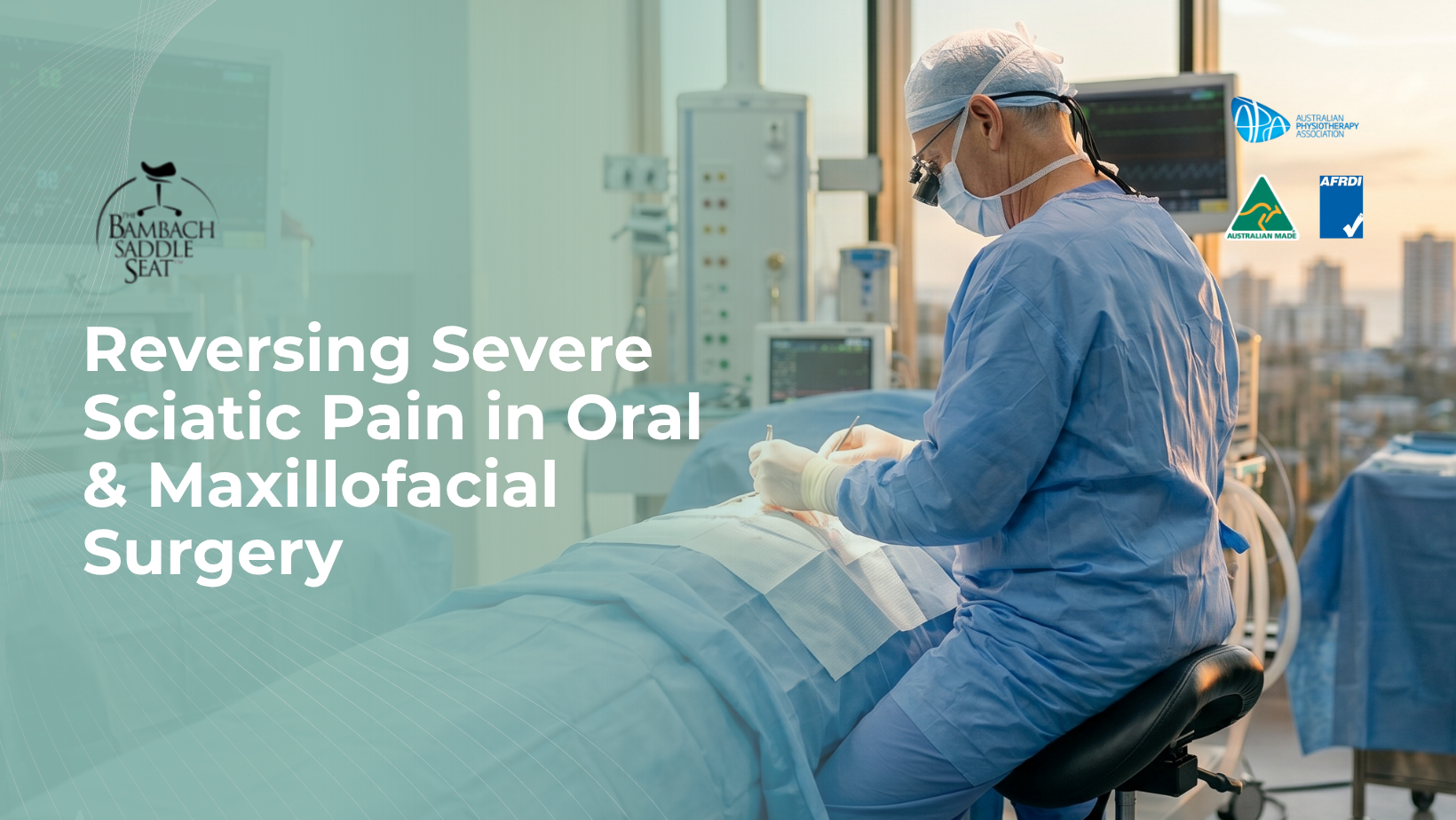
Case Study: Reversing Severe Sciatic Pain in Oral & Maxillofacial Surgery

Dentist: Back and Sciatic

Name: Dr T (M.B.S, M.B,ChB.,F.R.A.C.D.S.,O.M.S.), Occupation: Oral Maxio Facial Surgeon.

The Problem

Oral Maxillofacial Surgeon Dr T suffered from chronic back issues and debilitating sciatic pain that severely restricted his life outside of work. The condition became so severe that after simply packing the car for a family holiday, he was physically unable to pick up or hold his children. To manage the pain during long, high-precision procedures, Dr T was forced to perform 100% of his surgeries standing up. Despite a rigorous routine of physiotherapy, targeted exercises, and competitive rowing, he could not achieve lasting relief from the static postural strain of his profession.

The Intervention

A fellow surgeon recommended the Bambach Saddle Seat after seeing it at a medical conference in Cairns, Australia. Dr T integrated a standard Bambach model customized with a foot-operated height adjuster, allowing him to alter his positioning hands-free while preserving a sterile surgical environment.

Because Dr T operates using surgical loupes, his work demands extreme upper-body stability and a static “hold” position. The Bambach’s unique contour dropped his thighs into an open 135-degree angle, tilting his pelvis forward and automatically locking his spine into its natural “S” curve. This balanced alignment transferred his upper-body weight safely onto his skeletal structure, immediately taking the pressure off his compressed lumbar discs and sciatic nerve.

The Outcome

  • Eradication of Sciatic Symptoms: Combined with his exercise regime, the Bambach dramatically improved Dr T’s symptoms, allowing him to return to an active lifestyle and hold his children pain-free.
  • Dynamic Surgical Posture: Previously bound to standing for all operations, Dr T now remains comfortably and safely seated for 30% of his surgical schedule.

Cognitive Behavioral Shift: Dr T notes that because the Bambach is completely different to a standard office chair, it serves as an active, continuous reminder to maintain proper biomechanics throughout the day.


Yes. Many surgeons stand because traditional office stools cause immediate, agonizing lower back strain. A saddle chair perfectly replicates the healthy spinal alignment of standing while eliminating lower limb fatigue, blood pooling, and joint stress. It acts as an ideal hybrid solution, allowing surgeons to sit for blocks of time to conserve physical energy without compromising their posture.

In operating theatres and sterile clinical environments, hands-free adjustments are a strict medical necessity. A foot-operated pneumatic ring allows the surgeon to effortlessly raise or lower the seat pan using their heel, completely removing the need to touch manual levers, thereby preventing cross-contamination and preserving the sterile field.

Eliminating Muscle Fatigue in Mortuary Embalming

Case Study: Eliminating Muscle Fatigue in Mortuary Embalming

Embalmer: Muscle Fatigue

Name: Blaire Brown, Occupation: Embalmer

The Problem

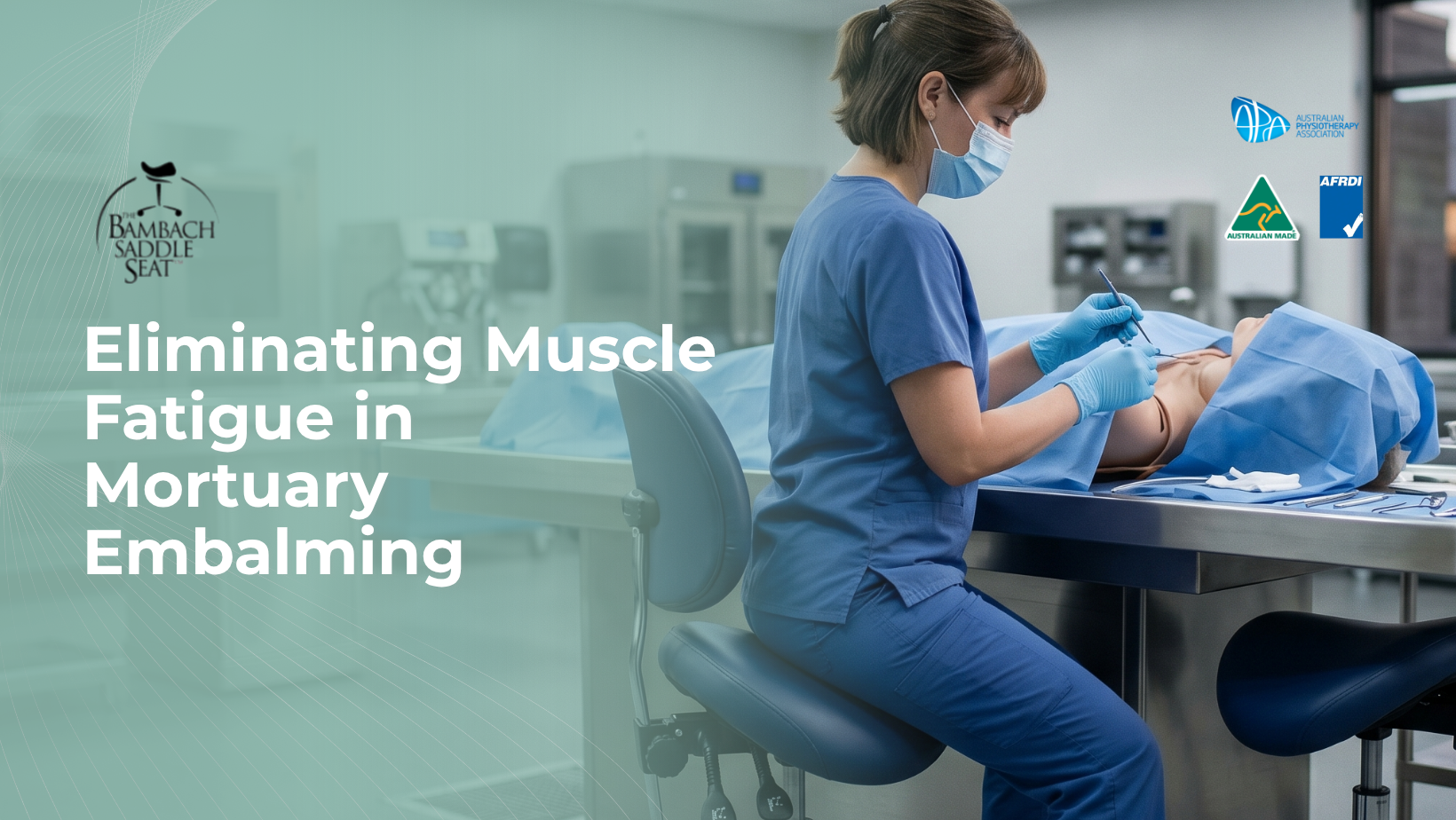
Blaire Brown, a professional embalmer, presented with severe, compounding occupational muscle fatigue. The mortuary science profession is physically demanding; the embalming process requires hours of leaning over a stainless steel preparation table to perform intricate vascular and restorative procedures.

Attempting to alleviate the strain by sitting on a standard flat-pan stool only worsened the issue. The flat seat forced Blaire’s pelvis to tilt backward, collapsing the spine into a slumped “C” curve. This static, forward-leaning posture required the lower back and shoulder muscles to remain in a constant state of tension. This excessive static loading choked off blood supply to the tissues (ischemia), leading to rapid muscle exhaustion, micro-trauma, and severe daily fatigue.

The Intervention

Following a comprehensive workplace assessment, an Occupational Therapist introduced Blaire to the Bambach Saddle Seat.

To combat the specific hazards of the embalming room, the Bambach fundamentally altered Blaire’s seated biomechanics. The patented contour of the seat dropped Blaire’s thighs into a 135-degree open hip angle. This automatically rotated the pelvis forward and locked the spine back into its natural, self-supporting “S” curve. Furthermore, the straddle stance allowed Blaire to get significantly closer to the prep table, eliminating the need to awkwardly lean forward.

The Outcome

  • Eradication of Muscle Fatigue: By perfectly balancing the spine, the weight of the upper body was transferred away from the overworked muscles and distributed safely onto the skeletal structure, completely wiping out Blaire’s static muscle fatigue.
  • Stable Precision: With feet planted firmly on the floor in a wide straddle, Blaire gained a highly stable base of support. This eliminated muscle tremors in the shoulder girdle, ensuring absolute precision during delicate restorative art procedures.

OT Endorsement: This case validates the Occupational Therapist’s assessment: true ergonomic relief in clinical environments requires a proactive, active seating solution rather than passive backrests.


Because a saddle chair requires a straddled leg stance, the user's knees point downward and outward rather than straight ahead. This allows the embalmer to slide their body flush against the preparation table without their knees bumping the cabinets or the table's edge, completely eliminating the need to strain and reach from a distance.

Absolutely. Bambach seats are designed for strict clinical environments. They are upholstered in premium, medical-grade vinyl that is completely seamless in high-contact areas, making them resistant to bodily fluids, harsh mortuary chemicals, and rigorous infection-control wipe-downs.

office neck and shoulder pain

Case Study: Resolving Office-Induced Shoulder, Neck Pain, and Breathing Difficulty

Office: Shoulder and Neck pain

Name: Rhonda Bates, Occupation: Supervisor, Safety Officer

The Problem

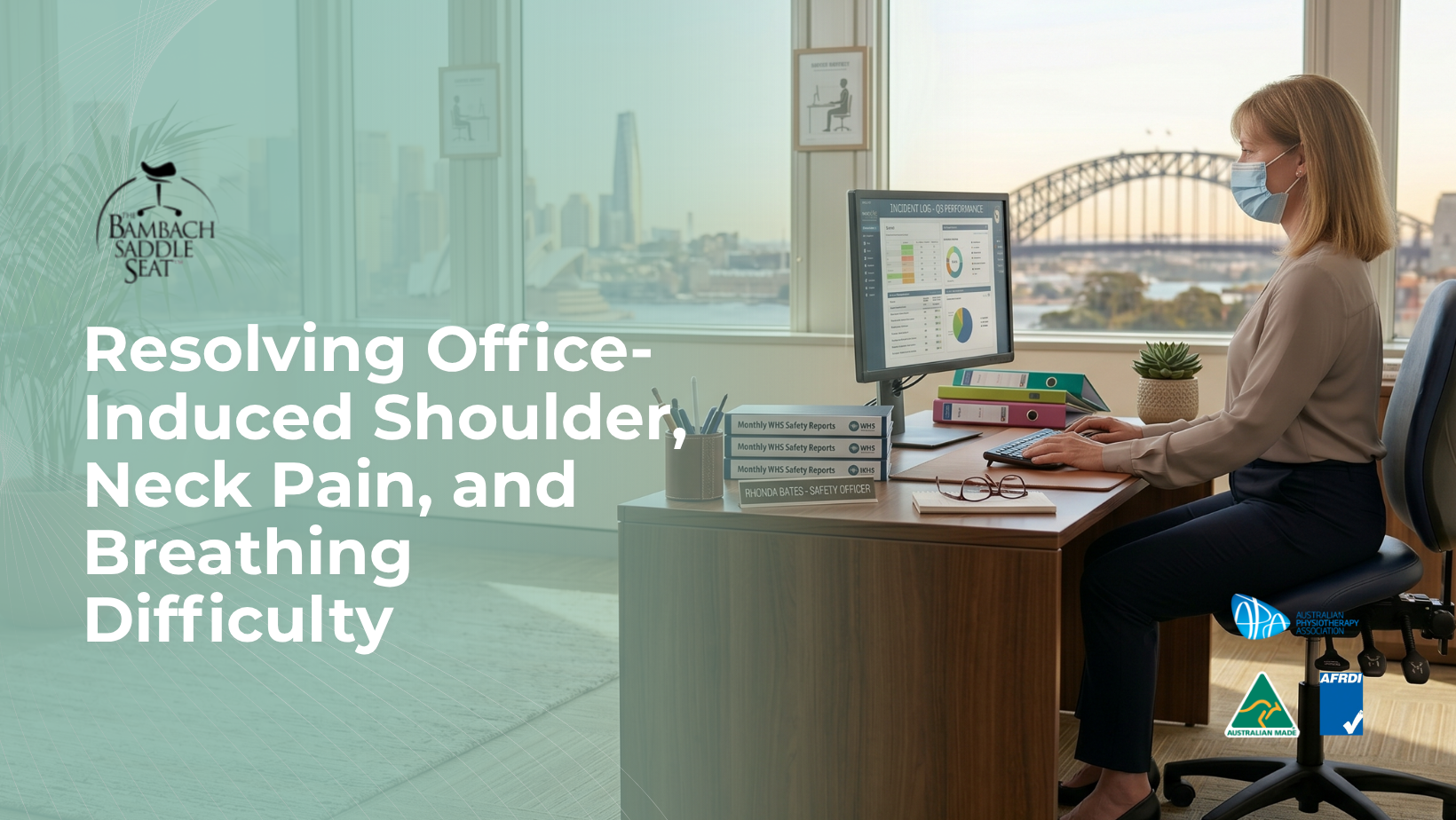
Rhonda Bates, a Supervisor and Safety Officer, spent long hours at her desk performing computer-based office work. Four years into her role, she developed severe, chronic pain in her shoulders and neck. The condition escalated to the point where her slumped, forward-leaning posture actively compressed her chest cavity, causing alarming breathing difficulties even when relaxing on a lounge at home.

Standard office chairs failed to support her properly. The flat seat pan encouraged her pelvis to roll backward, flattening her lower back and forcing her upper spine and neck to crane forward toward the screen. This static, unnatural posture overworked her cervical and shoulder muscles and restricted her diaphragm.

The Intervention

As a Safety Officer understanding the importance of workplace ergonomics, Rhonda transitioned from a conventional office chair to a Bambach Saddle Seat.

The Bambach fundamentally changed her seated posture. By placing her in an upright, straddled stance with a 135-degree open hip angle, the seat naturally rotated her pelvis forward. This effortless alignment restored the natural “S” curve of her spine, directly balancing her heavy head over her shoulders and completely removing the need to actively strain her neck and upper back.

The Outcome

  • Elimination of Shoulder & Neck Pain: By letting her skeletal structure support her body weight rather than her muscles, the Bambach eliminated the static loading that caused her severe upper body pain.

  • Restored Breathing Capacity: The upright, chest-open posture released the compression on her diaphragm and lungs. Her breathing difficulties were completely resolved, both at work and while resting at home.

  • Safety First: Rhonda’s case perfectly illustrates the systemic health impact of poor seating. A true ergonomic intervention doesn’t just fix back pain; it improves overall physiological function.


    Office workers frequently crane their necks forward to read monitors ("tech neck"). When the spine isn't properly supported at the base (the pelvis), the muscles in the neck and shoulders have to work overtime to hold the head up. Over time, this constant static tension causes severe muscle fatigue and chronic pain.

    A saddle chair fixes the root cause of neck pain, which originates in the lower back and pelvis. By locking the pelvis upright, the spine stack naturally aligns. When your spine is perfectly upright, your head balances effortlessly on top of your shoulders, removing the need for external headrests or constant muscular straining.