
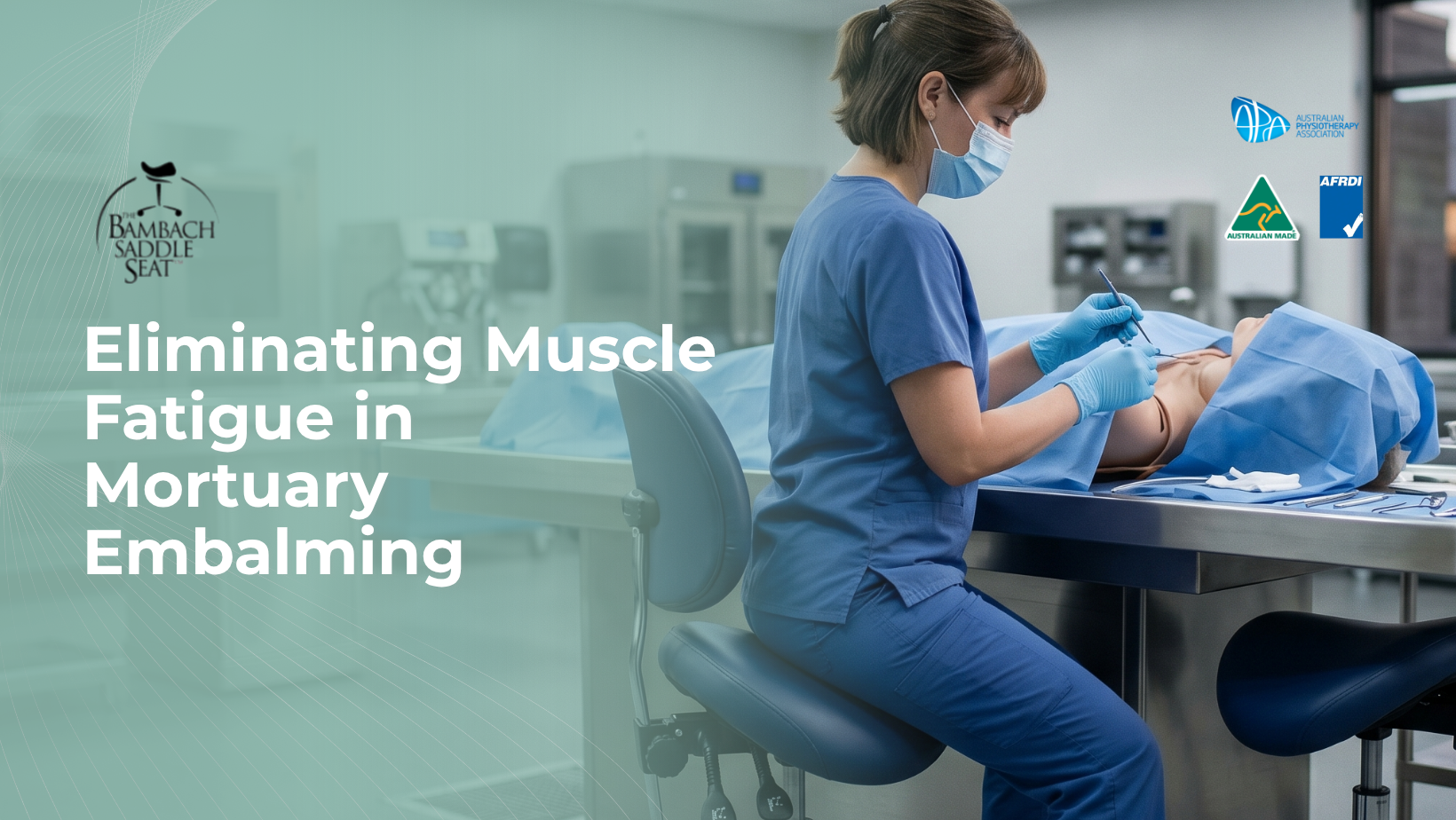
Case Study: Eliminating Muscle Fatigue in Mortuary Embalming
Embalmer: Muscle Fatigue
Name: Blaire Brown, Occupation: Embalmer
The Problem
Blaire Brown, a professional embalmer, presented with severe, compounding occupational muscle fatigue. The mortuary science profession is physically demanding; the embalming process requires hours of leaning over a stainless steel preparation table to perform intricate vascular and restorative procedures.
Attempting to alleviate the strain by sitting on a standard flat-pan stool only worsened the issue. The flat seat forced Blaire’s pelvis to tilt backward, collapsing the spine into a slumped “C” curve. This static, forward-leaning posture required the lower back and shoulder muscles to remain in a constant state of tension. This excessive static loading choked off blood supply to the tissues (ischemia), leading to rapid muscle exhaustion, micro-trauma, and severe daily fatigue.
The Intervention
Following a comprehensive workplace assessment, an Occupational Therapist introduced Blaire to the Bambach Saddle Seat.
To combat the specific hazards of the embalming room, the Bambach fundamentally altered Blaire’s seated biomechanics. The patented contour of the seat dropped Blaire’s thighs into a 135-degree open hip angle. This automatically rotated the pelvis forward and locked the spine back into its natural, self-supporting “S” curve. Furthermore, the straddle stance allowed Blaire to get significantly closer to the prep table, eliminating the need to awkwardly lean forward.
The Outcome
- Eradication of Muscle Fatigue: By perfectly balancing the spine, the weight of the upper body was transferred away from the overworked muscles and distributed safely onto the skeletal structure, completely wiping out Blaire’s static muscle fatigue.
- Stable Precision: With feet planted firmly on the floor in a wide straddle, Blaire gained a highly stable base of support. This eliminated muscle tremors in the shoulder girdle, ensuring absolute precision during delicate restorative art procedures.
OT Endorsement: This case validates the Occupational Therapist’s assessment: true ergonomic relief in clinical environments requires a proactive, active seating solution rather than passive backrests.
How does a saddle chair improve physical reach during embalming?
Because a saddle chair requires a straddled leg stance, the user's knees point downward and outward rather than straight ahead. This allows the embalmer to slide their body flush against the preparation table without their knees bumping the cabinets or the table's edge, completely eliminating the need to strain and reach from a distance.
Is the Bambach Saddle Seat compliant with mortuary hygiene standards?
Absolutely. Bambach seats are designed for strict clinical environments. They are upholstered in premium, medical-grade vinyl that is completely seamless in high-contact areas, making them resistant to bodily fluids, harsh mortuary chemicals, and rigorous infection-control wipe-downs.