The Best Ergonomic Chair for Home Office Workers in Australia (2026 Guide)
The shift to remote work is no longer a temporary phase; it is the permanent reality for millions of Australians. But while our commutes have disappeared, a new epidemic has taken their place: severe, chronic musculoskeletal pain. If you are struggling with a work from home chair back pain, you are not alone.
The problem isn’t your work ethic, and it isn’t your body. The problem is your furniture.
For decades, the standard office chair has forced the human body into a “90-degree trap”—a flat-pan design that actively fights your natural anatomy, forcing your spine to collapse. At Bambach, we believe your furniture should work with your biology, not against it. In this comprehensive 2026 guide, we will unpack exactly why traditional seating fails, what criteria actually matter when upgrading your workspace, and why the original continuous-contour design makes the Bambach Saddle Seat the best home office chair Australia 2026 has to offer.
Read also : https://www.bambach.com.au/case-study/office-shoulder-neck-pain/
Why Your Current Home Office Chair is Causing Back Pain
To understand what makes the best ergonomic chair home office Australia professionals can buy, you first have to understand why standard chairs cause so much damage.
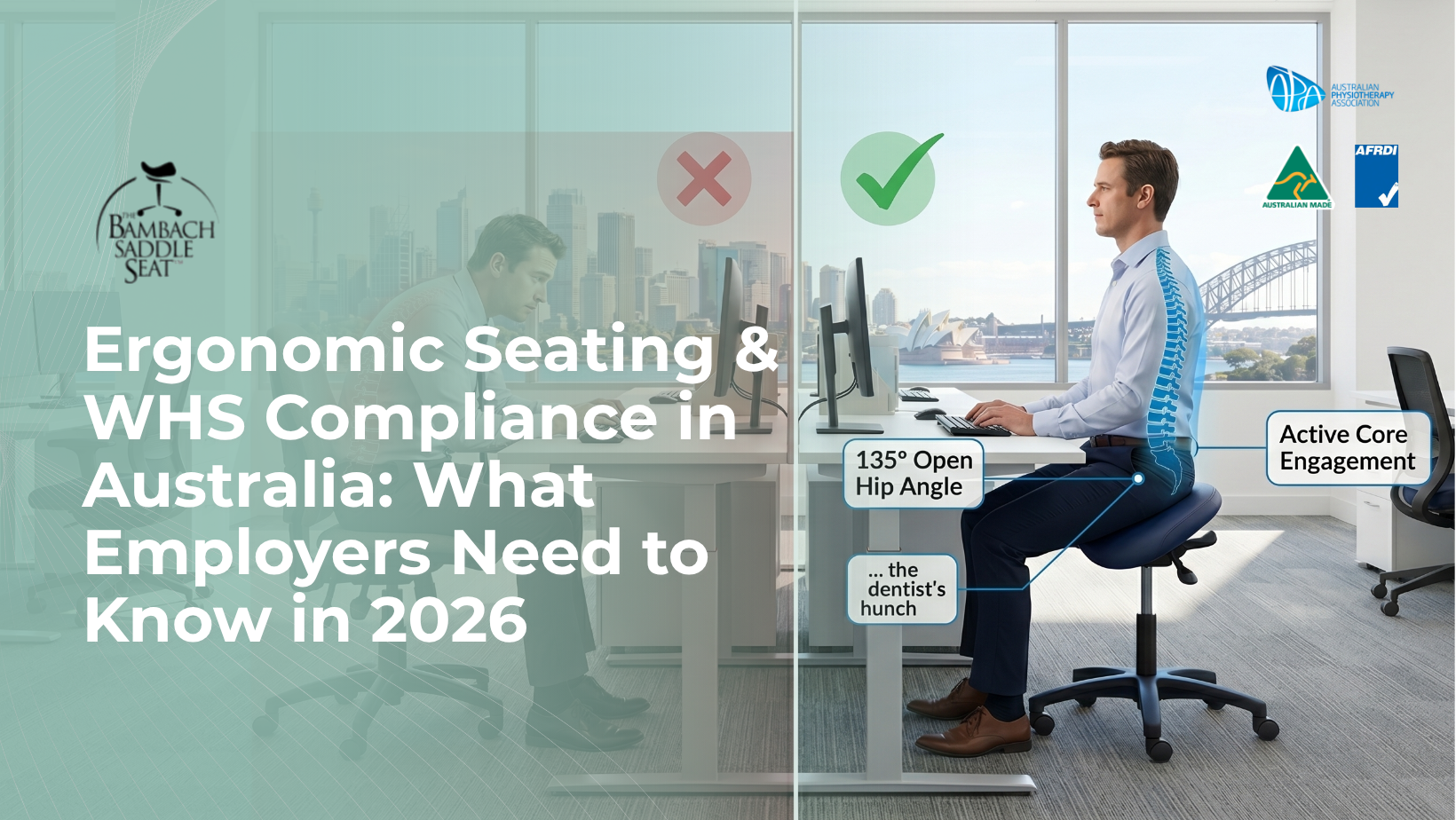
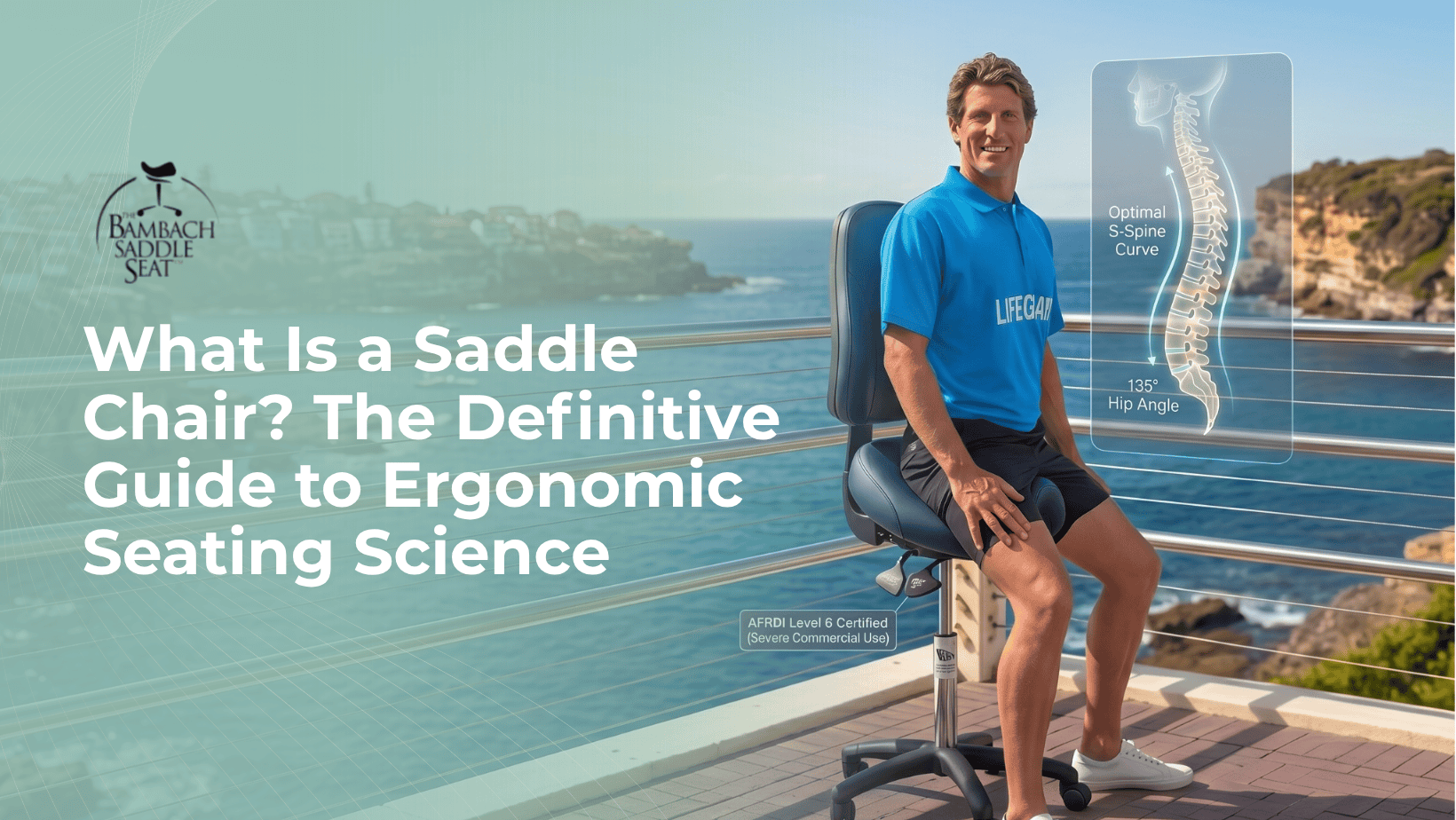
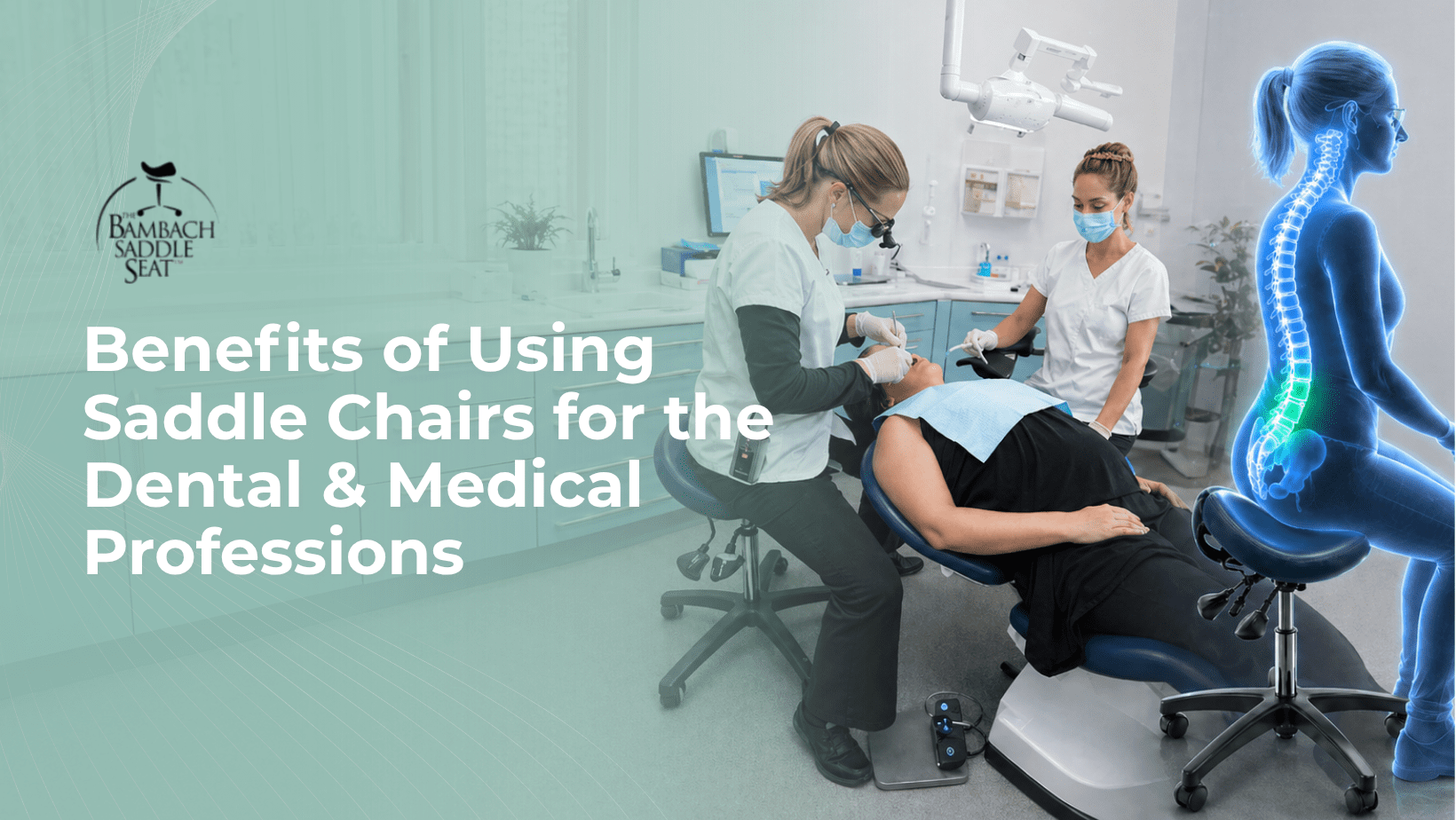
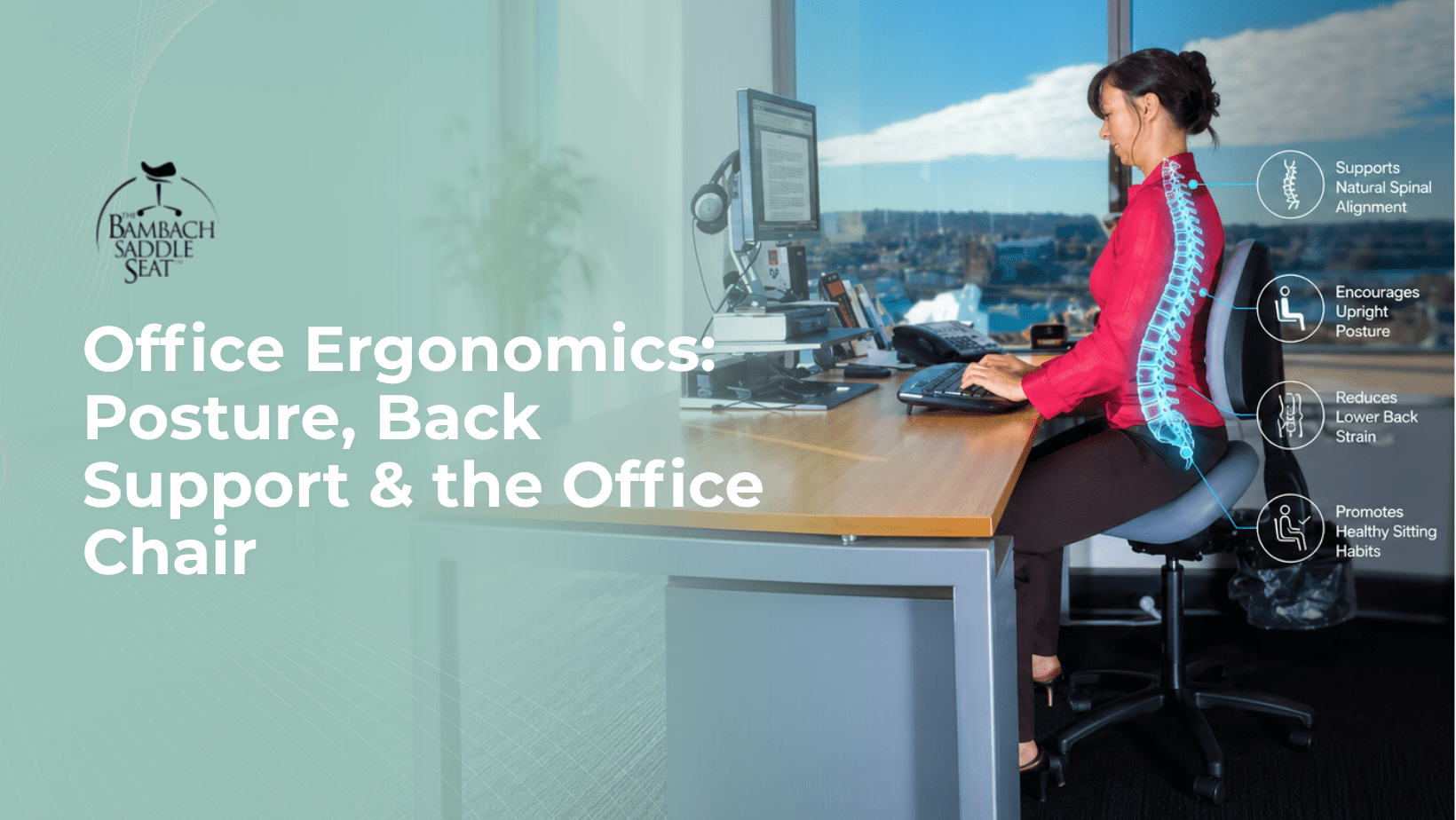
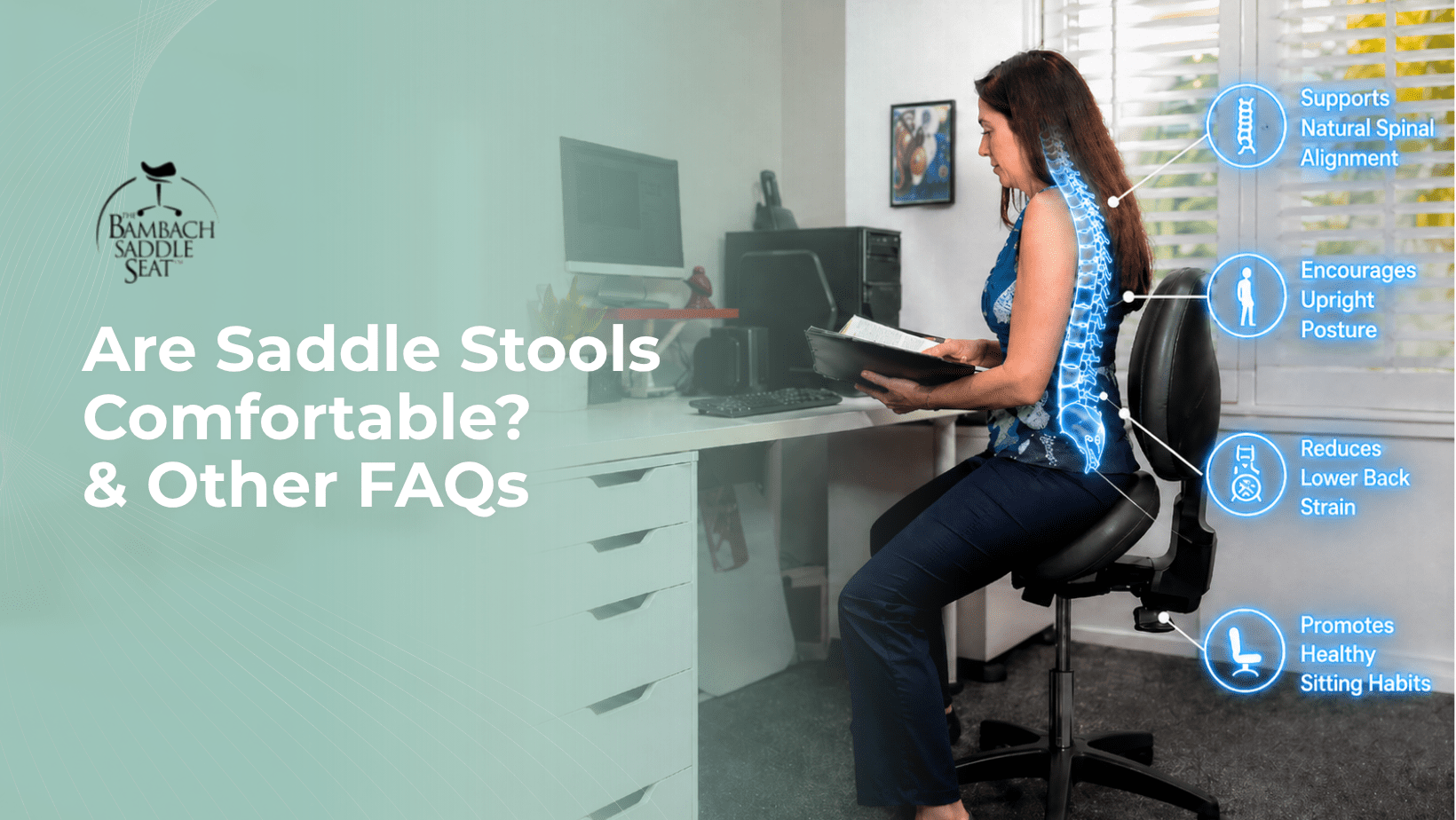
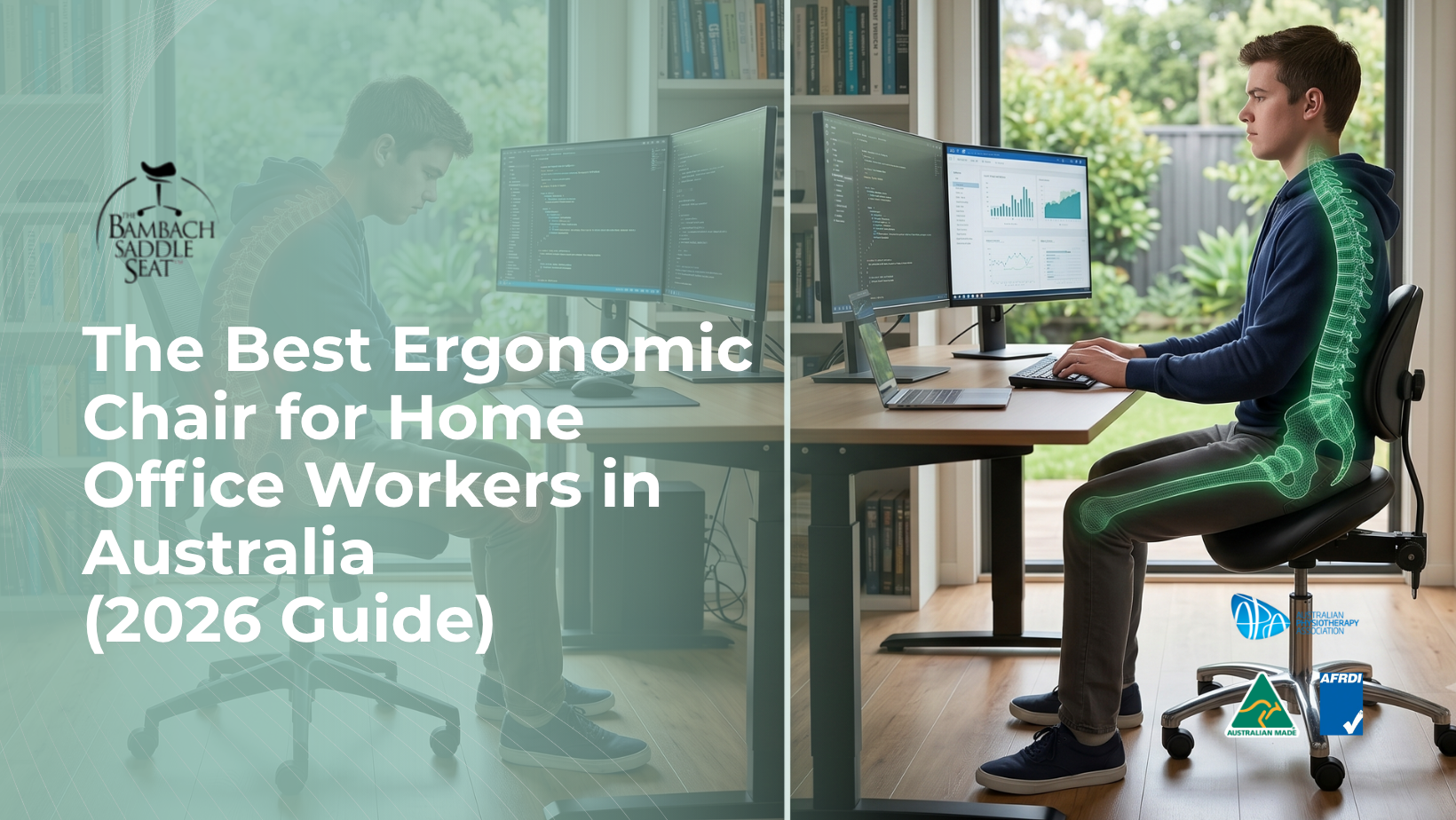
When you sit on a traditional, flat-seated office chair, your hips are locked at a 90-degree angle. This unnatural geometry forces your pelvis to tilt backward (a posterior tilt). The moment your pelvis rolls backward, the natural, healthy “S” curve of your lumbar spine is flattened into a weak, collapsed “C” shape.
This is the “sacral slump.”
Once the foundation collapses, a destructive whole-body chain reaction begins:
- Lumbar Compression: Your lower spinal discs bear massive, asymmetrical weight, leading to herniations and sciatica.
- Thoracic Restriction: Your chest caves in, physically restricting your diaphragm and reducing oxygen intake, which accelerates fatigue.
- “Tech Neck”: To compensate for the slumped spine and still see your monitor, your neck juts forward, forcing your trapezius and shoulder muscles to work overtime.
Standard ergonomic chairs try to fix this by adding passive lumbar cushions and massive backrests. But treating a collapsed foundation by simply propping it up from behind is a flawed premise. You don’t need a better backrest; you need a better foundation.
5 Criteria for Choosing the Best Home Office Chair in Australia
When assessing the market for an ergonomic upgrade, cut through the marketing jargon and evaluate chairs based on biomechanical reality. Here are the five critical criteria you must consider:
1. Active Spinal Support (Pelvic Alignment)
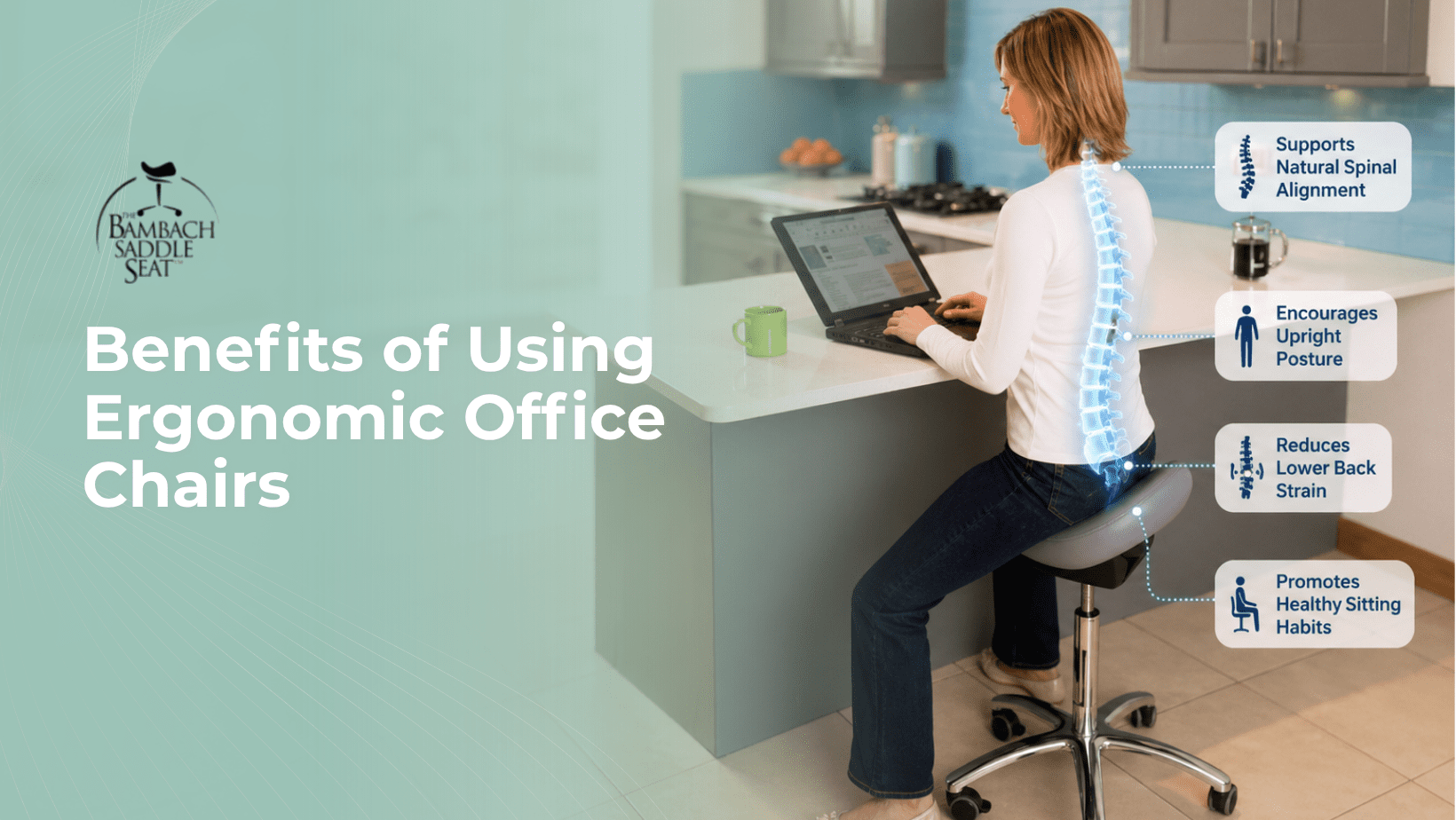
Passive support (leaning back into a cushion) turns off your core and breeds weakness. Active support focuses on the pelvis. The ideal chair must naturally guide your pelvis into a neutral, upright position (anterior tilt). By stabilizing the pelvis, your spine effortlessly stacks into its natural architecture without requiring constant muscle tension.
2. Customisation and Fit
A chair built for a 160cm graphic designer will not biomechanically support a 190cm software engineer. True ergonomic seating requires precise customization. Look for seating solutions that offer variations in seat size, adjustable gas stems for height, and foot-support options to ensure your feet are perfectly anchored.
3. Clinical Certification and Endorsement
Do not rely on the word “ergonomic”—it is an unregulated marketing term. Look for chairs that are actively utilized in medical environments and hold genuine endorsements from credible bodies, such as the Australian Physiotherapy Association (APA). If a chair isn’t trusted by spine specialists, it doesn’t belong in your home office.
4. Durability & Build Quality
Your home office chair is the most heavily used piece of equipment you own. Cheap plastics, degraded foam, and flimsy castors will break down within a year. A premium chair should be manufactured locally with high-density, automotive-grade materials designed to withstand decades of heavy, daily use.
5. Warranty and Local Support
Investing in your spinal health is a significant decision. The best chairs in Australia are backed by robust, multi-year warranties and accessible local customer support teams who can assist with adjustments, parts, and personalized fitting advice.
Head-to-Head: The Biomechanical Comparison
How do the most popular WFH seating options actually stack up against each other? We break down the anatomical impact of four common choices.
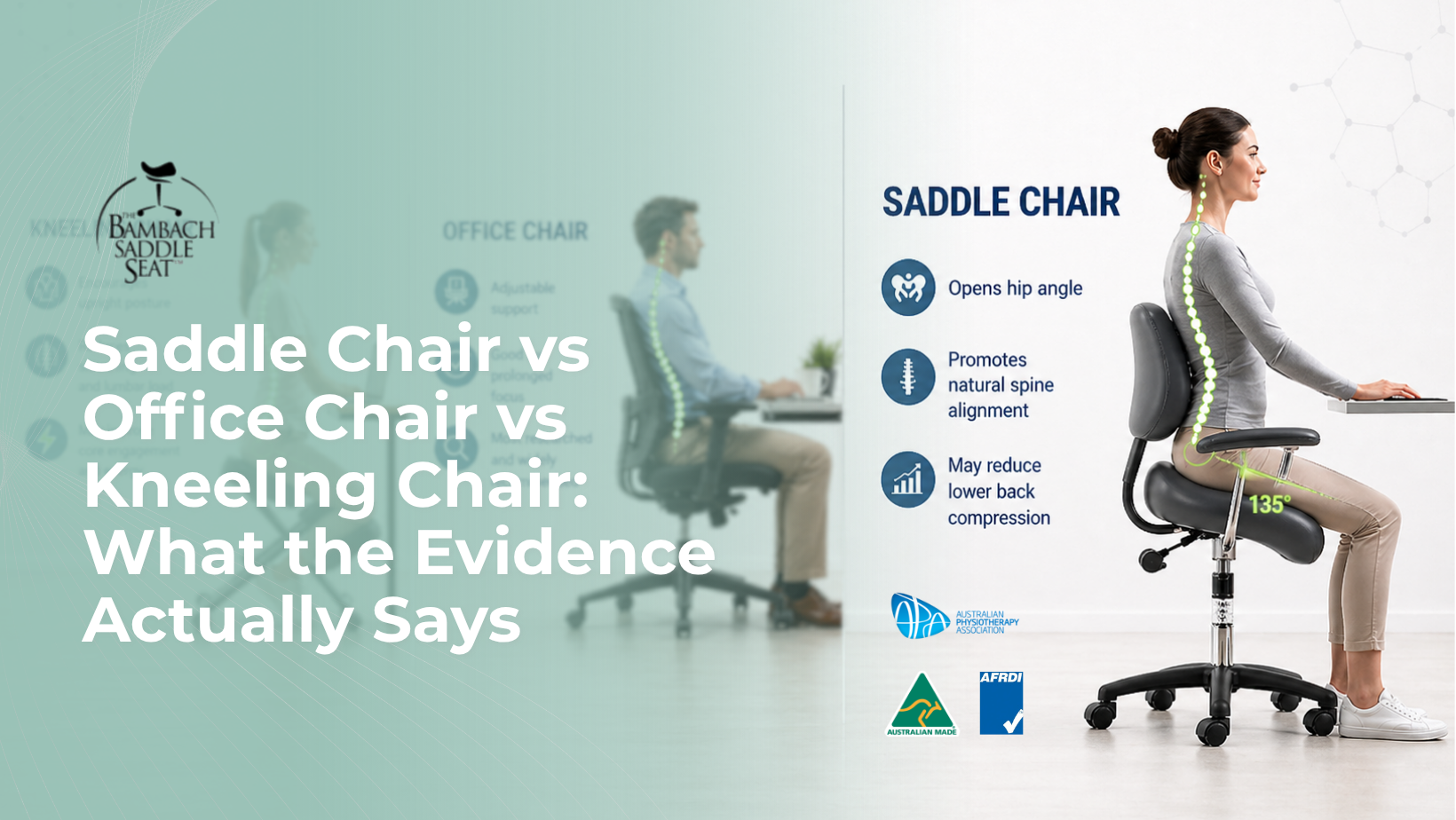
| Feature / Chair Type | Standard Ergonomic Chair | Kneeling Chair | Balance Ball | The Bambach Saddle Seat |
| Pelvic Position | Slumped backward (Posterior tilt) | Tilted forward (but locks the knees) | Unstable, requires constant micro-adjustments | Neutral & upright (Anterior tilt) |
| Spine Alignment | Unnatural “C” shape collapse | “S” curve, but transfers strain to shins | “S” curve, but highly fatiguing over time | Healthy, natural “S” curve, sustained effortlessly |
| Hip Angle | Compressed 90° angle | Compressed, restrictive angle | Open, but lacks solid foundation | Open, dynamic 135° angle |
| Core Muscle Use | Dormant, leading to severe weakness | Engaged, but static | Over-engaged, leading to rapid exhaustion | Active, stabilizing the torso without fatigue |
| Long-Term Comfort | Poor (Pain develops over hours) | Moderate (Shin and knee pain common) | Poor (Not sustainable for 8-hour days) | Excellent (Designed for all-day clinical use) |
Why the Bambach is the Ultimate Home Office Solution
We don’t just change your chair. We restore your posture.
Over thirty-five years ago, an Australian occupational therapist revolutionized clinical seating by looking at the only posture where the human spine is perfectly balanced while seated: horseback riding. This insight led to the creation of the original, unbroken continuous-contour design that defines the Bambach Saddle Seat. (Read the History of Bambach)
Here is why we remain the benchmark for the best saddle chair Australia has to offer:
The Power of the 135-Degree Angle
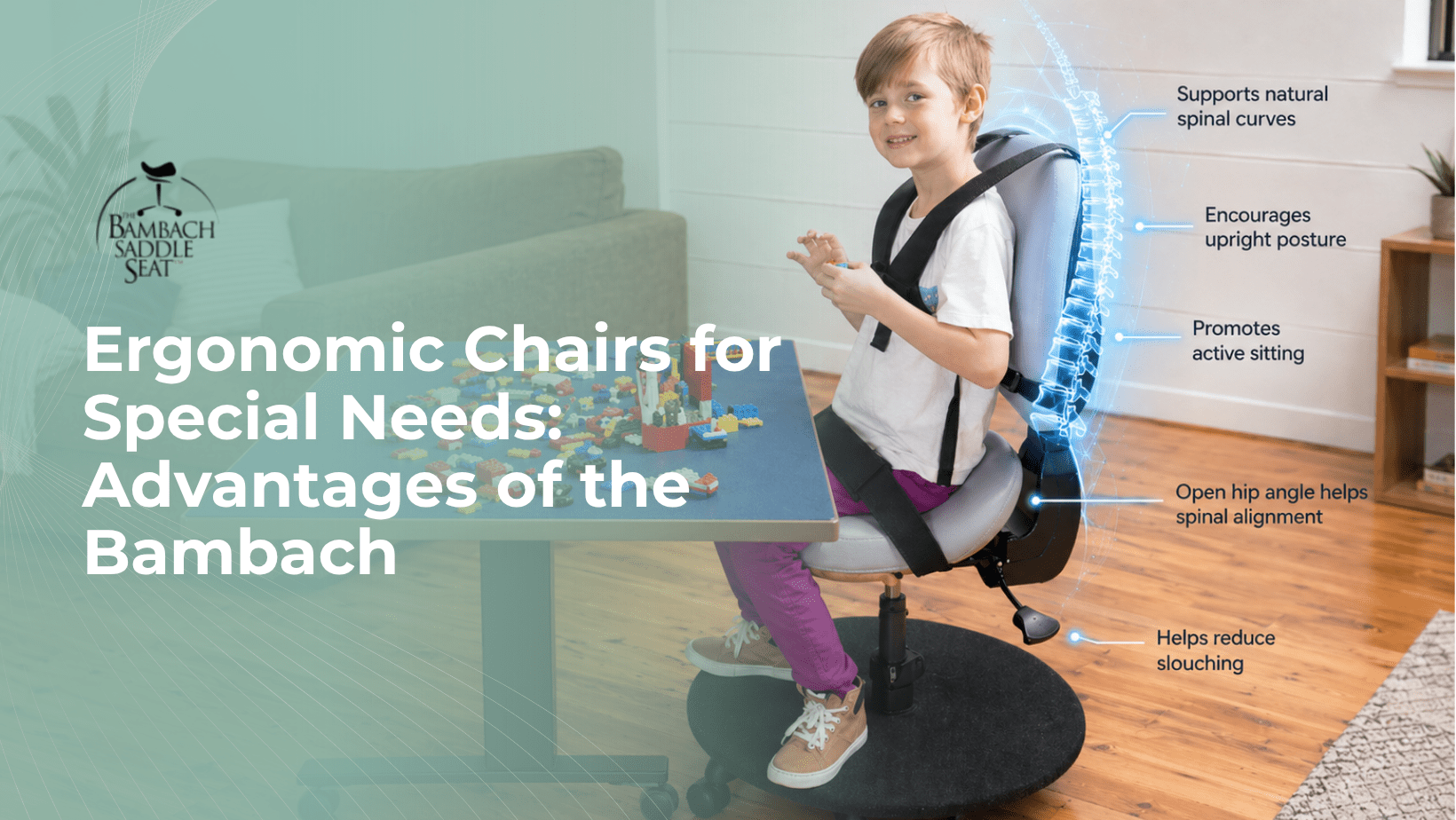
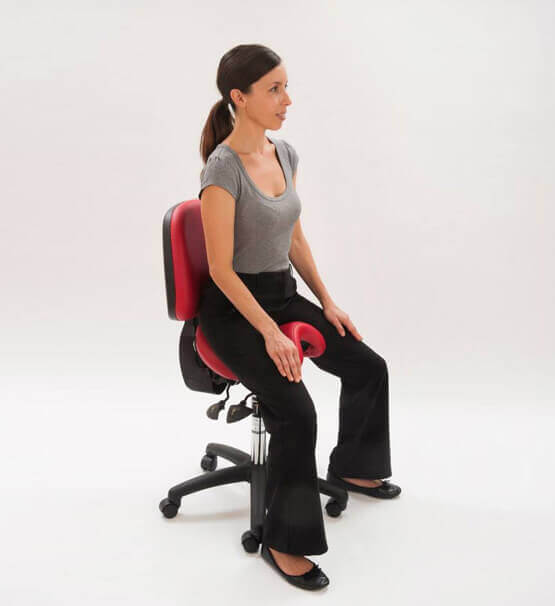
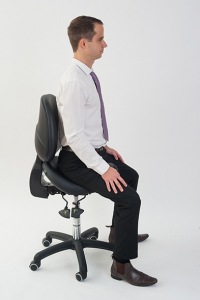
By dropping your thighs into a natural 135-degree angle, the Bambach naturally abducts your legs. This skeletal geometry locks your pelvis into the perfect upright position. You don’t have to try to sit up straight; the chair’s contour forces your anatomy into alignment.
Sit Unbroken
Unlike cheap copycats that use split or divided seat pans, Bambach utilizes a solid, continuous-contour seat. This unbroken design ensures uniform weight distribution across your sit bones without sacrificing the structural surface stability required to keep your pelvis anchored. We keep our seat unbroken so your spine can stay uncompromised.
Free Your Upper Body
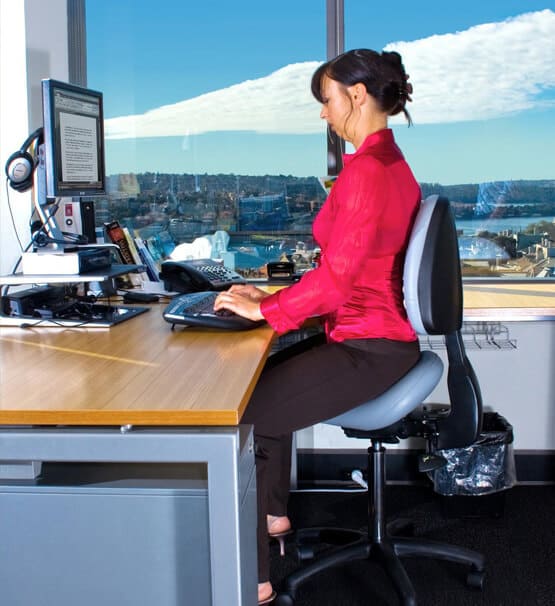
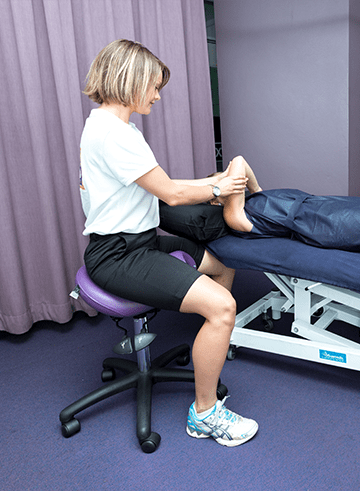
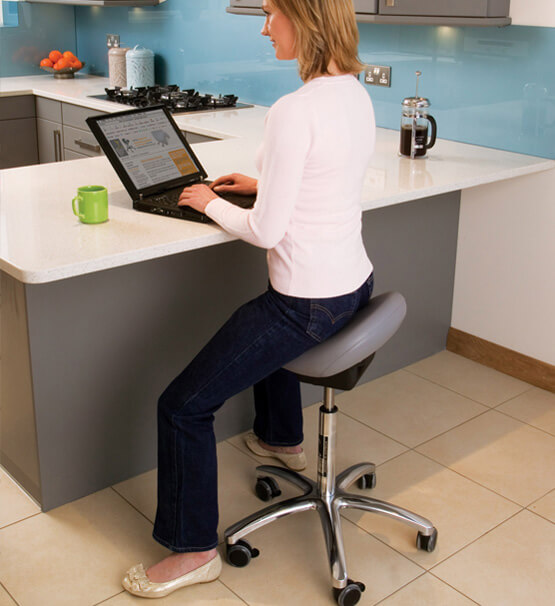
Because your lower body is perfectly stabilized by the saddle’s pommel and cantle, your upper body is completely liberated. Your chest opens, improving breathing. Your shoulders drop, eliminating “tech neck.” You gain total freedom to reach, pivot, and type without putting hazardous twisting forces on your lower back.
Ready to Break the 90-Degree Trap?
Stop fighting your furniture. If you are serious about eliminating back pain and upgrading your workspace to a clinical standard, it is time to invest in the foundation of your health.
Explore our dedicated range designed specifically for modern remote professionals by visiting our Home Office Seating Solutions.
Because every body is unique, the perfect fit is crucial. Use our guide to Choose The Right Model and tailor your Bambach to your exact height, workstation setup, and professional needs. Join the thousands of Australians who have discovered the Best Saddle Chairs in Australia and sit the way your body was built to.
Do I need a sit-stand or height-adjustable desk to use a Bambach?
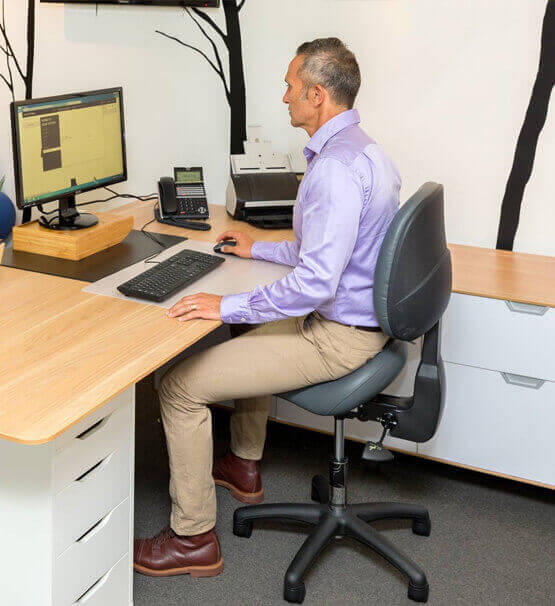
While a height-adjustable desk is an excellent addition to any home office, it is not strictly necessary. Because a saddle seat opens your hip angle to 135 degrees, you will sit slightly higher than you would in a standard office chair. We can customize the gas stem height of your Bambach to work perfectly with your existing desk, or you can pair it with desk risers for optimal monitor and keyboard height.
How long does it take to get used to sitting on a saddle chair?
Because standard chairs allow your core muscles to go completely dormant, transitioning to active seating requires a brief adjustment period. Most users experience a "waking up" of their core and pelvic muscles during the first 1–2 weeks. We recommend building up your time in the Bambach gradually—starting with a few hours a day—until your body readapts to its natural, upright architecture.
Can I sit on a Bambach Saddle Seat for a full 8-hour workday?
Absolutely. Unlike balance balls or kneeling chairs, which cause rapid fatigue or transfer pressure to your shins, the Bambach is designed for all-day clinical and professional use. Once your core muscles have adjusted to active sitting, the solid, continuous contour of the saddle provides the long-term structural support needed to work an 8-hour day with zero postural fatigue.
Why shouldn't I just buy a cheaper "split-seat" saddle chair online?
Many generic online alternatives use a divided or split-seat design. These split pans fail to provide uniform weight distribution and lack the structural surface stability required to keep your pelvis firmly anchored. The Bambach Saddle Seat utilizes an original, continuous-contour design, manufactured locally in Australia to rigorous medical standards and endorsed by the Australian Physiotherapy Association. When it comes to the foundation of your spine, compromising on geometry means compromising on relief.